Centralized Records
Enquiries, contacts, organizations, notes and activity live in one structured record instead of inboxes and spreadsheets.
Our custom CRM development gives your team one tailored system of record for enquiries, contacts, pipeline stages, follow-ups and ownership, so sales work follows one process instead of scattered inboxes and spreadsheets.

Many teams run sales from a mix of website forms, shared inboxes, spreadsheets and chat apps. Custom CRM software development replaces that mix with one system of record, built around how your team qualifies, follows up and closes work. It suits teams looking for CRM software in India that have outgrown a spreadsheet but do not want to bend their process around a generic template.
The CRM consolidates enquiries, contacts, organizations, activity, ownership and reporting. This is a CRM build, not an AI automation project. AI can be an optional supporting capability for bounded suggestions, extraction, summaries or classification, and only with validation and human review. For AI-led workflow design, see how AI automation differs from a CRM.
Enquiries, contacts, organizations, notes and activity live in one structured record instead of inboxes and spreadsheets.
Stages mirror how your team sells, with an owner and a status on every deal so progress is visible to everyone.
Permissions are set per role, so reps, managers and administrators see and change only what suits their work.
Each connector has written boundaries and failure handling, so it can be supported and changed without surprises.
Selected to fit each project. They are not client logos, partnerships, certifications or endorsements, and they carry no promise of performance.
Back-end foundation for data models, permissions, queues and APIs
Custom interfaces where a team task justifies a bespoke screen
Structured relational storage for contacts, companies and deals
Connectors built only when an integration requires them
Email conversations linked to contacts, with a review step for inbound records
Separately scoped lead-contact matching, defined per project
An enquiry management system or lead tracking software only helps when it matches the way work actually moves. When it does not, teams fall back on side spreadsheets, and the CRM becomes one more place to update. These are the problems we hear most often.

New enquiries arrive in website forms, personal inboxes, spreadsheets and messaging apps, so no one can say how many are open or who has replied.
Each person keeps their own notes. When someone is away or leaves, the context behind a conversation leaves with them.
Follow-ups rely on memory and personal reminders, so routine hand-offs are inconsistent and easy to miss during busy weeks.
Without agreed stages and a named owner, deals stall unnoticed and managers cannot tell what is progressing.
Reports are assembled by hand from partial data, so numbers differ between people and are hard to trust.
CRM development services work together as one system, from records and pipelines to integrations and support. Each project is scoped from this menu, and nothing here is included by default.
A structured record for every person, organization and enquiry, with its history kept together instead of split across inboxes and sheets.
We model contacts, companies and enquiries around the fields your team actually uses, then build screens for searching, filtering and reviewing them. Each record can carry notes, calls, emails, meetings and quotes, so whoever picks up a conversation sees what has already happened. Duplicate checks, required fields and clear ownership are agreed during discovery rather than assumed. This is the foundation that pipelines, follow-ups and reports depend on, so we settle the data model before building anything that sits on top of it.
Acts as the system of record that every other part of the CRM reads from and writes to.
A CRM for lead management: enquiries from your agreed channels land as records with a recorded source, instead of waiting in separate inboxes.
We connect the channels you choose, such as website forms, a shared enquiry mailbox or manual entry by your team, so each new enquiry arrives as a record with its source noted. For email, a reviewed inbound flow can turn structured messages into pending records that a person approves before they are created. Each channel is a separate piece of work with its own limits, so we list exactly what is connected and what is entered by hand. Source tracking is only as complete as the channels that feed it, and we say so in the handover notes.
Turns scattered enquiries into consistent records so nothing depends on one personal inbox.
Deals move through stages you define, each with an owner, a status and a next step, so progress is visible to everyone.
Instead of a preset funnel, we map the stages your team already uses, from first enquiry to won or lost, and build one or more pipelines around them. Each deal belongs to a company and contact, has an assigned owner, a status and an optional follow-up flag, and can have quotes or meetings attached. We also agree what must be recorded before a deal can move forward, which keeps stage data consistent. Delivery work after a sale is a different process, which is why task tracking is handled by a separate project management system.
Shows where every opportunity stands and who owns the next step.
Follow-up flags and manual ownership today, with automated assignment available as separately scoped custom workflow logic.
The CRM supports follow-up flags, an attention queue and manual ownership and assigned-user fields on deals. Automated lead assignment is different: it can be designed and built as separately scoped custom workflow logic, and it is not part of the base CRM or included by default. If you want it, routing criteria, fallback ownership, exception handling, permissions and audit behavior are agreed during discovery, so every lead has a named owner. The CRM supports consistent follow-up but cannot make people act. Optional AI suggestions stay off by default, only suggest, and need administrator approval.
Keeps routine hand-offs and reminders consistent while leaving judgement calls to your team.
CRM with WhatsApp integration and email linking, with every connector defined by clear boundaries and failure handling before it is built.
We link email conversations to the contacts they belong to. API endpoints and webhooks can be designed and implemented when the integration requires them; a public CRM API is not included in the base implementation. A separately scoped WhatsApp connector can match messages to lead-contact records by phone number. Two-way WhatsApp inside a CRM record is not included by default, nor are Gmail or Outlook OAuth sync and calendar connection. Connector scope covers authentication, authorization, validation, rate limits, retries, idempotency, logging and failure recovery, and for WhatsApp also identity matching, duplicate handling, consent, account access, provider approval and webhook behavior.
Connects the CRM to your existing channels without hiding what each connection can and cannot do.
A CRM dashboard built from the records your team enters, shown to the people who are allowed to see them.
We build CRM dashboard views for open deals, contacts, companies, follow-ups and upcoming meetings, then add reports your managers have asked for. Counts and statuses come straight from the records, so a report is only as accurate as the data behind it, and we flag the data-quality habits that keep it trustworthy. Permissions are defined per role, so a sales rep, a manager and an administrator can each see and change what is appropriate. Exports and imports can be scoped for the record types you need. Deeper analytics is a separate piece of work.
Gives managers a reliable view of pipeline status without exposing every record to everyone.
CRM customization services after launch, plus a realistic look at your existing data before any import.
Migration starts with a review of what your spreadsheets or current CRM can export, how consistent the data is and what needs cleaning. We rehearse an import on a copy first and report what matched and what needs a decision, because a clean result cannot be promised in advance. After launch we can handle fixes, small customizations and monitoring under a support arrangement, and larger changes are scoped as new work. Hosting is chosen per project, including cloud-based deployment where it suits your needs, and its cost is stated openly rather than hidden.
Moves your existing records across carefully and keeps the system useful as your process changes.
A CRM succeeds when your team keeps using it. As a CRM development company in India, we focus on process, data and honest scoping so the system stays usable after launch.
We map your enquiry sources, stages, hand-offs and users first, so screens and fields follow the real process rather than a template.
Records, relationships and role rules are modelled on a framework we use for our own CRM tooling, with policies checked on every record type.
We use React where a bespoke interface helps a specific task, and Laravel admin screens where they are faster to build and maintain.
Every connector lists what data moves, who can trigger it and what happens when the other service fails, before it is built.
Import rehearsals, acceptance testing, written handover notes and a support option are part of how we plan the work.

How the Engagement Works
Each stage ends with something you can review and a decision only you can make, so the CRM is built on agreed ground.
How does an enquiry really become a customer today?
We interview the people who handle enquiries, list every source and map the current stages and hand-offs. Output: a written workflow map and a list of problems to fix. Checkpoint: you confirm the map before design starts.
What should be recorded, by whom, and connected to what?
We design the record fields, pipeline stages, role permissions and integration boundaries, and sketch the key screens. Output: a data model, permission table and integration scope. Checkpoint: you approve the scope and what is excluded.
Does the working system match the approved design?
We build the records, pipelines, dashboards and agreed connectors in stages, sharing a working version for review as pieces are completed. Output: a staging CRM your team can try. Checkpoint: you accept each part or list changes.
Is the data ready, and can the team work in it?
We rehearse the import on a copy, test roles and connectors, and walk your team through daily use. Output: a mismatch report, test results and training notes. Checkpoint: you decide when the data and team are ready for launch.
What needs changing now that people are using it?
We launch, watch for errors and review early feedback, then plan improvements. Output: handover documentation and a prioritized change list. Checkpoint: you choose whether to continue with a support plan.
The first conversation is about your situation, not a sales pitch. We aim to leave you with a clear view of what a custom CRM would involve, or whether a ready-made tool fits better. It covers:
Please do not include passwords, personal customer exports or sensitive credentials in this form. We will ask for data later, through a secure route.
This form is temporarily unavailable.
Please contact us directly and we will pick this up straight away:
Selected Work
These are website projects, not CRM case studies. They show our delivered web work; CRM scope is assessed separately in a consultation.
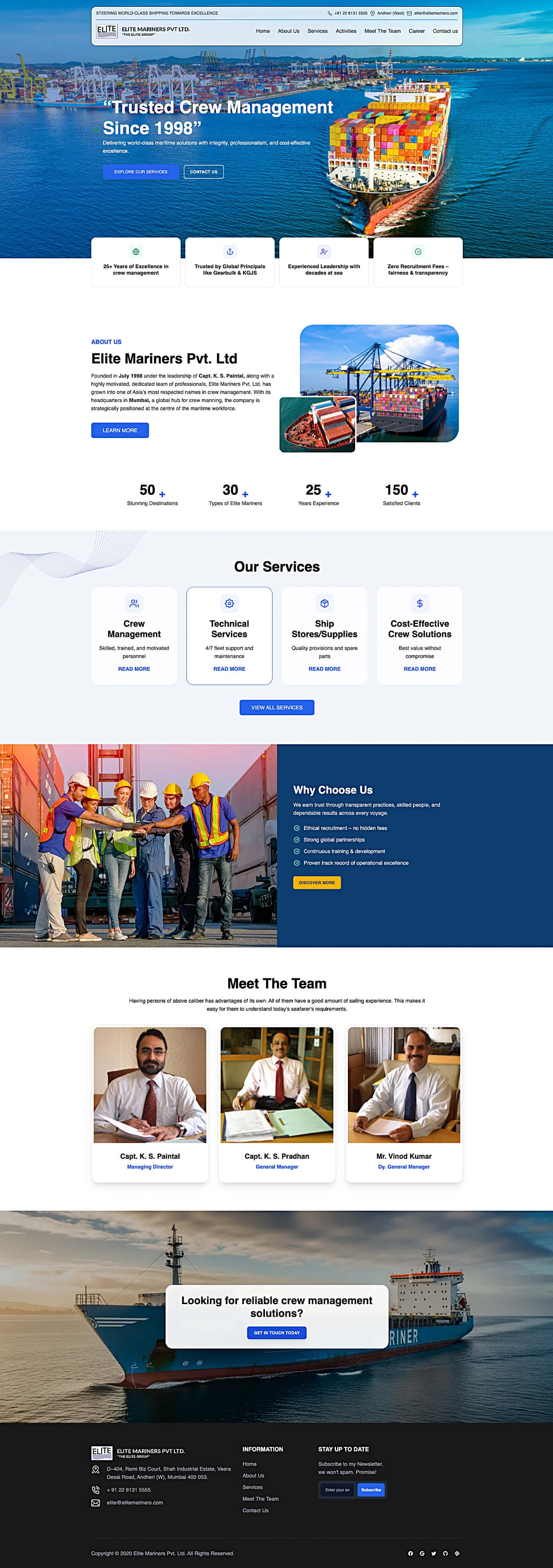
Maritime website presenting crew management, technical services and quick enquiry routes.
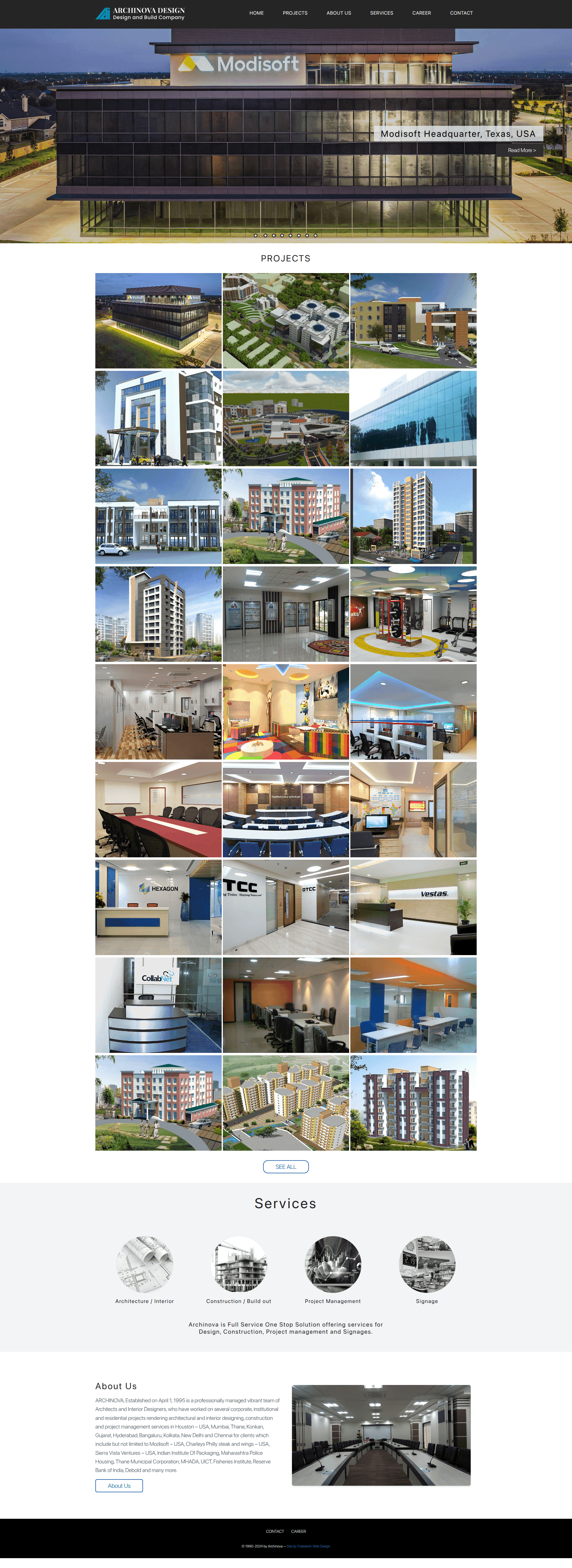
Architecture firm website showcasing commercial and residential projects with clear consultation paths.
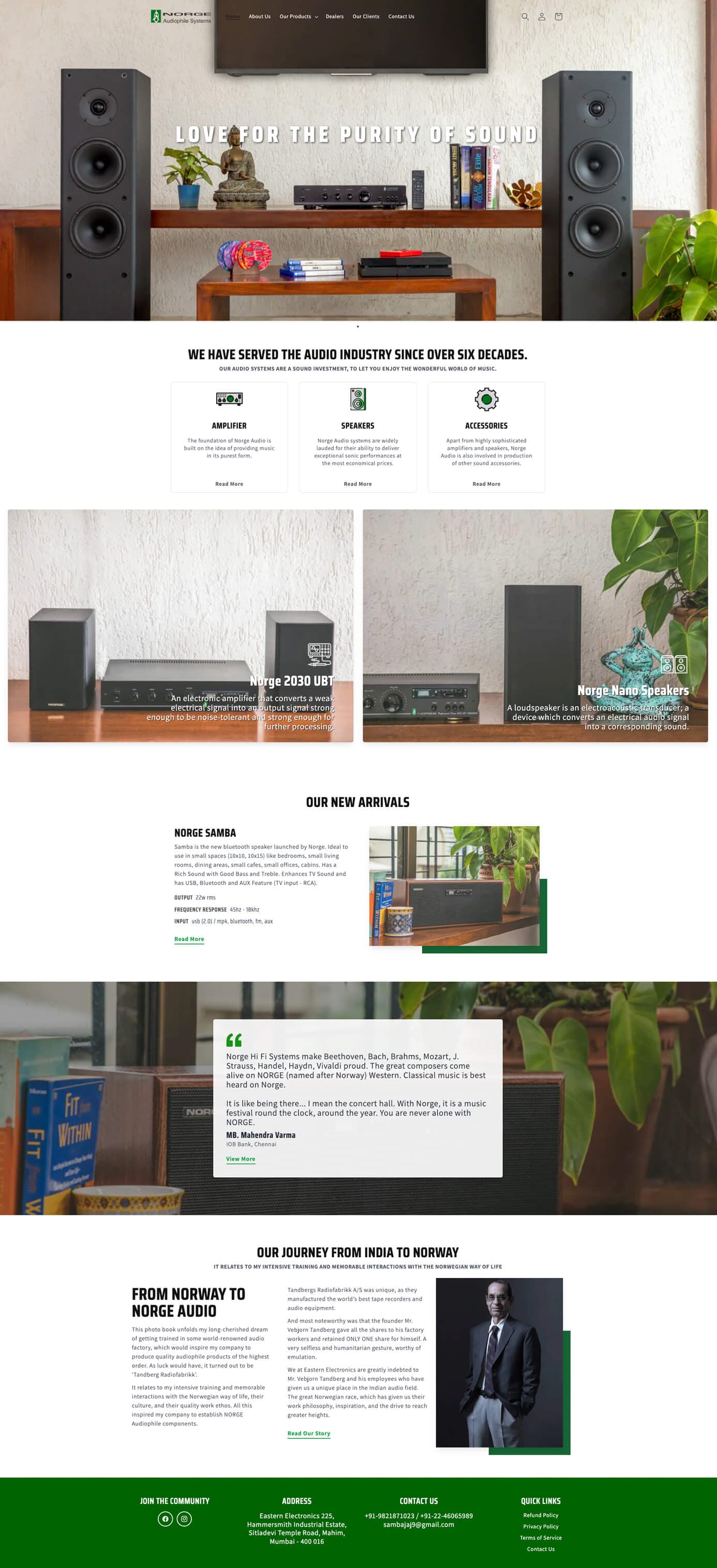
Audio equipment website with structured categories, product pages and customer enquiries.
FAQs
Straight answers on scope, integrations, data and what is not included by default.
Not sure whether you need a custom CRM? Share your process and we will say so plainly.
Ready-made CRM software is a mature product you adapt your process to, often quicker to start with and priced per user. A custom CRM is built around your own stages, fields and permissions, and changes when your process changes, but it needs a discovery phase first and carries hosting and maintenance costs. Neither is better in every case. If your sales process fits a standard template, a ready-made tool may be the sensible choice, and we will say so.
Not always. A custom CRM for a small business makes sense when enquiries are spread across forms, inboxes and spreadsheets, when several people need different access, or when the sales process has stages a generic template handles poorly. A single owner with a handful of leads may be well served by a simpler tool. We will help you judge which situation you are in before any build starts.
Only what is written into the agreed scope. We can connect website forms and link email conversations to contacts. API endpoints and webhooks can be designed and implemented when an integration requires them; a public CRM API is not included in the base implementation. A separately scoped connector can match WhatsApp messages to lead-contact records by phone number. Two-way WhatsApp inside a CRM record, Gmail or Outlook OAuth sync and calendar sync are not included by default. Each connector scope covers identity matching, duplicate handling, consent, account access, provider approval, webhook behavior and failure handling.
Not by default. The CRM supports manual ownership and assigned-user fields on deals. Automated lead assignment can be designed and built as separately scoped custom workflow logic; it is not part of the base CRM. If you want it, routing criteria, fallback ownership, exception handling, permissions and audit behavior are agreed during discovery. Until then, a person assigns an owner to each lead.
Usually yes, depending on what your current system can export and how consistent the data is. We review the export first, rehearse an import on a copy and report what matched and what needs a decision. We cannot promise a clean, duplicate-free migration, because that depends on the quality of the source data, but you will see the results before anything goes live.
A report is only as accurate as the records behind it. Dashboards count what your team enters, such as open deals, contacts, companies and follow-ups, so missing or inconsistent entries show up as missing or inconsistent numbers. We agree required fields and stage rules to improve data quality, and deeper analytics is scoped separately. We offer no promise that reporting will be complete.
Laravel gives a structured foundation for a Laravel CRM, covering data models, permissions, queues, APIs and integrations, and we use it for the CRM back end. React is used when a custom front-end interface is worth building for a particular team task. Some screens are quicker and easier to maintain as Laravel admin panels, so we choose per screen rather than by default. Hosting, including cloud-based deployment, is decided per project.
No. The deliverable is a CRM that acts as your system of record, not an AI automation project. AI is an optional supporting capability that stays off by default unless explicitly enabled. It offers suggestions only, for example proposing missing fields from an email, summarizing a thread or classifying an enquiry. Deterministic fields take precedence, outputs are limited to an allowlisted set of fields, and every suggestion passes the same validation as typed input and needs human or administrator approval. AI does not assign owners, route leads, approve records or make sales decisions. If AI-led workflow design is what you want, see our AI automation consultancy.
As a CRM software development company, we scope after a first conversation. Cost and timing depend on the number of pipelines, record types, users, integrations and the state of your existing data, so we avoid quoting a fixed price or duration up front. After launch, fixes, monitoring and small changes can be covered by a support plan. We make no promise of uninterrupted uptime. See our website maintenance page for how support is structured.
Locations
We proudly serve clients in major cities worldwide, delivering exceptional web design, development, and digital marketing services.