Commercial Diagnosis
We inspect collection performance, hero SKU margins, inventory depth, traffic sources, and checkout drop-off before recommending where to invest design, engineering, or media budget.
Launching an online store is only the starting line. Prateeksha Web Design helps existing ecommerce businesses coordinate commercial strategy, brand and product merchandising, social media growth, search and AI-search readiness, performance marketing, storefront conversion, and customer retention around your store's real operating constraints.
Who this is for: Designed for established Shopify, WooCommerce, and custom online stores that need coordinated post-launch growth—not a basic first-time store setup.

Once an online store is live, growth responsibilities often fragment across separate hands: a developer maintaining templates, a designer updating banners, a social team posting reels, an SEO vendor chasing keywords, an ad agency pushing traffic, and no single partner owning how those touchpoints work together across first and repeat orders.
Our ecommerce growth strategy services start by diagnosing the store's primary commercial constraint—whether that is collection discovery, product-page confidence, feed quality, mobile checkout friction, or post-purchase retention—and then coordinating execution in the order that respects unit economics.
The intended value is clearer prioritization for leadership, a more coherent customer journey from first impression to delivery, and a consent-aware measurement baseline that helps determine the next priority. If you still need a brand-new store built from scratch, explore our Ecommerce Website Design & Storefront Development services.
We inspect collection performance, hero SKU margins, inventory depth, traffic sources, and checkout drop-off before recommending where to invest design, engineering, or media budget.
Merchandising, product storytelling, organic search, social content, and paid campaigns are planned around the same offer and destination pages so shoppers encounter a consistent journey.
When scoped and with appropriate account access, GA4, Google Tag Manager, Search Console, and Merchant Center signals are configured within visitor privacy boundaries to support a useful measurement baseline.
Rather than treating growth as a one-off campaign or redesign, we run an iterative cycle of storefront refinements, feed hygiene, creative testing, and lifecycle follow-through on an agreed cadence.
When scoped and with client account access, we work inside the commerce platforms, search consoles, product feeds, and analytics tools powering your store so strategy and implementation stay connected.
Collection merchandising, Online Store 2.0 product templates, and cart-to-checkout UX refinement.
Catalog structure, variable product clarity, checkout performance, and WordPress store care.
Scoped consent-aware ecommerce event tracking across product views, cart additions, checkout steps, and purchases.
Structured data-layer governance for storefront interactions, remarketing tags, and consented conversion events.
Category and product indexation monitoring, query diagnostics, and Merchant listings schema validation.
Scoped product feed attribute checks, GTIN/MPN hygiene, price/stock sync review, and Shopping surface eligibility.
Scoped product-led social creative, catalog retargeting alignment, and landing-page message match.
Fast, schema-ready frontend templates and API-connected product experiences for custom commerce stacks.
Tools and platforms are selected to fit your existing store stack and engagement scope. Platform names and icons describe operational compatibility and implementation scope—they are not claims of official vendor partnership, certification, endorsement, or assured commercial performance.
Driving more visitors to an under-merchandised store rarely fixes unit economics. Coordinated ecommerce growth requires aligning how products are positioned, how shoppers discover collections, how product pages answer objections, and how post-purchase follow-through is structured.

Commercial Reality & Shared Responsibility
Ecommerce outcomes depend on product demand, price, margin, inventory availability, competition, fulfilment capability, media investment, and implementation quality. Strategy and execution improve clarity, user experience, discoverability, and decision-making, but they do not control or promise sales volume, ROAS, search placement, AI recommendations, or conversion rates.
When collection pages, product photography, sizing or material details, and return policies feel inconsistent, shoppers hesitate to commit—especially on first-time D2C visits.
Reels, creator collaborations, and paid ads can generate clicks while still straining budgets if visitors land on generic category pages that do not match the featured product angle or bundle.
Ranking for commercial category or product queries only helps when faceted navigation, variant availability, comparison guidance, and structured product data make evaluation straightforward.
Managing CRO, paid media, average order value, and post-purchase retention through disconnected vendors obscures whether your main constraint is traffic relevance, checkout friction, or repeat order behavior.
Select a capability below to inspect how we coordinate commercial strategy, branding and merchandising, social media, search and AI visibility, paid marketing, storefront conversion, and customer retention—and where each workstream connects to our specialist service pages.
Diagnose where your store loses momentum and sequence catalog, acquisition, conversion, and retention priorities around real unit economics.
Most online stores do not stall for lack of activity; they stall because catalog decisions, acquisition spend, storefront UX, and retention work happen in separate silos. We start by auditing your store’s unit economics, hero SKUs, collection performance, traffic mix, and checkout drop-off points. From that commercial diagnosis, we map a prioritized initial growth sequence that defines which products to feature, which landing experiences need refinement before paid spend scales, and how each workstream will be reviewed on an agreed cadence. Instead of chasing every channel at once, your team receives a phased growth roadmap tied to margin, inventory readiness, and customer acquisition cost.
Commercial Role in Your Store
Helps leadership sequence media and engineering effort by identifying whether the store’s primary constraint is discovery, product confidence, checkout friction, or repeat purchase behavior.
Dedicated Specialist Service Pages
Present your catalog, collections, and product pages with the visual coherence and buying information customers need to evaluate your store.
Shoppers decide quickly whether an online store feels credible enough for their order and whether a product justifies its price. We refine how your brand and catalog are presented across collection pages, product detail templates, comparison blocks, and seasonal launch pages. That work covers visual hierarchy, collection grouping, bundle or variant framing, fabric or specification clarity, and buying guides that address pre-purchase hesitation. Clearer merchandising helps organic visitors, social audiences, and paid clickers evaluate product fit and value without leaving your storefront to piece together specifications, sizing, or delivery terms elsewhere.
Commercial Role in Your Store
Clarifies product positioning and reduces pre-cart hesitation across hero SKUs, bundles, and priority collections.
Dedicated Specialist Service Pages
Improve foundations for organic discovery and machine readability across category pages, product pages, merchant feeds, and AI answer surfaces.
Ecommerce search visibility depends on how cleanly search engines and answer engines can crawl, interpret, and index your catalog. We structure collection hierarchy, subcategory targeting, internal linking, canonical tags for filtered or variant URLs, and buying-question content so shoppers searching with commercial intent land on relevant pages. Alongside organic SEO, we implement and validate Product, Offer, BreadcrumbList, and FAQPage structured data and merchant feed attributes where scoped. Accurate schema and product data improve machine readability, completeness, eligibility, and discoverability across search, shopping surfaces, and AI answer tools, while offering no assurance of rankings, search placement, or AI product recommendations.
Commercial Role in Your Store
Improves technical and editorial foundations for organic discovery across commercial category queries, product comparisons, and structured shopping feeds.
Dedicated Specialist Service Pages
Coordinate scoped Google Shopping, search, and paid social campaigns around product margins, feed readiness, and matching landing pages.
Running paid search, Shopping feeds, or Meta campaigns into an under-prepared storefront can erode margin quickly. When performance marketing is part of your engagement scope, we align campaign structure with your catalog economics by organizing activity around hero products, stock availability, contribution margin, and landing-page readiness. Scoped work can include Google Merchant Center feed hygiene, campaign and ad-group setup, creative angle testing, and dedicated collection or offer landing paths. Rather than reviewing click-through rates in isolation, we evaluate media activity against contribution margin, average order value, and consented storefront conversion data.
Commercial Role in Your Store
Evaluates media activity against contribution margin, product feed readiness, and landing-page conversion context rather than isolated ad-platform metrics.
Dedicated Specialist Service Pages
Reduce identifiable purchase friction across mobile navigation, product pages, carts, and checkout steps through diagnostic UX refinements.
Points of hesitation across mobile navigation, collection filters, product pages, cart drawers, and checkout steps can stall otherwise interested buyers. We audit shopper journeys using consented analytics events, device breakdowns, speed diagnostics, and heuristic template reviews to identify where visitors drop off. From there, we implement practical refinements to gallery order, variant selection, delivery terms and return policy visibility, payment options, warranty details, verified review integration, cross-sell placement, and checkout form clarity. Each storefront update is scoped to reduce identifiable purchase friction and clarify product value before additional media budget is committed.
Commercial Role in Your Store
Addresses mobile usability, product-page hesitation, and cart-to-checkout drop-off so existing traffic encounters fewer avoidable obstacles.
Dedicated Specialist Service Pages
Support retention analysis where the buying cycle permits it and improve decision clarity through structured post-purchase flows and consent-aware reporting.
Relying solely on paid acquisition for every repeat order puts heavy pressure on acquisition budgets. Where your product category and buying cycle permit repeat purchases, we help plan and configure lifecycle marketing workflows—covering welcome sequences, browse and cart recovery prompts, post-purchase onboarding, replenishment reminders, and win-back campaigns inside your chosen email or CRM platform. In parallel, we configure consent-aware GA4 and Google Tag Manager ecommerce events so your team can support retention analysis where the buying cycle permits it and review first-order versus repeat-order trends from a consistent measurement baseline.
Commercial Role in Your Store
Supports repeat-buyer workflows where applicable and gives leadership a consent-aware baseline for reviewing acquisition and retention together.
Dedicated Specialist Service Pages
Many agencies either build storefronts without owning post-launch commercial flow or run ads without the engineering ability to fix slow templates, broken schema, or confusing product pages. We bridge both sides under one accountable team.

Best fit: Existing online stores with validated products, active inventory, and leadership ready to coordinate merchandising, storefront UX, search, and marketing around real unit economics.
Not the right fit: Pre-product ventures seeking assured overnight ROAS, businesses without fulfilment or stock readiness, or teams needing a first-time store setup (which is better served by our Ecommerce Website Design or Shopify Development services).
We do not start by pushing a pre-packaged channel retainer. Every engagement begins by identifying whether catalog clarity, organic discovery, ad efficiency, checkout friction, or retention is the main commercial bottleneck.
Because our team works across storefront engineering, merchandising UX, SEO, social content, and scoped performance marketing, campaign launches and template improvements happen in one coordinated workflow.
Recommendations are grounded in how Shopify, WooCommerce, product feeds, variant schemas, and checkout flows actually behave—so strategic priorities translate directly into clean storefront changes.
Before scaling ad budgets or redesigning templates, we verify scoped GA4 ecommerce events, Tag Manager triggers, Search Console coverage, and feed health so subsequent tests are judged against a consistent baseline.
Your team retains ownership of your store code, ad accounts, analytics properties, and creative assets, supported by agreed review checkpoints that explain what changed, what was observed, and what is prioritized next.
The Ecommerce Growth Process
Every engagement follows a clear diagnostic and implementation sequence with defined outputs and review checkpoints—cadence adapts to your catalog size, platform complexity, and agreed scope rather than fixed day-count promises.
Where is the store currently losing demand, margin, or checkout completion?
We review your storefront funnel, collection and hero-SKU performance, traffic sources, scoped Merchant Center feed health, technical SEO, and GA4/GTM event accuracy.
Do collection and product pages give shoppers the clarity needed to buy?
We refine collection structure, product page hierarchy, value framing, bundle or threshold logic, and delivery terms, return policies, payment options, warranty details, and verified review integration across priority SKUs.
Which organic, social, paid, or CRO levers should run first?
We sequence work across organic category/product SEO, AI-ready product schema, social content pillars, scoped Shopping/social campaigns, and lifecycle flows around margin and stock readiness.
Are storefront updates, feeds, campaigns, and events working cleanly together?
Our developers, designers, and marketers ship storefront UX updates, structured data, scoped product feed fixes, social/paid campaigns, and retention sequences with pre- and post-launch QA.
What did the data show, and where should the next cycle focus?
We evaluate conversion steps, average order value, acquisition efficiency, search visibility, and repeat-purchase cohorts where the buying cycle permits it to focus the next cycle on the highest-priority constraint.
Ecommerce Growth Consultation
Share your storefront URL and current commercial priorities. We will review how your collections, product pages, search visibility, paid acquisition, and checkout flow work together and outline a practical starting scope.
Tell us about your platform (Shopify, WooCommerce, or custom), catalog focus, and where growth feels stuck. We respond with an honest assessment and next steps.
Selected Brand, Product & Commerce Work
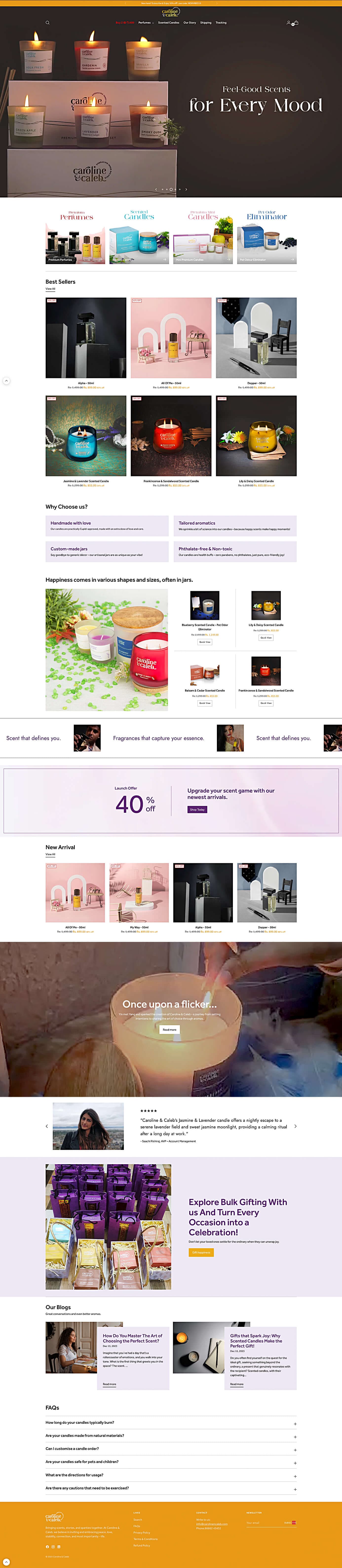
Editorial collection presentation, garment detail hierarchy, and mobile-first product discovery structured for a fashion and apparel brand.

Brand-led catalog framing, collection categorization, and responsive buyer journeys for a designer occasionwear label.
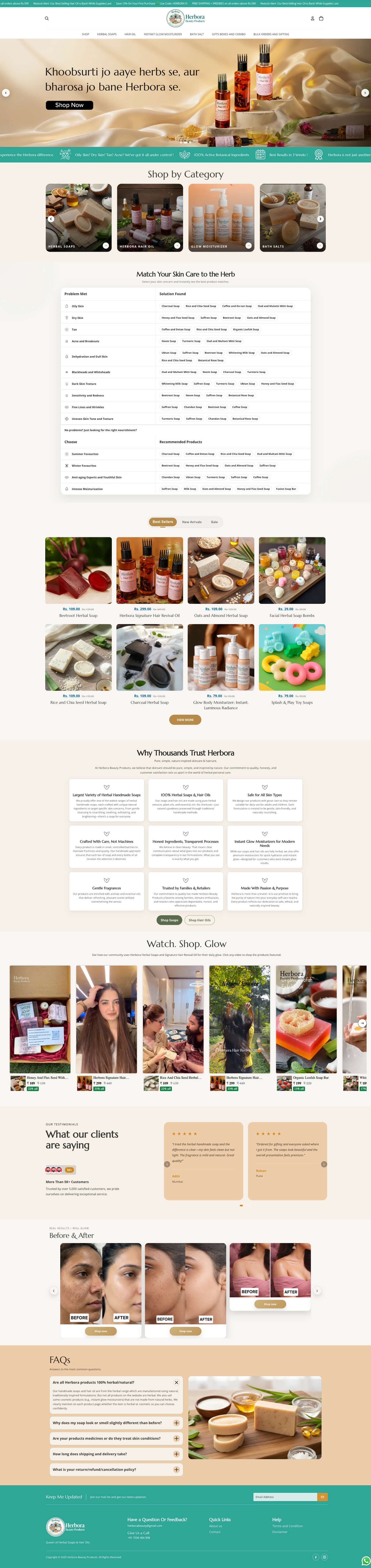
Ingredient-led product detail pages, routine navigation, and clear product specification and delivery information structure for a D2C personal care brand.

Specification-rich product catalog, amplifier and speaker category paths, and clear product differentiation for audio equipment buyers.
FAQs
Clear answers about how we scope post-launch ecommerce growth, how this page relates to storefront builds, and how we handle measurement and realistic outcomes.
Have a question specific to your store, catalog, or growth bottleneck? Reach out through our consultation form above.
Our ecommerce growth strategy services connect commercial diagnosis, brand and collection merchandising, product-led social media growth, technical and category/product SEO, AI-ready product schema, margin-aware performance marketing, storefront conversion rate optimization, and post-purchase lifecycle workflows under one prioritized plan.
Our /ecommerce and /shopify pages focus on designing, building, or migrating a storefront from the ground up. This /solutions/ecommerce-growth solution is built for businesses that already operate a live online store and need coordinated post-launch work across merchandising, acquisition, conversion, and customer retention.
No. Ecommerce outcomes depend on product demand, price, margin, inventory availability, competition, fulfilment capability, media investment, and implementation quality. Strategy and execution improve clarity, user experience, discoverability, and decision-making, but they do not control or promise sales volume, ROAS, search placement, AI recommendations, or conversion rates.
We organize collection and subcategory hierarchy, clean up faceted navigation and canonical URLs, enrich product pages with clear buying-decision content, and validate Product, Offer, BreadcrumbList, and FAQPage structured data alongside scoped merchant feed attributes. Structured product and offer data improves machine readability, completeness, eligibility, and discoverability across search engines, shopping surfaces, and AI-assisted discovery systems, while offering no assurance of rankings, search placement, or AI assistant recommendations.
We diagnose that during Stage 1. If high-intent visitors are already reaching product pages or carts and dropping off due to unclear sizing, slow mobile templates, unexpected delivery terms, or checkout friction, we prioritize storefront and merchandising fixes first so subsequent media spend lands on a clearer path to purchase.
Not every visitor can be tracked across every channel or device. Privacy settings, consent choices, ad blockers, iOS/browser restrictions, and cross-device behaviour limit visibility. We focus on establishing a clean, useful measurement baseline across GA4, Google Tag Manager, Search Console, and store order data so your team can make better commercial decisions.
Yes. Many store owners start with a commercial funnel, SEO, and measurement audit or focus first on storefront conversion and merchandising before layering in ongoing SEO, social media, performance marketing, or lifecycle flows.
Locations
We proudly serve clients in major cities worldwide, delivering exceptional web design, development, and digital marketing services.