Defined Scope
Goals, deliverables, assumptions and exclusions are written down before design or code begins, so everyone is reviewing against the same reference.
Here is how we work: we plan, design, develop, test, launch and maintain websites and digital systems, with decisions recorded and review checkpoints agreed for each project. You get a clear view of scope, responsibilities and next steps at every stage.

Many website and software projects stall for the same reasons: unclear scope, work split between vendors who never speak to each other, feedback that arrives late, and uncertainty about what happens at launch.
Our approach answers those problems with discovery, documented priorities, review checkpoints, staged delivery, quality assurance and a written handover. The intended value is fewer avoidable surprises, clearer ownership and a result your team can maintain. Outcomes still depend on your market, content and decisions, so we describe the process we follow rather than promise results.
Goals, deliverables, assumptions and exclusions are written down before design or code begins, so everyone is reviewing against the same reference.
The plan is built around review points and approvals, so both sides can see what comes next and what is needed to move forward.
Wireframes, designs and build stages are reviewed at agreed points, with feedback collected in one place and changes confirmed before revisions start.
Handover materials are defined in the proposal and may include access notes, editor guidance and technical documentation, so your team is not left relying on memory.
Tools are selected to fit each project and are not used on every project. They are not partner badges, and listing a tool does not imply partnership, certification, endorsement, mandatory use or specific results.
Server-rendered websites and landing pages
Interactive interface components
Custom applications, APIs and content backends
Editor-friendly publishing and service sites
Online store catalogues and checkout
Code versioning for technical builds where it forms part of the delivery workflow
Traffic and enquiry measurement
Event and tag management

A scope question answered during planning costs a conversation. The same question found after development usually costs rework.
Most project problems can be seen coming. A clear web design process plans around these four.
When goals and exclusions are not written down, each reviewer remembers them differently. Features get added late, designs are redone and the plan quietly drifts.
Layouts designed around placeholder text and structure decided during development tend to need rework once real content and visitor tasks are considered.
Forms, links and layouts checked only at the end leave little room to fix what is found, and problems reach real visitors.
If nobody is named to approve a stage or care for the site afterwards, feedback is delayed and updates are skipped until something breaks.
Seven stages cover discovery, planning, design, build, software, testing, launch and ongoing care. Choose a stage to see what happens, what you receive and where to read more about the related service.
A structured start that turns a loose brief into documented goals, audiences, constraints and priorities.
Our discovery and planning process begins with a conversation and a short brief review. We ask about your business, the people the website or system must serve, existing content, tools and analytics, competitors you watch, and anything that limits the project, such as budget range, deadlines, brand rules or technology you already use. We write down what we heard, flag open questions and agree who makes which decisions. The aim is a shared written understanding before design or code starts, so later feedback can be checked against agreed goals rather than memory. Proposals state scope, assumptions and exclusions in plain language.
Role in the Project
Creates the written reference that every later design, build and review decision is checked against.
Turns the agreed brief into a page structure, a feature list in priority order and a set of review milestones.
Website project planning converts discovery notes into a working plan. We map the pages and templates the site needs, group content by what visitors are trying to do, and rank features as essential, useful or later. Milestones are set around review points rather than around calendar promises, because the pace depends on how quickly content, feedback and approvals arrive. We also agree how changes are handled: a request that alters the agreed scope is written up, discussed and either swapped for something of equal weight or added with its effect on the plan made visible before work continues.
Role in the Project
Gives both sides the same map of what is being built, in what order and who must approve each step.
Layouts and content are shaped around user tasks before visual styling is applied.
Our UI UX design process starts with the tasks visitors need to complete and the questions they ask before acting. Wireframes show page structure and the order of content without colour or imagery, so feedback stays on usefulness. Once structure is agreed, we develop visual direction, components, typography and responsive behaviour, then present designs for review at the checkpoints in the plan. Content is treated as part of the design: headings, calls to action and form wording are drafted or reviewed alongside layouts so that pages are not designed around placeholder text. Accessibility basics such as contrast, focus states and readable type are considered from the start.
Role in the Project
Settles structure and content decisions on paper before they become expensive to change in code.
Approved designs are built in stages, with review checkpoints so progress can be checked before anything goes live.
The website development process moves from approved designs into working pages. We build in stages, usually starting with global elements and the most important templates. Where staging is part of the agreed workflow, working pages are shared on a private site so you can click through real pages instead of images before release. Code-based builds use an appropriate source-control workflow, and components are reused where sensible. Content is entered into the content management system or prepared for your team to enter. Each build stage ends with a review checkpoint, and feedback is collected in one place so revisions stay orderly.
Role in the Project
Turns approved design decisions into maintainable pages that the client can review in a working state.
Where a project needs business logic, dashboards or connections to other systems, the same stages apply with extra technical checkpoints.
A custom software development process follows the same discovery, planning, build and test sequence, with more attention to data, roles and integrations. We document who uses the system, what each role can do, what data is stored and which outside services it must talk to, then confirm the technical approach before building. Where the scope allows, work is released in increments so that workflows can be tried early. Integrations are tested against the agreed services and failure cases are noted. Whether a feature is feasible, how it should behave and what is out of scope are decided in writing, so the final system matches what was approved rather than what was assumed.
Role in the Project
Keeps complex logic, permissions and integrations visible and reviewable instead of hidden in code.
Testing runs through the build, and launch checks and handover materials are agreed to suit the project.
Quality assurance and testing are not left to the last day. We check pages, forms, links, responsive behaviour and basic accessibility throughout the build, then run a fuller pass before launch. The website launch process uses checks selected for the project’s platform, migration risk, analytics scope and agreed responsibilities. These may include redirects from old addresses, metadata, tag setup, form delivery and backups, followed by a review of live pages. Handover materials are defined in the proposal and may include access notes, editor guidance and technical documentation. Testing reduces avoidable problems; it cannot promise a launch with no issues, so we plan time to review and correct anything found after release.
Role in the Project
Confirms that what was approved is what is published, and records how the site works for the next person.
Launch is a starting point: updates, checks and improvements continue on the cadence you choose.
Ongoing website maintenance keeps a site usable after release. Depending on the plan you agree, this can include software and plugin updates, backup checks, form and link checks, small content changes and review of analytics for pages that need attention. Update summaries and recommended next steps are supplied when they are included in the selected plan. Improvements are suggested from observed behaviour, such as pages visitors leave quickly or forms that are rarely finished, and are discussed before work begins. Scope and response times are written into your plan, and we do not claim uninterrupted uptime or perfect security.
Role in the Project
Maintains the site, reports on agreed work and feeds observations back into the next round of planning.
This is how we work day to day, described as practices you can check rather than claims you have to take on trust.
We start by writing down goals, audiences and constraints. Designs and code are then checked against that record instead of against preference.
During planning we identify your main contact and the decision points. Decisions, open questions and review feedback are recorded, so it is clear what is waiting on whom.
Wireframes, content and components carry through into the build, and, where staging is part of the agreed workflow, working pages are shared for review before release.
Testing runs through the build. Launch checks are selected for the project’s platform, migration risk and analytics scope, and handover materials are defined in the proposal.
Maintenance and improvement continue after launch on the cadence in your selected plan, with update summaries and recommended next actions when included in the plan.

The Process
Each stage names the activity, what you see at the end of it, what we need from you and the approval that moves the work forward. Timing depends on scope and on how quickly feedback and content arrive, so we do not quote fixed durations here. For deliverables, client inputs and approval points at every step, see our full website design and development process, stage by stage.
What must this project achieve, and who decides?
We review your brief, ask about audiences, content, tools and constraints, and record goals, assumptions and exclusions.
How should pages, content and features be organised?
We map the page structure, prioritise features, draft wireframes and agree review milestones and how changes are handled.
Is the approved experience being built as agreed?
Visual design is developed and then built in stages. Where staging is part of the agreed workflow, working pages are shared for review before release, and software and integrations are tested as they are added.
Is everything checked, and does your team know how it works?
We run a test pass, apply launch checks suited to the project, review live pages and provide the handover materials defined in your proposal.
What should be updated or improved next?
We carry out agreed updates and checks, supply update summaries when included in your plan, and propose improvements based on observed behaviour.
The first conversation covers your constraints, scope, priorities, stakeholders, measurement needs and a realistic next step, with no commitment to a build before the scope is clear.
Share your details and we will follow up about a practical first step.
Selected Work
Examples of website projects from our portfolio.
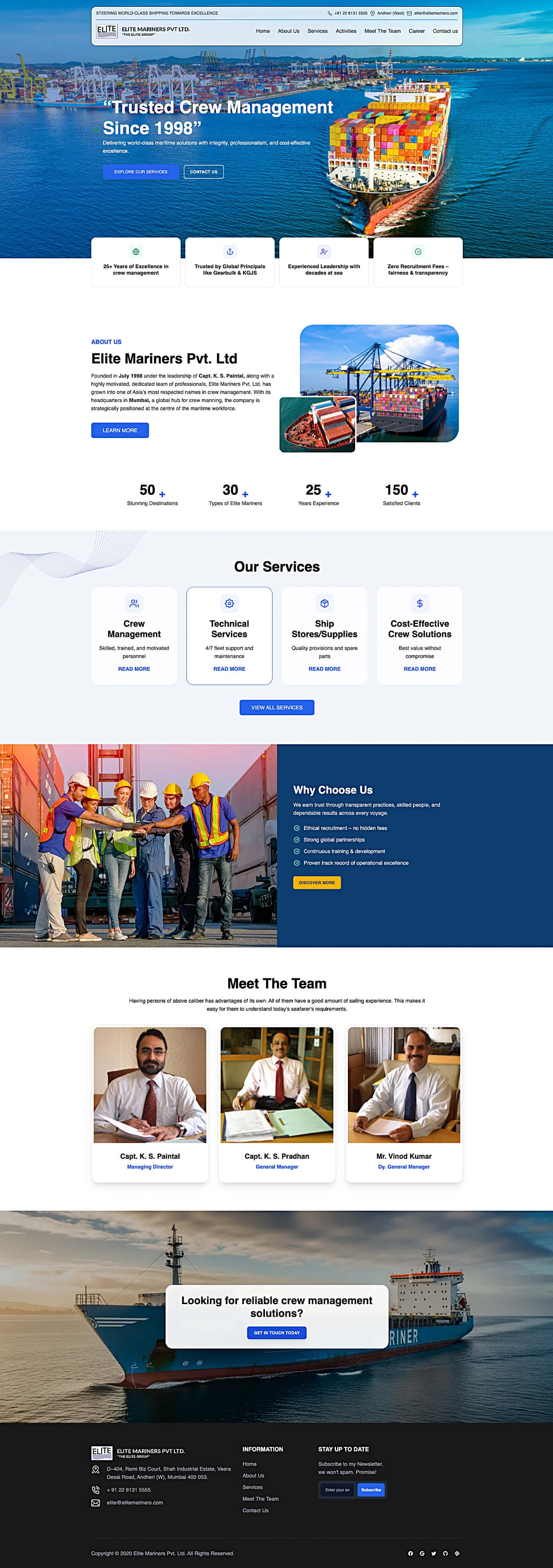
Website for a maritime services company.
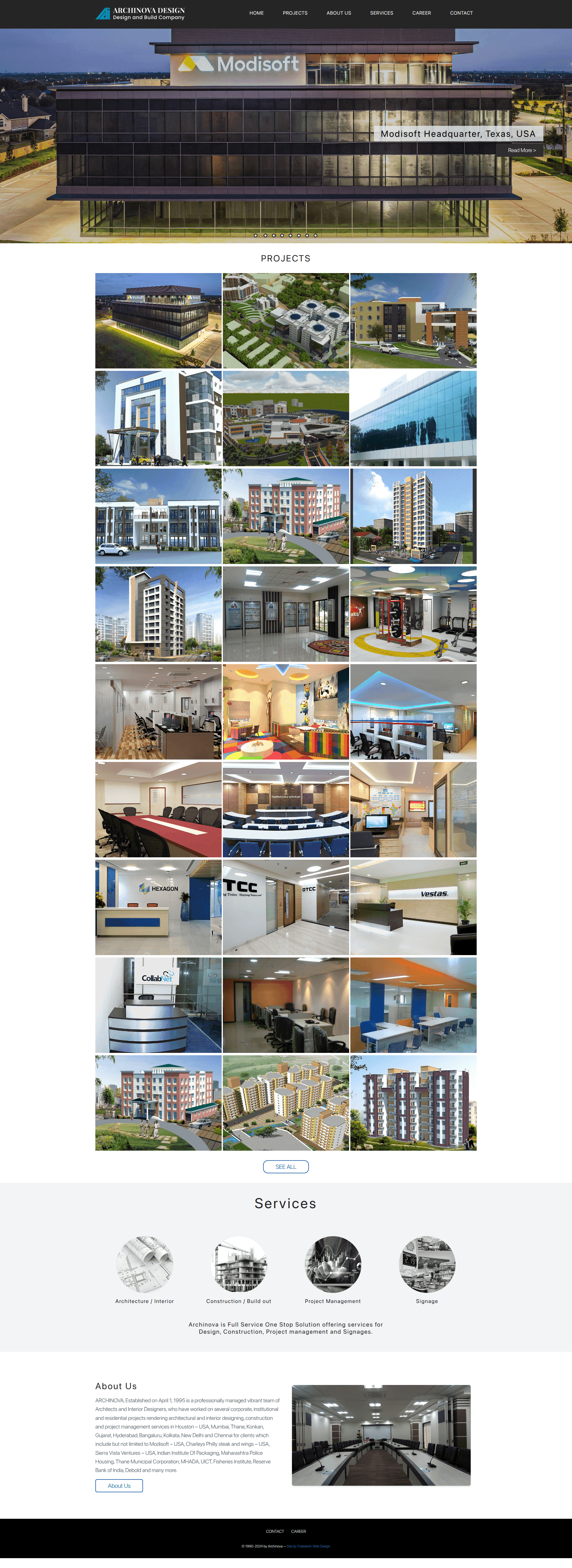
Website for an architecture firm, showing its projects, careers and office design.
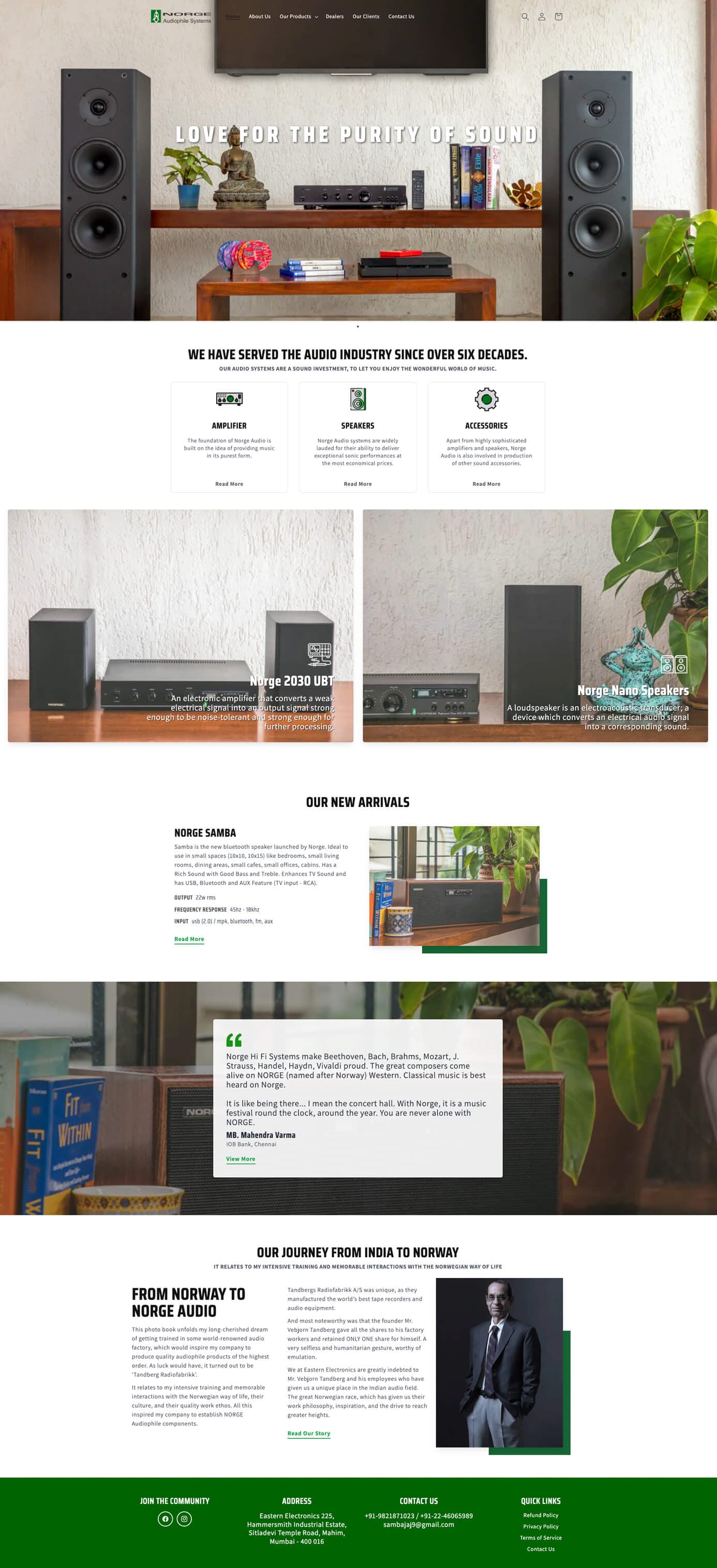
Website for an audio equipment brand, with a product showcase.
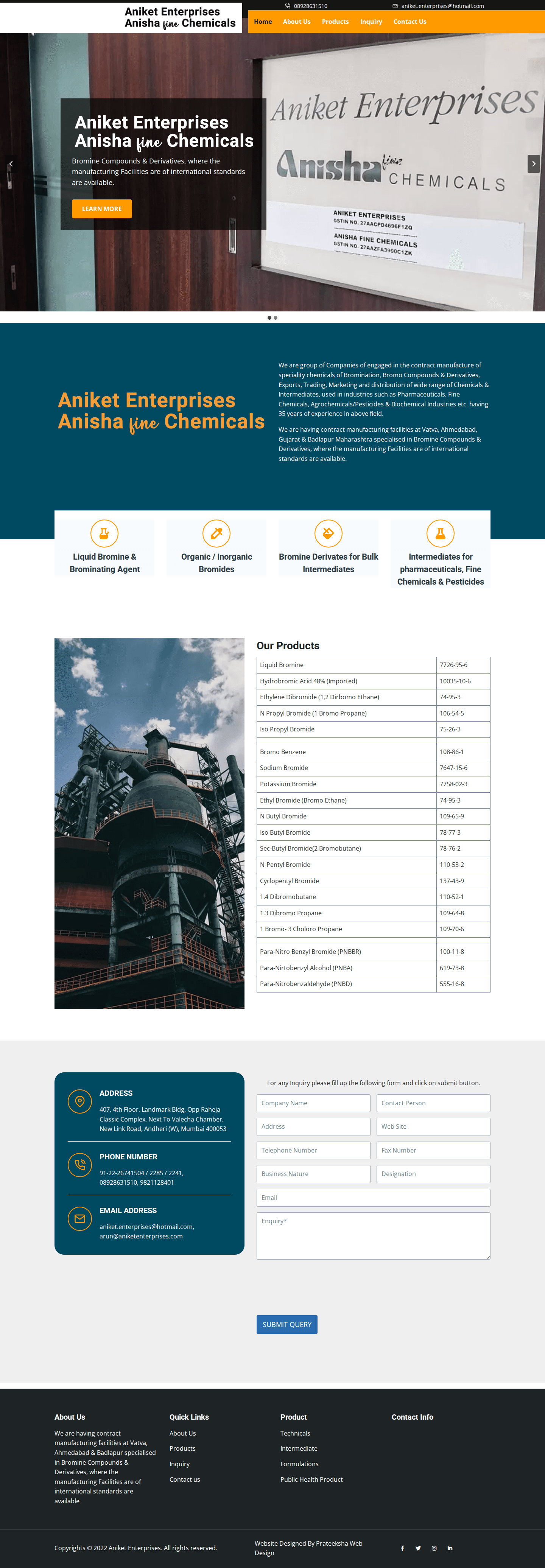
Website for a Mumbai bromine chemicals manufacturer, built around a product data table and certificates.
FAQs
Straight answers on discovery, scope, reviews, testing, launch and support.
Have a different question? Talk to us about your project.
We review your brief, ask about your business, audiences, content, tools and constraints, and write down what we heard. The outcome is a scope summary that records assumptions, exclusions and who makes the main decisions. Design and build begin once both sides agree the written reference is accurate.
Scope is set from the discovery brief as a page and template inventory, a prioritised feature list and a list of what is not included. It is written in plain language so that anyone on your team can check it, and it becomes the reference for later review rounds.
Reviews happen at agreed checkpoints, such as after wireframes, design and each build stage. Where staging is part of the agreed workflow, working pages are shared for review before release; otherwise we share designs or review documents. Feedback is collected in one place, and we confirm what will change before revisions start. We ask you to name who gives feedback so it stays consistent.
Typically a clear brief, access to existing accounts and tools, content or time for content interviews, timely feedback and someone who can approve each stage. If something cannot be supplied, we tell you what it affects so you can decide how to proceed.
A request that changes the agreed scope is written up and discussed. It can replace something of similar weight or be added with its effect on the plan made visible. Work on the change begins only after you agree, so there are no surprises in the plan.
We check pages, forms, links, responsive layouts and basic accessibility during the build, then run a fuller pass before launch. Testing reduces avoidable problems, but no process removes every issue, so time is planned for review after release.
Launch checks are selected for the project’s platform, migration risk, analytics scope and agreed responsibilities, and may include redirects, metadata, form delivery and backups. We then review the live pages. Handover materials are defined in the proposal and may include access notes, editor guidance and technical documentation.
Yes. Ongoing website maintenance can include updates, backup checks, form and link checks and small content changes, depending on the plan you choose. Scope and response times are written into the plan, and we do not promise uninterrupted uptime.
The stages stay the same, with more attention to roles, data, workflows and integrations. We document these first, confirm the technical approach, where the scope allows, release in increments so workflows can be tried early, and test integrations against agreed scenarios.
Locations
We proudly serve clients in major cities worldwide, delivering exceptional web design, development, and digital marketing services.