Portals and Dashboards
Secure areas where customers or staff can view records, download documents and see the status of their requests.
Some projects are not websites at all. They are a customer portal, an internal dashboard, a booking flow or a connection between two systems that currently depend on spreadsheets. We build these as maintainable web applications, with the scope written down before code starts.

Some projects are not websites at all. They are portals, dashboards, booking flows or links between systems that currently depend on spreadsheets. Our web development in Mumbai covers these custom tools, built as maintainable web applications with the scope written down before code starts.
We begin with the workflow rather than the technology, release the core task first and grow in stages once it proves useful. Prateeksha Web Design is a Mumbai-based agency and works in frameworks such as Laravel and Next.js where they fit. We cannot promise a specific saving or outcome, but staged delivery keeps cost and risk visible.
Secure areas where customers or staff can view records, download documents and see the status of their requests.
Forms and scheduling steps designed around your process, with notifications to the right people.
Connections between your website, accounting tool, CRM or other systems so data is entered once and stays consistent.
Code, documentation and access are handed over as your contract sets out, so the work does not depend on one person.
These are platforms and tools used in delivering this service, not clients and not official partnerships, certifications, or endorsements, and they carry no promise of performance. Each link opens in a new window.
A PHP framework for custom web applications, admin panels and APIs.
A React framework for fast, custom-built websites with strong control over performance.
A flexible content management system when editors need to manage pages themselves.
Version control used so every change to the code is recorded and can be reviewed or reversed.

The software should follow your process, not the other way round.
A tool shaped around real work reduces manual steps and gives the team one place to see what is happening.
Off-the-shelf tools suit many needs, but not every process. These six situations are where a purpose-built application usually earns its place.
Requests that move through messages and sheets are easy to lose. A shared system makes the full picture visible.
When each tool holds part of the data, staff retype details and the copies drift apart.
Checking a status or rescheduling should not need a call. A simple portal page can handle routine requests.
Bending a process around a tool that almost fits costs time every week. Custom work removes the workaround.
Staff and customers should see only what they need. Roles and permissions are defined early rather than added late.
A data model reviewed at the start makes later reporting possible without a rebuild.
Five connected development workstreams cover planning, build, integrations, testing and ongoing support. Each project is scoped in writing, with anything optional listed separately.
A written scope that says what will be built, what will not, and which technology fits.
We turn your requirements into user roles, screens and rules, and recommend a stack such as Laravel, Next.js or WordPress against your team, budget and the way the system will be used. Integrations with payment, messaging or accounting tools are listed with their dependencies. The scope states exclusions plainly so the project can be priced and reviewed.
Role in the project
Gives the build an agreed definition before code is written.
Front-end pages and back-office screens built in reviewable stages.
We build in stages that you can review on a staging address: public pages, logged-in areas, and admin panels for staff to manage content, users or records. Code is kept tidy and version-controlled. We choose Laravel for application logic, Next.js for fast front ends, and WordPress where editors need familiar tools.
Role in the project
Delivers working software in stages you can review.
Connections to payment, messaging, CRM and accounting tools you already use.
We connect the site or application to the tools your team relies on, such as payment gateways, WhatsApp messaging providers, CRMs and email services, using the providers' official APIs. Availability, fees and approval rules are set by those providers, so we confirm them before building.
Role in the project
Reduces re-typing by passing data between your systems.
Checks on behaviour, speed and common security issues before launch.
We test key journeys on common devices and browsers, check forms and permissions, and review speed. Security basics include validated input, protected admin areas, updated dependencies and backups. A review of this kind lowers common risks but is not a formal security audit or certification.
Role in the project
Finds problems before users do.
A planned go-live, written handover and optional support afterwards.
We agree a go-live plan, move the system to your hosting, and hand over code access and written notes. Support after launch, covering fixes, updates and small improvements, is optional and agreed before it starts.
Role in the project
Moves the system live safely and keeps it maintained.
We write the scope down first, build in reviewable stages, and hand over code and documentation you can keep.
Features, exclusions and dependencies are agreed in writing first, so the project follows decisions rather than assumptions.
The same team builds the public pages, the admin tools and the integrations, so the parts fit and are tested as a whole.
You receive code access, deployment notes and a record of what was built, so you are not dependent on us.
We are a Mumbai-based team and use scheduled calls, shared reviews and written updates so decisions and progress stay clear.

How the Work Runs
A development project moves through five stages, each with an output and a review point before the next begins.
What exactly needs to be built?
We gather requirements, list user roles and integrations, and write down what is and is not included.
How will people move through it?
We sketch key screens and data rules so users and staff can confirm the flow before it is built.
Can you see progress as it happens?
We build in milestones on a staging address and share each one for review.
Does it work on real devices and real data?
We test key journeys, check security basics and agree a go-live plan.
Who looks after it afterwards?
We hand over code and notes and, if you choose, support fixes and small improvements.
Selected Work
These are websites we have built for other organisations. They show the kind of work we do, and they are not results or outcome claims for Mumbai businesses.
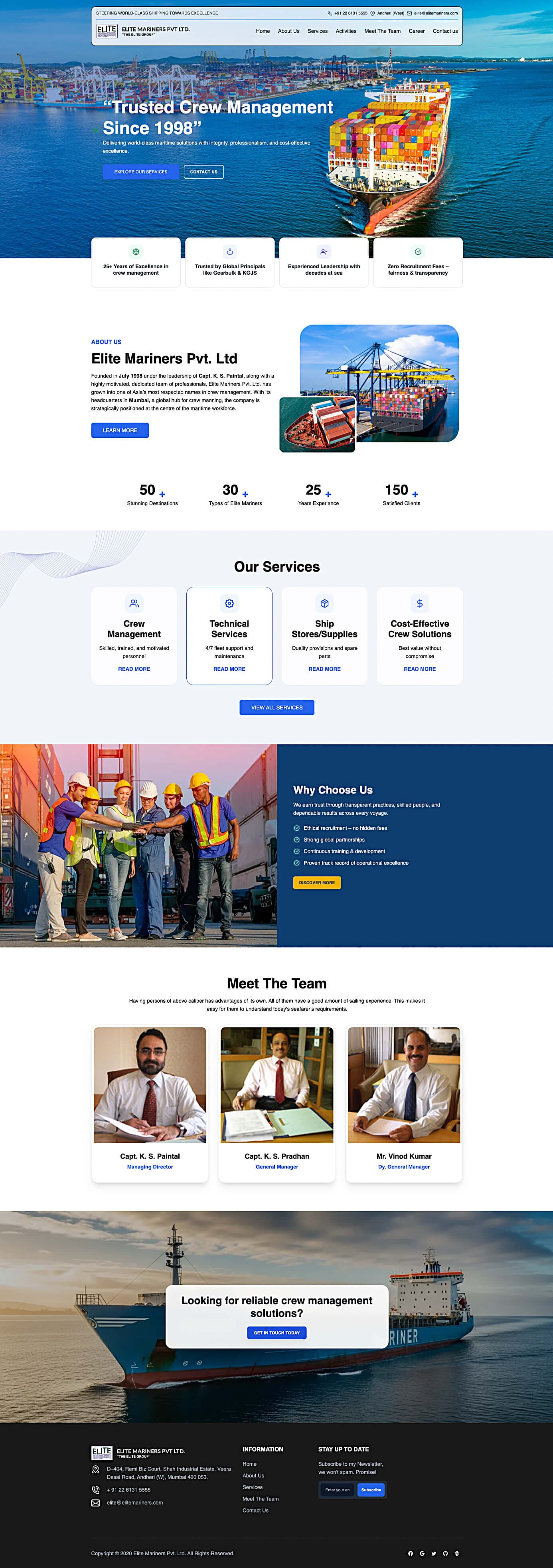
A maritime crew management and technical services website with clear service pages and contact paths.
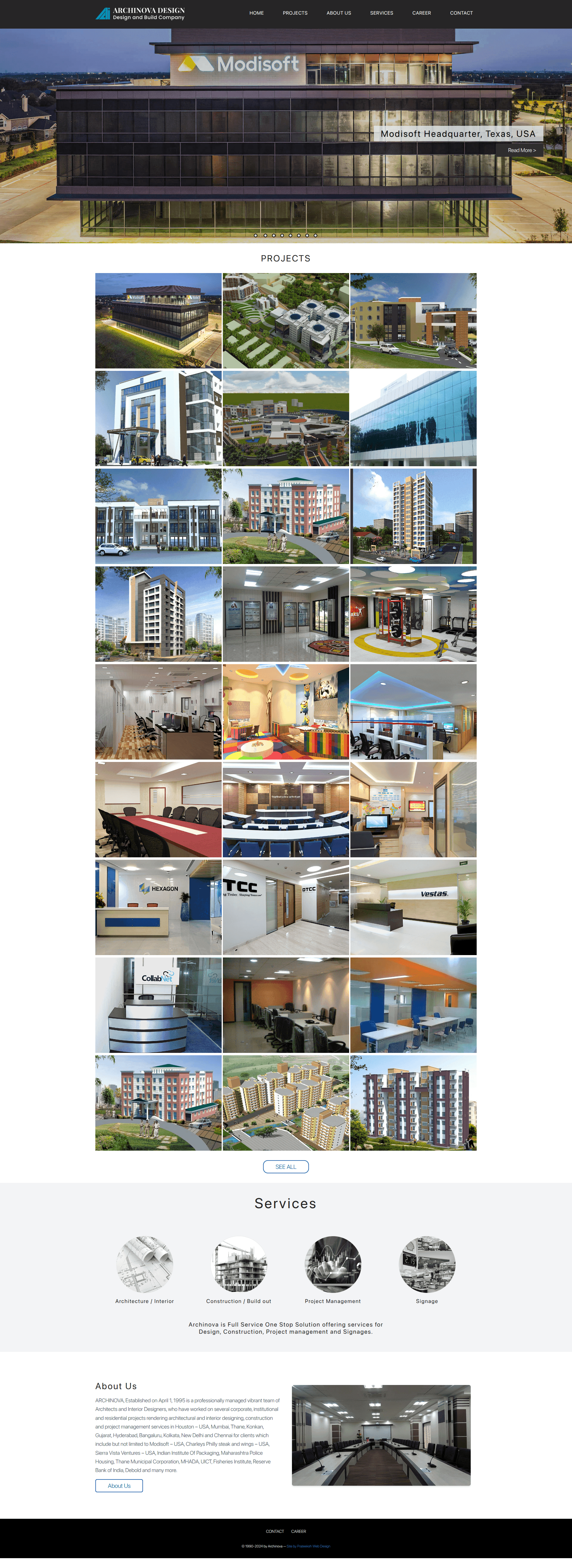
A premium architecture firm portfolio website that presents projects visually and keeps enquiries easy.
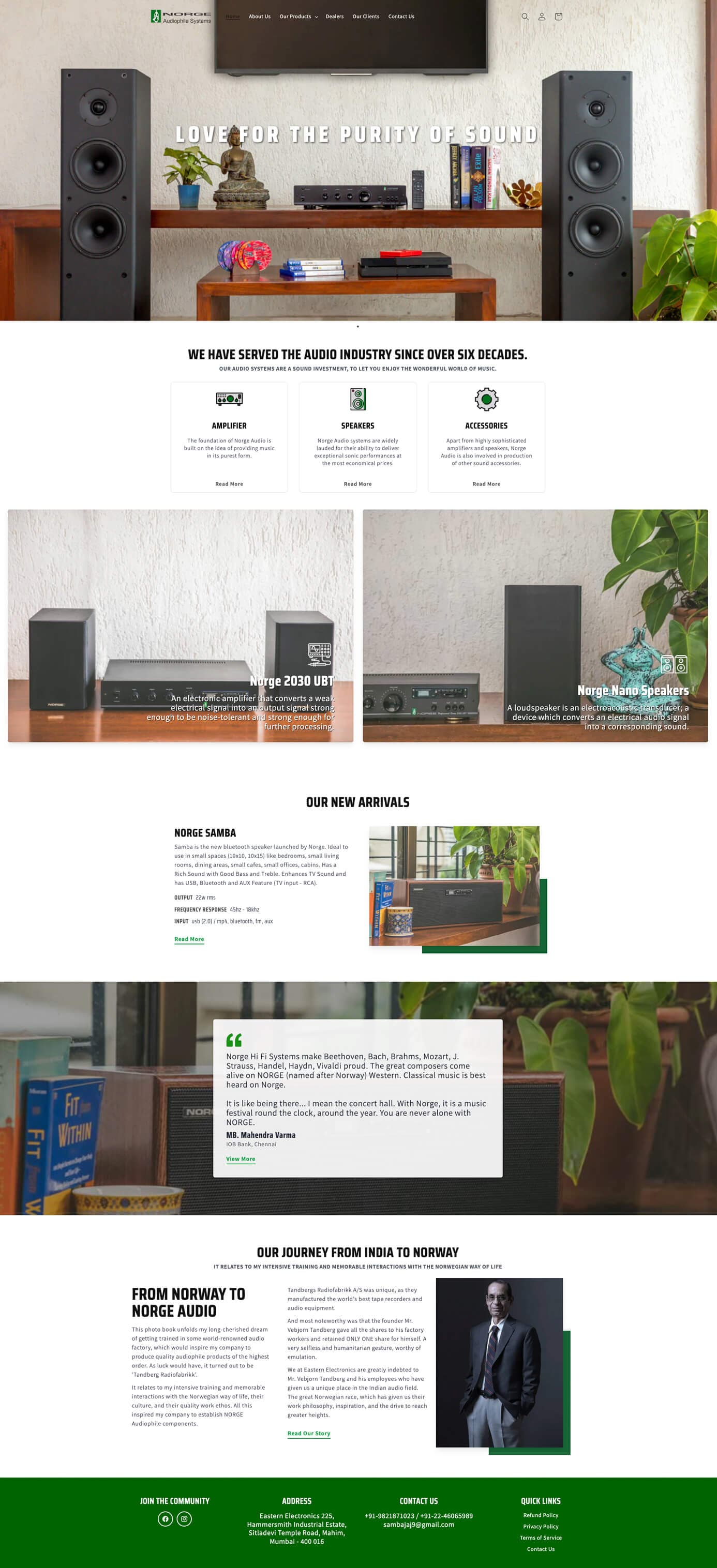
A premium audio ecommerce storefront with product pages and a straightforward buying journey.
FAQs
A website mainly presents information. A web application lets users log in, enter data and complete tasks such as placing requests or viewing records. The second needs more planning around data and permissions.
We commonly work with Laravel for application back ends and Next.js for fast front ends, and use WordPress or Shopify where they fit better. The choice follows your requirements and who will maintain it.
Ownership, access and handover terms are set out in your written proposal or contract before work begins, including any conditions such as payment. Third-party frameworks, packages and hosted services remain under their own licences.
Often yes, if the other system offers an API or an export. We check what the tool actually exposes during discovery before promising a particular integration.
We build in stages and record changes as short written notes with their effect on scope and timing, so you decide with full information instead of finding out later.
This page is about web applications that work in a browser on phones and desktops. If you need a native app for app stores, mention it in your enquiry and we will discuss it separately.
We can review the code first and tell you its condition, then suggest whether to maintain, extend or rebuild it. We do not commit before seeing what is there.
Describe what you need the system to do and who will use it. We will reply with a suggested approach, the technology we would use and an itemised scope, including what is left out.
Share your requirements and any tools you need to connect, and we will outline an approach and what each part involves.
Locations
We proudly serve clients in major cities worldwide, delivering exceptional web design, development, and digital marketing services.