Baseline and gap audit
We begin with an AI search visibility audit across priority buyer questions, inspecting how your entity details, service pages, and technical signals currently appear across organic search and AI answer platforms.
Our AEO and GEO services improve technical accessibility, clean rendering, indexability where applicable, factual consistency, and truthful structured data, strengthening clarity for human visitors and systems that retrieve public web content. Where useful, we also publish llms.txt solely as an optional directory for compatible tools and developer workflows.

Beyond Keyword-Only SEO
Buyers no longer discover service providers solely by clicking ten blue links. Decision-makers increasingly ask detailed scoping, comparison, and technical questions inside Google AI Overviews, ChatGPT, Claude, Perplexity, and Gemini before they ever visit a shortlist of websites.
While many teams search for AI SEO services when trying to adapt, surface-level keyword insertion does not help a language model or answer engine verify what your business actually delivers. Effective AEO and GEO services build on sound technical SEO foundations—pairing answer engine optimization services (clear, self-contained answers to real buyer questions) with generative engine optimization services (consistent entity definitions, validated JSON-LD schema, and machine-readable documentation).
Instead of promising proprietary access to model weights or guaranteed citations, we focus on the controllable technical and editorial signals that make your website easier for both human buyers and retrieval systems to trust, verify, and reference accurately.
We begin with an AI search visibility audit across priority buyer questions, inspecting how your entity details, service pages, and technical signals currently appear across organic search and AI answer platforms.
We standardize how your company name, service taxonomy, locations, and credentials are stated across your pages and public profiles so retrieval systems encounter consistent facts.
We reorganize key commercial routes around direct question-led headings, concise answer blocks, comparison tables, and verified FAQs that serve both human evaluators and answer extraction.
Because generative outputs change across sessions and model updates, we log dated prompt snapshots alongside Google Search Console and consented analytics trends to guide ongoing improvements.
AI Answer & Retrieval Surfaces
Website optimization for ChatGPT and AI search requires understanding how different retrieval-augmented systems and web standards read public pages. We evaluate your content architecture, rendering, and structured data against these major ecosystems:
Clean server-rendered HTML, direct service definitions, and crawler policy review distinguishing OAI-SearchBot (ChatGPT search) and GPTBot (potential model-training collection) from ChatGPT-User (user-triggered page access that does not control ChatGPT Search inclusion and where robots.txt rules may not apply).
Well-structured public pages and crawler policy review distinguishing Claude-SearchBot (search indexing and retrieval), ClaudeBot (content that may contribute to model training), and Claude-User (user-directed retrieval)—plus clear developer docs where coding agents such as Claude Code apply.
Clear, verifiable passages, explicit scope statements, and unambiguous source attribution for retrieval-assisted answer synthesis.
Consistent entity definitions, aligned Organization and Service schema, and connected topic clusters grounded in standard Google Search indexation.
Standard Google Search indexability, snippet eligibility, helpful content, and internal linking—Google Search ignores llms.txt (which neither helps nor harms Google Search visibility) and requires no special AI schema for AI Overviews or AI Mode.
Validated JSON-LD structured data, semantic HTML5 landmarks, XML sitemaps, and optional llms.txt markdown directories for compatible tools and developer workflows.
Platform Independence Notice: OpenAI, ChatGPT, Anthropic, Claude, Perplexity, Google Gemini, Google AI Overviews, and Schema.org are independent third-party platforms and standards that our engineering and editorial work is evaluated against. Their names and icons do not imply partnerships, certifications, endorsements, or guaranteed distribution channels.

Answer Engine Optimization structures clear, direct, and accurate answers to specific commercial and technical questions so passages can be understood without ambiguity.
Generative Engine Optimization reduces ambiguity in service, organization, and entity descriptions through cross-source consistency, validated structured data, and clean machine-readable content.
Together, an AEO and GEO optimization strategy improves the clarity and consistency of information available on the public website and supports technical eligibility where applicable—while platform vendors retain control over retrieval, selection, summaries, and citations.
Commercial & Technical Diagnostics
Even companies with strong domain history can be omitted or mischaracterized in AI-generated answers when their site structure leaves key facts ambiguous. Common risks that reduce clarity and technical eligibility include:
When your company name, core offerings, service areas, or credentials vary across your homepage, service pages, and external profiles, generative models may struggle to disambiguate your business from similarly named organizations.
Pages filled with broad slogans instead of explicit scope definitions, deliverables, suitability criteria, and direct answers give answer engines very little extractable substance to summarize.
Outdated legacy pages, duplicate service routes, or mismatched visible FAQs and schema markup create contradictory signals that reduce confidence during retrieval and synthesis.
Important commercial explanations hidden inside client-side JavaScript tabs, blocked by overly restrictive robots.txt rules, or split across non-canonical URLs may create rendering or retrieval risk for search and AI crawlers.
Unbacked claims of being the "#1 agency" without concrete methodology, deliverables, or verifiable governance weaken credibility with both discerning human buyers and retrieval systems.
Most teams track traditional keyword positions in isolation without recording how ChatGPT, Claude, Perplexity, Gemini, or Google AI Overviews actually describe their business when buyers ask comparison or scoping questions.
Select a capability below to inspect how we handle baseline audits, answer structuring, entity alignment, platform readiness, optional llms.txt creation, FAQ writing, and schema markup.
Establish a factual baseline of how your brand, services, and core buyer questions currently appear across organic search and AI answer platforms.
Before rewriting pages or adding technical files, we perform an AI search visibility audit across your priority service categories and buyer prompts. We review how ChatGPT, Claude, Perplexity, Gemini, and Google AI Overviews currently summarize your company, where facts are missing or contradictory, and which pages lack extractable answers. Because generative responses vary by model, session, and location, we treat prompt tests as point-in-time diagnostic snapshots rather than permanent scores. Those findings are paired with a technical crawl and entity inventory to build a prioritized AEO and GEO optimization strategy aligned with your commercial goals.
Builds a prioritized, evidence-based roadmap covering editorial gaps, entity ambiguities, and technical blockers.
Structure commercial and educational pages so buyers and answer engines can extract clear, accurate, and self-contained explanations.
Our answer engine optimization services focus on how information is organized and phrased on your most important pages. When prospective buyers ask specific questions about scope, pricing models, suitability, implementation steps, or technical comparisons, pages buried in vague marketing prose are rarely surfaced or summarized accurately. We restructure headings around genuine buyer questions, place concise lead answers immediately below each heading, and back them with scannable specifications, tables, and boundary conditions. This improves comprehension for human decision-makers while making passages easier for search features and answer engines to parse without distorting your meaning.
Transforms dense or promotional copy into clear, passage-level answers that serve both human evaluators and answer extraction systems.
Strengthen entity disambiguation, source consistency, and verifiable context so generative models can connect your brand to the right topics.
Generative engine optimization services address how large language models and retrieval-augmented systems synthesize information across multiple documents. If your company name, service taxonomy, locations, or leadership credentials differ across your website, documentation, and third-party directories, retrieval systems may struggle to disambiguate your organization or connect your pages accurately. We standardize your entity vocabulary, connect related service and solution pages through deliberate semantic internal linking, and document verifiable proof points such as methodology, deliverables, and authorship. Clearer entity relationships support discoverability and technical eligibility across generative summaries without relying on manipulative tactics.
Aligns brand identity, service relationships, and supporting evidence so generative retrieval systems encounter consistent facts.
Support crawlability, clean HTML rendering, and intentional crawler policies across major search and AI answer ecosystems.
Website optimization for ChatGPT and AI search removes technical barriers that create rendering or retrieval risk on public pages. We verify server-rendered HTML so copy is not hidden behind client-side JavaScript, check canonicals and sitemaps, and review robots.txt rules by agent purpose: OpenAI’s OAI-SearchBot (ChatGPT search), GPTBot (potential model-training collection), and ChatGPT-User (user-triggered page access, not used to determine ChatGPT Search inclusion, where robots.txt may not apply); Anthropic’s Claude-SearchBot (search indexing/retrieval), ClaudeBot (model-training collection), and Claude-User (user-directed retrieval); and published policies for other platforms. For Google AI Overviews and AI Mode, we strengthen standard Search indexability, snippet eligibility, and internal linking.
Supports clean server-rendered HTML and intentional crawler policies across search engines, AI answer platforms, and developer documentation.
Publish an optional, curated markdown index at /llms.txt to help compatible tools and developer workflows locate your canonical pages.
An llms.txt file is an emerging, voluntary convention and optional publishing format (llmstxt.org) that provides a concise markdown directory of a website’s canonical routes, service definitions, and documentation links. Google Search ignores llms.txt—meaning it neither helps nor harms Google Search visibility—and requires no special machine-readable AI file for AI Overviews or AI Mode, and not every AI model or search crawler automatically reads llms.txt. Rather than presenting llms.txt file creation as a ranking, citation, discovery, indexing, or eligibility signal, we implement it solely as an optional directory for compatible tools and developer workflows, with governance to keep route summaries current.
Provides an optional, machine-readable directory of canonical URLs and summaries for compatible tools without overstating platform support.
Research real buyer objections and technical questions, then write direct, verified answers synchronized between visible copy and schema.
Effective FAQ writing for answer engines starts with real commercial questions gathered from sales conversations, support tickets, search queries, and competitor gaps. Instead of padding pages with generic filler questions, we cluster high-intent questions by topic and stage of evaluation. Each answer is written to open with a direct, plain-language statement followed by accurate scope conditions, technical specifics, and next steps. Every answer undergoes factual review against your actual capabilities, and the visible FAQ component is wired to the exact same data source as your FAQPage JSON-LD so visible text and structured data never drift apart.
Addresses buyer decision criteria directly on the page while maintaining strict parity between visible FAQs and JSON-LD markup.
Implement validated JSON-LD schema that explicitly defines your organization, services, breadcrumbs, and page relationships.
Structured data and schema markup for AI search give search engines and knowledge graphs explicit, machine-readable labels for the entities described on your page. Google requires no special AI schema for AI Overviews or AI Mode, and schema markup does not force AI citations or rankings. Validated Organization, WebPage, and Service JSON-LD reduce ambiguity about your business and services, while supported types such as BreadcrumbList can aid standard Search appearance. Because Google discontinued FAQ rich results in May 2026, we maintain synchronized FAQPage JSON-LD strictly for machine-readable parity with visible FAQs—never as a Google FAQ rich-result claim—and validate every property against visible page copy.
Reduces structural ambiguity for search parsers and knowledge graphs through truthful, validated JSON-LD implementation.
AEO and GEO sit at the intersection of technical web engineering, structured data, and editorial precision. We ground our work in verifiable engineering and content practices rather than hype:
We do not apply a generic checklist to every site. Every engagement starts by auditing your existing search footprint, entity consistency, rendering behavior, and buyer prompt snapshots so work focuses on real bottlenecks.
AEO and GEO require both clear writing and clean code. We handle content structuring and technical implementation together across Next.js, WordPress, Shopify, and Laravel codebases so question-led copy, SSR fixes, and crawler policies stay aligned.
We write and validate Organization, Service, WebPage, BreadcrumbList, and synchronized FAQPage JSON-LD from controlled server-side objects, ensuring structured data matches the visible text on every page.
We document prompt checks as dated, caveated snapshots rather than fabricated visibility scores, combining qualitative answer reviews with Google Search Console indexing and consented analytics data.
Whether you engage us for a one-time implementation or ongoing refinement, we leave behind clean templates, single-source FAQ structures, and an llms.txt governance checklist your team can maintain.
Every deliverable is reviewed against three engineering and editorial verification checkpoints before deployment:
Primary service copy, entity definitions, and FAQs render in initial HTML with explicit canonical tags, clean HTTP responses, and intentional crawler rules.
JSON-LD graphs for Organization, Service, FAQPage, BreadcrumbList, and WebPage match visible copy without fabricated claims.
Dated prompt observation logs are recorded as point-in-time snapshots alongside Google Search Console indexing and query performance.
We coordinate AEO and GEO execution with your broader organic SEO architecture, online presence and authority, and local SEO profiles so every channel reinforces the same facts.
Delivery Workflow
Every stage produces a concrete client-visible deliverable and a clear review checkpoint before we advance to the next phase—without promising fixed ranking or citation timelines.
How do search engines and AI systems currently interpret and summarize your business?
We inspect crawlability, server-side rendering, canonical hygiene, existing JSON-LD, and entity consistency, alongside dated baseline prompt observations across ChatGPT, Claude, Perplexity, Gemini, and Google AI Overviews. Output: AI Search Visibility Baseline Audit & Gap Report • Checkpoint: Approve priority commercial pages, target query themes, and technical remediation scope.
Which buyer questions, entities, and canonical URLs should own each commercial topic?
We define your official entity glossary, map core commercial and long-tail buyer questions to distinct routes, and establish cannibalization boundaries between your AEO/GEO pages, traditional SEO pages, and blog guides. Output: Entity Glossary, Question Cluster Map & Canonical Route Plan • Checkpoint: Sign off on page ownership and question architecture before copy drafting.
Do your pages answer buyer questions directly with verifiable scope and clear formatting?
We rewrite or refine priority sections with question-led headings, concise direct-answer openings, structured deliverable lists, and factually reviewed FAQs so both human buyers and answer engines can extract accurate context. Output: Answer-Ready Page Copy & Synchronized FAQ Specifications • Checkpoint: Editorial and factual accuracy sign-off on all revised copy.
Are schema markup, semantic HTML, crawler policies, and optional llms.txt files properly deployed?
We implement validated Organization, Service, WebPage, BreadcrumbList, and FAQPage JSON-LD, publish or update an optional /llms.txt index where appropriate, and verify robots.txt, XML sitemaps, and server-rendered HTML across target templates. Output: Deployed JSON-LD Schema, Optional /llms.txt File & Technical Accessibility Updates • Checkpoint: Pass structured-data syntax validation and staging render checks.
How are indexing health, organic queries, and observed AI answers evolving after deployment?
After launch, we verify Google Search Console indexation, run follow-up prompt snapshot comparisons across priority buyer questions, and review consented landing-page enquiries to prioritize the next editorial or technical iteration. Output: Post-Deployment Verification Log & Periodic Snapshot Review • Checkpoint: Review observed changes and agree on next-cycle refinements.
Start With a Technical & Editorial Review
Whether you need a standalone AI search visibility audit, a full implementation of answer-ready service pages, FAQs, JSON-LD schema, and llms.txt, or ongoing refinement, our first conversation focuses on practical diagnostics:
llms.txt suitability, and priority AI ecosystems.Share your website URL and priority service areas. We will review your current structure before our call.
Selected Work
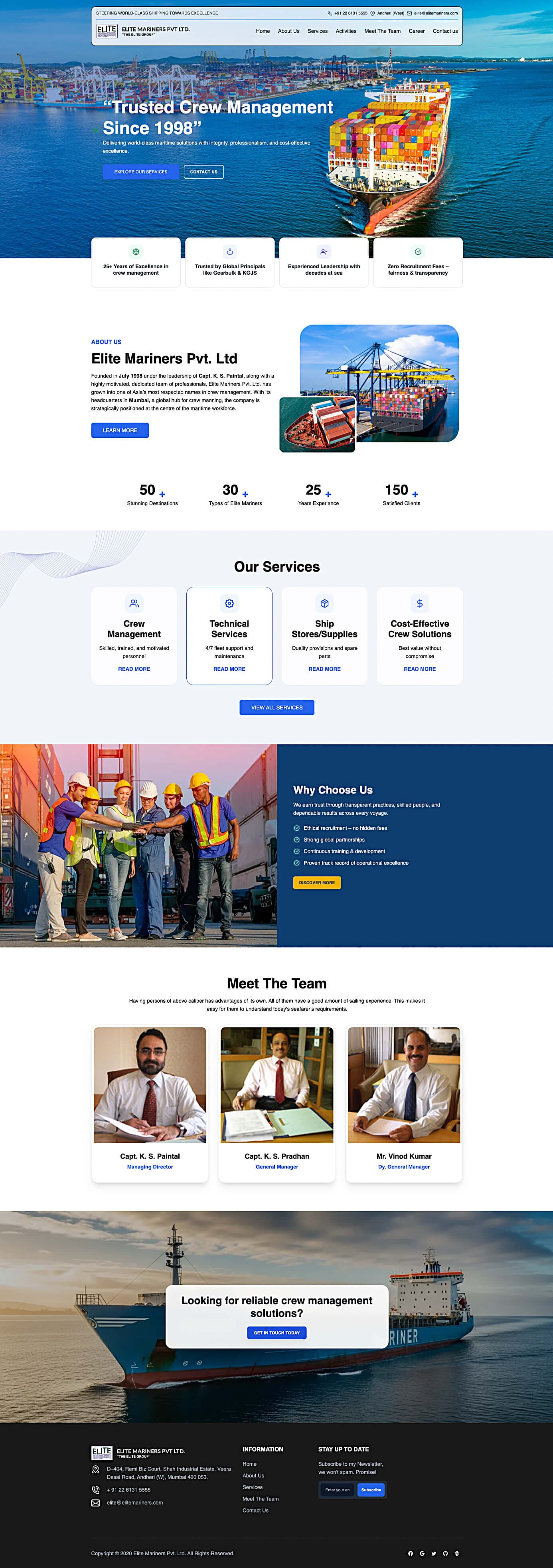
Corporate website architecture and service taxonomy built to present maritime crew management, technical services, and structured enquiry paths clearly.
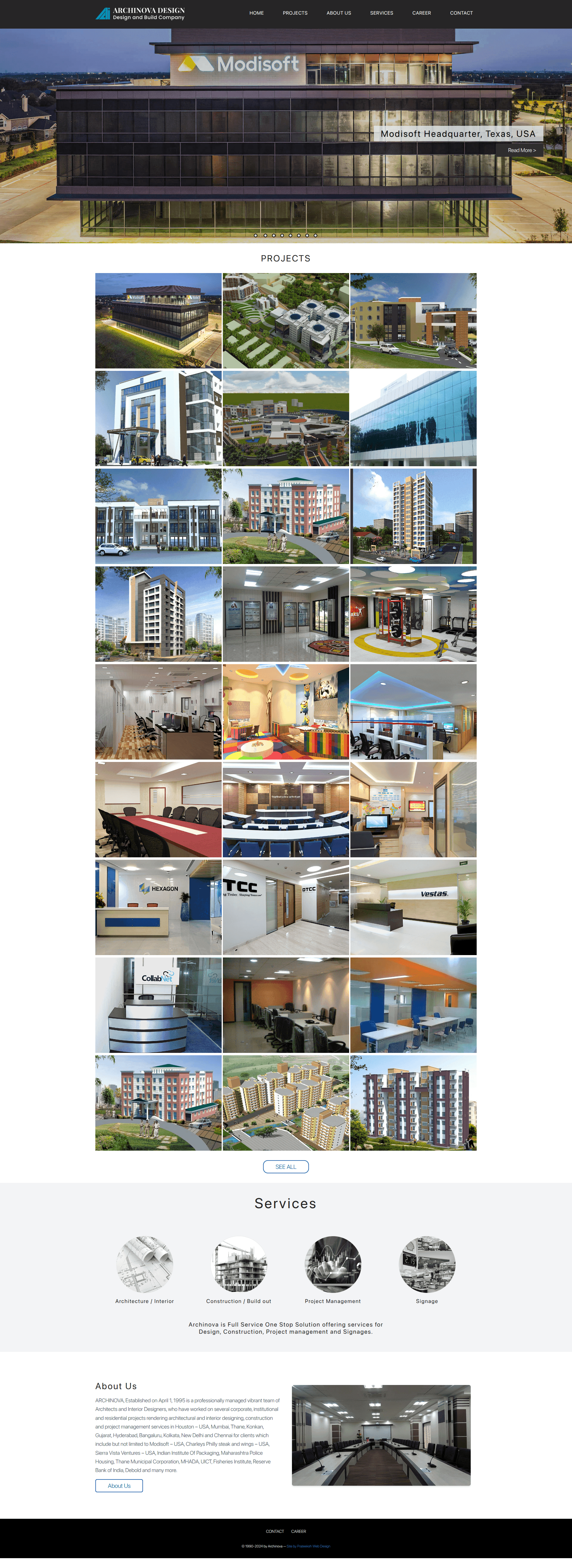
Structured portfolio and service hierarchy for an architecture practice, organizing commercial and residential project categories with clean navigation and consultation paths.
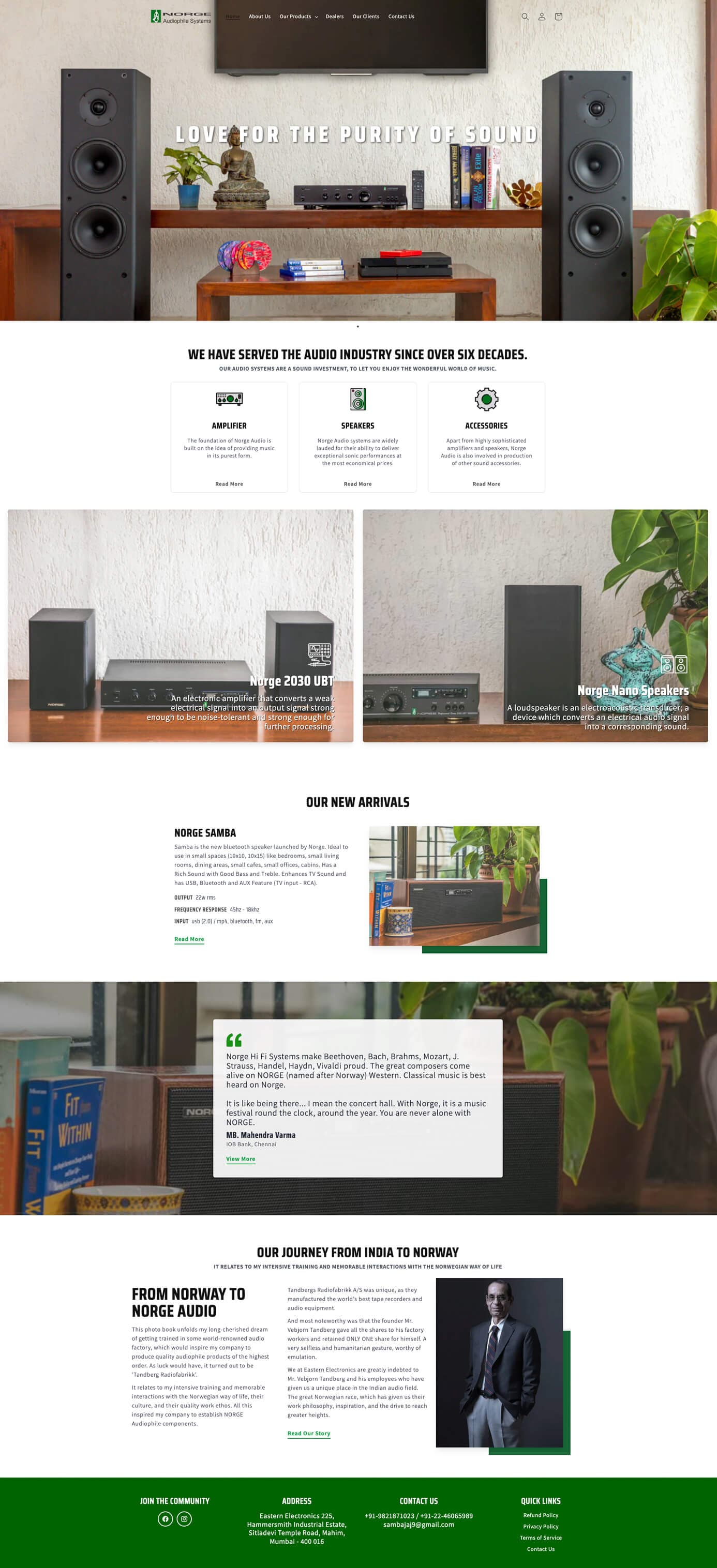
Product-led catalogue and brand website organizing audio equipment categories, technical specifications, and customer enquiry flows in a fast, crawlable layout.
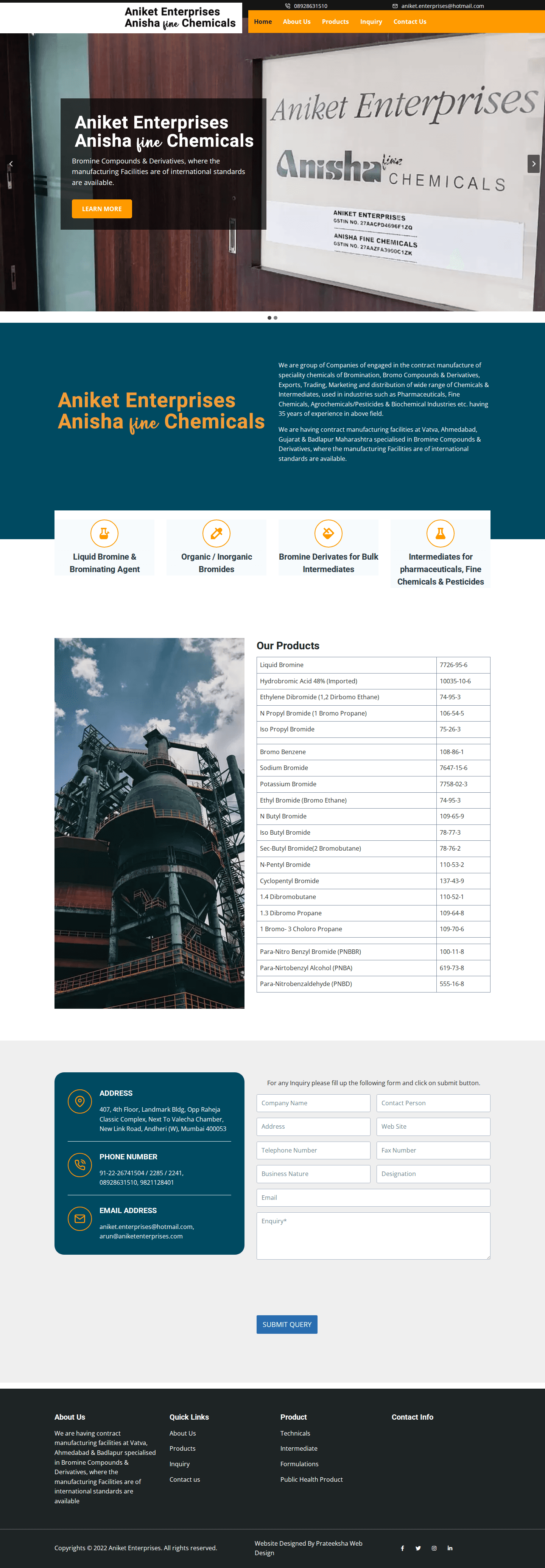
B2B trading and manufacturing website structured around clear product categories, semantic headings, and direct buyer contact paths.
FAQs
Direct answers regarding Answer Engine Optimization, Generative Engine Optimization, llms.txt, schema markup, and realistic measurement.
Need a technical review of how your business is summarized across search and AI answer platforms? Use the consultation form above to share your URL.
Answer Engine Optimization (AEO) is the practice of structuring and writing web pages so search features, voice assistants, and AI answer systems can extract clear, direct, and accurate responses to specific buyer questions. It emphasizes question-led headings, concise lead answers, scannable lists or comparison tables, and verified FAQ sections that match visible page content.
Generative Engine Optimization (GEO) focuses on helping large language models and retrieval-augmented AI systems understand who your business is, what services you provide, and how your pages relate to one another. It combines entity disambiguation, consistent facts across pages and public profiles, semantic internal linking, validated JSON-LD structured data, and clean machine-readable documentation.
Traditional SEO remains an essential technical foundation because crawlability, indexation, site speed, and page authority still govern whether search engines and retrieval crawlers can discover your pages. While buyers often search for AI SEO services as an umbrella term, AEO and GEO extend traditional SEO by focusing on passage-level answer clarity, cross-source entity consistency, and machine-readable context for generative synthesis.
We improve the clarity, consistency, and technical accessibility of your public website across these ecosystems. That includes clean server-rendered HTML, direct service definitions, structured FAQs, validated JSON-LD, and reviewing crawler policies by documented purpose: OpenAI’s OAI-SearchBot (ChatGPT search), GPTBot (potential model-training collection), and ChatGPT-User (user-triggered page access that is not an automatic crawler used to determine ChatGPT Search inclusion and where robots.txt rules may not apply), alongside Anthropic’s Claude-SearchBot (search indexing and retrieval), ClaudeBot (content that may contribute to model training), and Claude-User (user-directed retrieval), plus published crawler policies for other platforms. For Google AI Overviews and AI Mode, standard Search indexability, snippet eligibility, helpful content, and internal linking remain the foundation. Where your business publishes developer documentation or code repositories, we also structure markdown for coding agents such as Claude Code.
An llms.txt file is an emerging, voluntary convention and optional publishing format (llmstxt.org) placed at /llms.txt that provides a concise markdown directory of your canonical pages, documentation, and service summaries. Google Search ignores llms.txt—so publishing one neither helps nor harms Google Search visibility—and requires no special AI file for AI Overviews or AI Mode, and not every AI model or search crawler automatically reads llms.txt. It is not a ranking, citation, discovery, indexing, or eligibility signal, and is used only as an optional directory for compatible tools and developer workflows.
No. Google requires no special AI schema for AI Overviews or AI Mode, and schema markup does not trigger or guarantee AI citations. Validated Organization, Service, and WebPage JSON-LD reduce ambiguity in entity and service descriptions, while supported Search feature types such as BreadcrumbList can support standard Search appearance where applicable. Because Google discontinued FAQ rich results in May 2026, we use synchronized FAQPage JSON-LD strictly as a machine-readable representation of visible page questions rather than a Google FAQ rich-result feature.
Our baseline audit evaluates four areas: (1) how your brand and services are summarized across a defined set of commercial and comparison prompts in major AI tools, (2) whether your core entity facts are consistent across your site and public profiles, (3) where key buyer questions lack clear, extractable answers on your pages, and (4) technical barriers in rendering, robots directives, canonicals, sitemaps, and JSON-LD.
Generative AI outputs are non-deterministic and vary by model version, user session, geographic location, and time. No outside agency has proprietary access to private vendor ranking or retrieval weights. We monitor progress honestly by recording dated prompt observations as point-in-time snapshots alongside verifiable Google Search Console indexing, query impressions, and consented website enquiry trends.
Scope and timing depend on site size, template count, stakeholder review, implementation access, and remediation complexity. We provide a tailored estimate after completing the baseline review of your pages, templates, and technical architecture. Because search recrawling and model retrieval cycles operate on third-party vendor schedules, we never promise fixed delivery, ranking, indexing, or citation timelines.
No. Third-party search engines and AI platforms control their own retrieval pipelines, training data, safety filters, selection, summaries, and citation logic. We never promise guaranteed citations, rankings, recommendations, indexing, traffic lifts, lead totals, or revenue outcomes. Our work supports technical eligibility and improves the clarity and consistency of information available on your public website.
Yes. You can engage Prateeksha for a standalone AI search visibility audit and strategy blueprint, a scoped implementation project covering core service pages, FAQs, schema, and optional llms.txt documentation, or an ongoing retainer that combines AEO, GEO, and technical SEO refinement as your offerings expand.
Locations
We proudly serve clients in major cities worldwide, delivering exceptional web design, development, and digital marketing services.