A Plain-Language Overview
What is AI automation,
and is it right for your business?
"AI automation" often gets used to mean a fully autonomous, unsupervised system that makes decisions on its own. That is not what we build, and it is not what this page is about. This is a short, honest explainer of what automation actually involves — rules-based steps and AI-assisted steps, kept genuinely distinct, with a human review point built in. For the full workflow-discovery-to-production process, see our AI automation consultancy service — this page is a shorter starting point that carries forward the same safety controls, not a softened version of them.

This page is a plain-language overview of AI automation, subordinate to our AI automation consultancy service for the full process. Automation here means rules-based, deterministic steps kept genuinely distinct from probabilistic AI-assisted steps, with a human review point before anything is published or acted on. AI-generated output is never used to drive high-impact decisions without human review, and automation is never autonomous for consequential outcomes. Data minimization and least-privilege, role-based access are applied by default. Audit logging, retry and failure handling, and a genuine pause or disable control are built into every automation. Models can hallucinate, misclassify, or behave differently after a vendor change. No compliance certification is claimed, and no cost reduction, accuracy or ROI outcome is promised.
A common misunderstanding
“AI automation” often gets pitched as something it isn’t.
- 01
Assumed to be fully autonomous
"AI automation" gets read as a system that makes decisions on its own, with no one checking the output.
- 02
Treated as a guaranteed cost cut
Vague promises of reduced costs or eliminated manual work, with no honest discussion of what actually depends on your process and data.
- 03
Rules and AI blurred together
Deterministic automation and probabilistic AI assistance get pitched as one undifferentiated thing, hiding that they behave very differently.
- 04
No mention of what happens when it is wrong
Failure handling, exception logging and a way to stop the automation are left out of the pitch entirely.
What this page explains instead
A plain, honest description of what automation actually is here — and a human review point built in from the start.
This overview keeps things simple on purpose. For the full workflow-discovery-to- production process with the same safety controls described in detail, see our AI automation consultancy service. If you already know you want a bounded, productized starting point, see our AI automation package for content & leads. If your process needs a bespoke tool instead of an automation layer, see our custom web application development service, or request a quote and we will scope it honestly either way.
- Rules-based automation and AI-assisted steps kept genuinely distinct
- A human review step before anything is published or acted on
- No autonomous high-impact decisions, ever
- Data minimization and least-privilege, role-based access by default
- Audit logging, retry/failure handling and a pause/disable control built in
What's built in
The controls that make automation trustworthy — not an afterthought.
These are core to how we scope any automation, plain-language overview or full engagement alike.
A human review step
Human-in-the-loop
Data minimization
Data minimization
Least-privilege access
Least-privilege
Audit logging
Audit log
Retry & failure handling
Failure handling
A pause/disable control
Pause/disable
Model-fallibility awareness
Model fallibility
No compliance certification claimed
Honest boundary
Where to go from here
Three honest next steps, depending on how far along you are.
This overview does not scope a project on its own — it routes you to the right next step.
Just exploring
Read this page, then talk through your specific process with us — no commitment required.
Want the full picture
See our AI automation consultancy service for the complete discovery-to-production process.
Want a bounded starting point
See our productized package for one content-or-lead workflow, scoped and reviewed.
Have something more custom in mind
Some workflows need a bespoke application rather than automation layered on top — we’ll say so if that’s the case.
What changes
“AI everywhere” vs. scoped, supervised automation, in plain terms.
Both use AI. The honest difference is whether a person reviews the output before anything consequential happens.
Choose your starting point
Three honest starting points, depending on where you are.
Each is a legitimate next step — you decide how far to take it after reading.
Just exploring
Talk it through
Not sure if automation fits your process yet? Start with the full discovery-led conversation.
- An honest assessment of whether automation fits
- The full workflow-discovery-to-production process
- The same safety controls, explained in detail
- No commitment required to have the conversation
Recommended
The productized offering
Want to see a bounded, packaged starting point for one content-or-lead workflow?
- One workflow, clearly scoped
- Human review checkpoints, audit logging, a pause control
- A written proposal before any pilot work begins
- Explicit poor-fit boundaries, stated plainly
Something more custom
A bespoke workflow app
Some processes need a custom application built around them, not automation layered onto existing systems.
- A workflow that doesn’t fit an automation layer cleanly
- An internal tool built around your specific process
- An honest recommendation either way
- Scoped in a written proposal
What any automation engagement includes, at minimum
Documented process map
The current workflow written down, including its exceptions, before anything is automated.
A defined human review step
A checkpoint before anything with a consequential outcome is published or acted on.
Exception logging
A record of anything the automation could not confidently handle, reviewed rather than hidden.
Scoped security practices
Least-privilege, role-based access matched to what the specific workflow actually touches.
A pause/disable control
A real operational control to stop an automation immediately, no ticket required.
Handover documentation
How the automation operates, where the review step sits, and how to extend or pause it.
Website Design

A confident, finance-grade website for Wise Business Plans, a business plan and funding advisory firm serving founders, investors and USCIS immigration cases.

A luxurious, architecture-led website for TouchKey, India's premium smart biometric door lock brand, built around real product photography and genuine installation galleries.
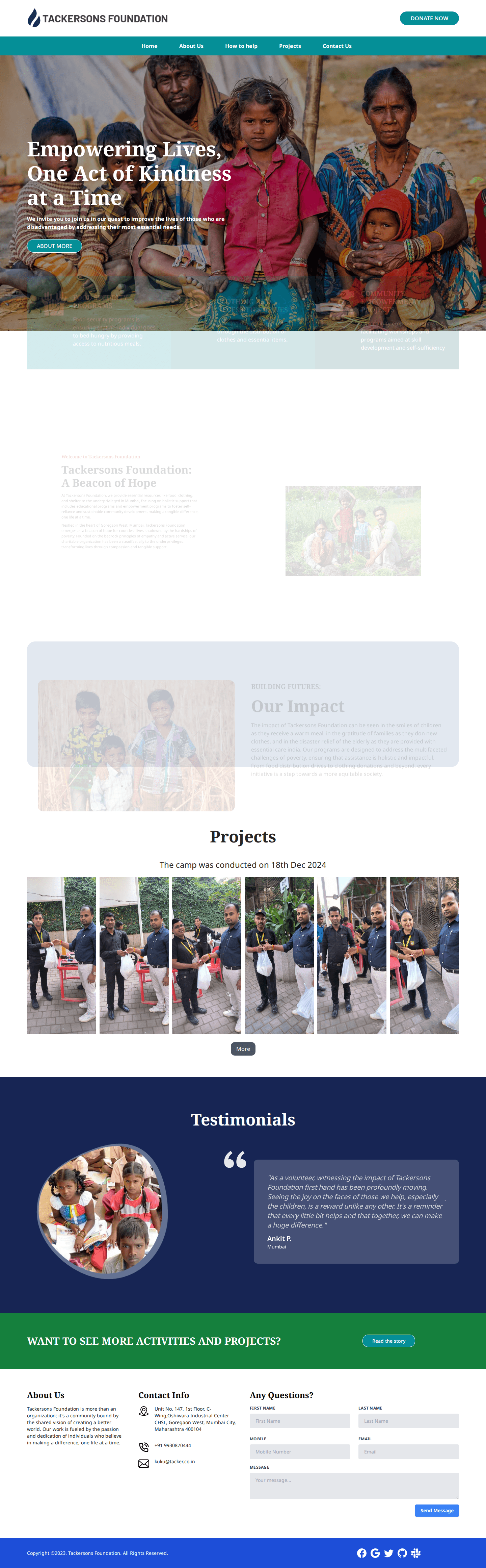
A warm, credibility-driven website for Tackersons Foundation, a Mumbai charitable nonprofit, built around genuine relief-camp photography and a real Certificate of Incorporation.
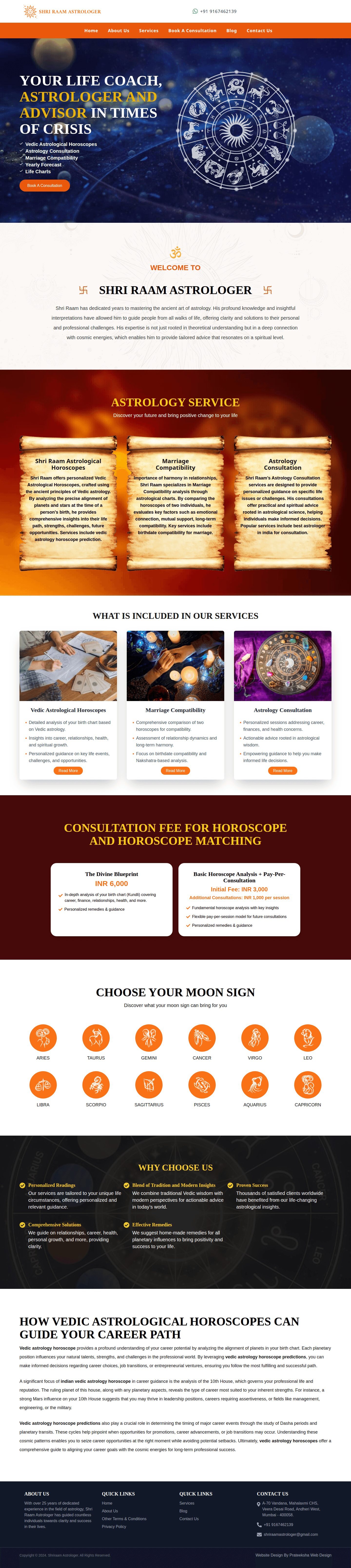
A warm, credible website for Shri Raam Astrologer, a Mumbai Vedic astrology practice, built around a glowing zodiac wheel hero and tasteful parchment-scroll service graphics.

A confident, near-black portfolio website for Pulp, an independent Bandra brand strategy and design agency, built around a striking mixed-media project grid and personal partner bios.

A cinematic, tech-forward website for PolicyGrace, a Mumbai InsurTech insurance broker, built around a striking eagle hero photograph and real dashboard mockups.

Wise Business Plans
A confident, finance-grade website for Wise Business Plans, a business plan and funding advisory firm serving founders, investors and USCIS immigration cases.

TouchKey
A luxurious, architecture-led website for TouchKey, India's premium smart biometric door lock brand, built around real product photography and genuine installation galleries.
Tacker
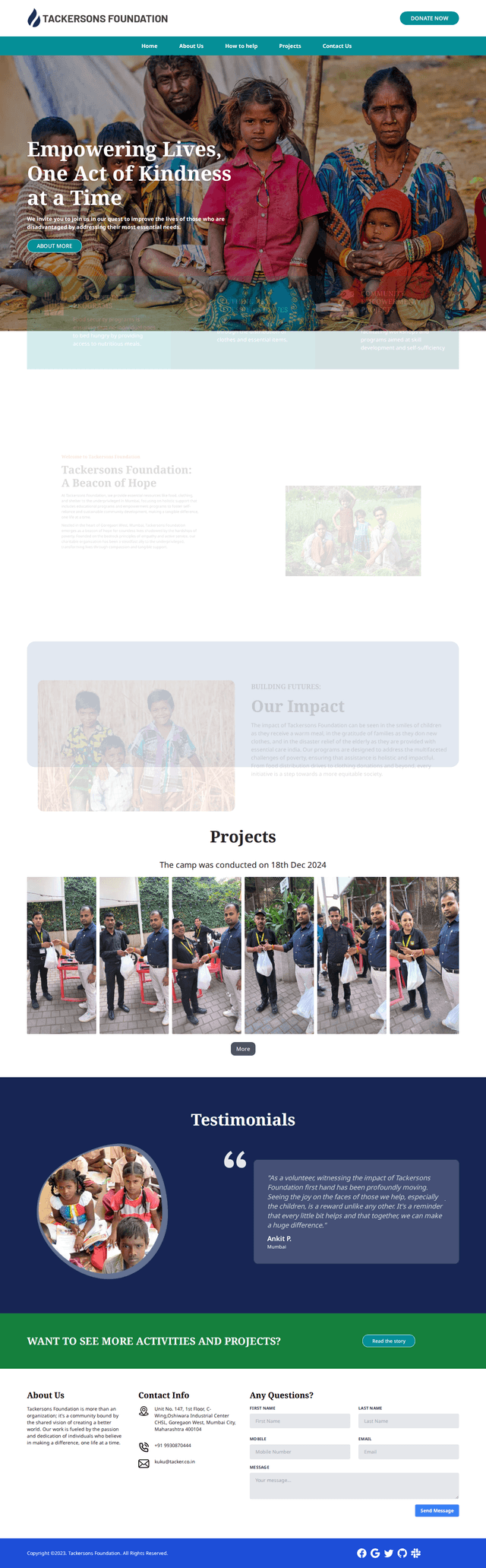
A warm, credibility-driven website for Tackersons Foundation, a Mumbai charitable nonprofit, built around genuine relief-camp photography and a real Certificate of Incorporation.
Shri Raam Astrologer
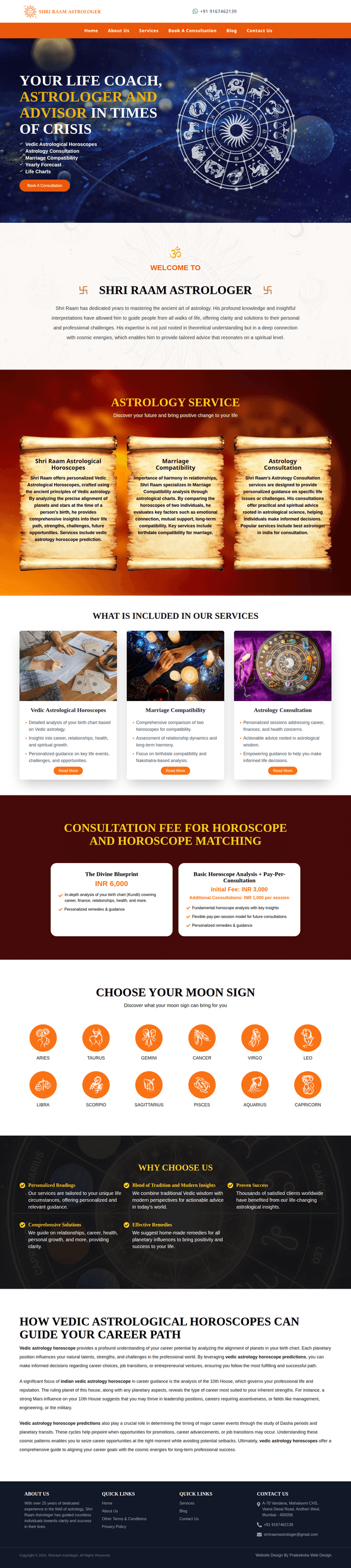
A warm, credible website for Shri Raam Astrologer, a Mumbai Vedic astrology practice, built around a glowing zodiac wheel hero and tasteful parchment-scroll service graphics.

Pulp India
A confident, near-black portfolio website for Pulp, an independent Bandra brand strategy and design agency, built around a striking mixed-media project grid and personal partner bios.

Policy Grace
A cinematic, tech-forward website for PolicyGrace, a Mumbai InsurTech insurance broker, built around a striking eagle hero photograph and real dashboard mockups.











Ready to talk through a specific workflow?
Start with an honest conversation, not a platform pitch.
Tell us about the process you're considering automating. You'll get an honest assessment of whether it fits, before any commitment.
FAQs
AI automation — frequently asked questions.
Straight, plain-language answers on what automation is, and what it deliberately is not.
Not sure if your process is a good fit? Tell us about it and we'll advise honestly, including if it is not.
No — and that is a common misunderstanding worth clearing up first. What we build is never autonomous for high-impact decisions. Every workflow includes a human review step before anything consequential is published or acted on. AI-assisted output (a draft, a classification, a summary) is a starting point for a person to review, not a decision made on its own.
Rules-based automation (moving data between systems, routing a lead, sending a notification) is deterministic — it behaves the same way every time. AI-assisted steps (drafting content, classifying a message) are probabilistic — they can be wrong, need review, and cannot be assumed correct by default. We keep these genuinely distinct rather than treating everything as one undifferentiated "AI" offering, matching the approach on our full AI automation consultancy page.
Only what a specific workflow genuinely needs — we apply data minimization by default rather than collecting or processing more than a workflow requires. Access is scoped too: least-privilege, role-based access matched to what that workflow actually touches, not broad standing access to every system.
Every automation we scope includes audit logging — a record of what happened and why, so it can be reviewed rather than taken on faith. If a step fails or hits something unexpected, retry and failure handling is built in rather than left to fail silently.
Yes. A genuine pause or disable control is part of every automation we scope — your team can stop it at any time without needing us involved, then review what happened before deciding what to do next.
Yes, and we say so plainly. Language models can hallucinate facts that were never true, misclassify a lead or message, omit relevant context, or behave differently after the underlying vendor changes the model. That is exactly why human review, audit logs and a pause control are core parts of any automation we scope, not optional extras.
No, and we will not claim that from this page or any other. We do not offer or imply any compliance certification. If your workflow is regulated or touches sensitive personal data, that determination is your own legal or compliance function’s responsibility, and we will say so plainly rather than imply otherwise.
This page is a shorter, plain-language overview. Our AI automation consultancy service covers the full process — workflow discovery, pilots, production rollout — in detail, with the same safety controls described here.
See our AI-powered automation package for content and leads — a scoped pilot for one content-or-lead workflow with the same human review, audit logging and pause-control commitments described on this page.
Some processes need a bespoke internal tool rather than an automation layered onto existing systems. See our custom web application development service, or request a quote and we will scope it honestly either way.
Locations
Explore Our Locations
We proudly serve clients in major cities worldwide, delivering exceptional web design, development, and digital marketing services.