Browsable Catalogue
Categories, filters and product pages are structured so shoppers can compare items quickly and your team can add new lines without rework.
An online store is a catalogue, a checkout and a set of daily operations. We build all three: product structure that shoppers can browse, a mobile checkout that suits how Indian customers pay, and back-office settings your team can run without developer help.

Mumbai brands and retailers often start with a handful of products and a payment link, then outgrow it. Our ecommerce website development in Mumbai begins with how your catalogue, orders and fulfilment actually work, and then shapes the store around that routine.
We build on Shopify where it fits and on custom platforms where your process demands it. Catalogue structure, mobile checkout, payment and shipping setup are agreed in writing before work starts. A well-built store makes buying easier; it cannot guarantee a particular level of sales.
Categories, filters and product pages are structured so shoppers can compare items quickly and your team can add new lines without rework.
A short checkout designed for phones, with the payment options Indian customers commonly expect, tested before the store goes live.
Courier, tax and payment gateway settings are configured with your own accounts, so day-to-day changes stay in your hands.
Your staff are shown how to manage products, orders and offers, with written notes to refer to after launch.
These are platforms and tools used in delivering this service, not clients and not official partnerships, certifications, or endorsements, and they carry no promise of performance. Each link opens in a new window.
A hosted ecommerce platform covering product pages, payments, and checkout.
An open-source store plugin for WordPress when you want more control over the build.
A payment gateway commonly connected to Indian online stores for UPI, card and wallet payments.
Store reporting used to see how visitors move from product page to checkout.

A store earns trust one product page and one checkout step at a time.
Clear pricing, honest delivery information and a simple payment path help a shopper complete a purchase they already wanted to make.
Online shoppers compare quickly and leave without notice. These six issues are common on stores that were assembled quickly and never revisited.
Thin descriptions and few images leave shoppers guessing about size, material or use. Fuller pages answer questions before they become reasons to leave.
Heavy images and extra apps make category pages drag on phones. Lean templates and sized images keep browsing smooth.
Forced account creation, long forms and hidden charges push buyers away at the last step. Fewer fields and early cost clarity help.
If stock, offers and orders need a developer, the store falls behind. Settings your team understands keep it current.
Duplicate product URLs and missing titles make pages harder for search engines to understand. Clean structure gives each page a fair start.
Without tracked purchases and add-to-cart events, it is hard to see where shoppers stop. Proper tracking makes decisions less of a guess.
Five connected workstreams take an online store from catalogue planning to day-to-day order handling. They are delivered together as one project and not as separate one-off purchases.
A written plan for categories, product attributes and the information shoppers need before they buy.
We start with what you sell: how products are grouped, which options and variants exist, and what each product page must answer. We choose the platform, whether Shopify, WooCommerce or a custom build, against your catalogue size, team and budget, and note any third-party apps and their costs. The plan covers shipping zones, tax settings and how orders reach your team. It makes the build easier to scope; it does not forecast sales.
Role in the project
Gives the store an agreed structure before design and build begin.
Layouts for browsing, comparing and buying comfortably on a phone first.
Most shoppers browse on mobile, so category, product and cart pages are designed for thumbs first. Product pages show images, options, delivery information and returns wording where shoppers look for them. We agree a simple visual system, share designs for review in agreed rounds, and ask for your approval before development starts.
Role in the project
Turns the catalogue plan into pages a shopper can understand and act on.
A short checkout with the payment methods your customers use, tested end to end.
We configure the payment gateways you choose, such as Razorpay or Stripe, plus cash-on-delivery where your platform supports it, and set up shipping rules, tax settings and order emails. Test orders are placed on phones and desktops before launch. Gateway availability, fees and approval rules are set by the providers, so we explain them before you commit.
Role in the project
Makes buying straightforward and gives your team clear order notifications.
Technical basics for product and category pages, plus tracking that shows where shoppers drop off.
We set up clean page titles, product and category structure, Product structured data where it fits, and redirects if you are migrating. Images are sized for speed, and add-to-cart and purchase events are tracked in Google Analytics 4. Search results depend on many factors outside any agency control, so this is groundwork and not a ranking promise.
Role in the project
Gives the store a sound technical base and a way to see what shoppers do.
A planned go-live, a walkthrough for your team and optional monthly care.
Before launch we test the full buying journey, agree a go-live plan and hand over logins with short written notes. We show your team how to add products, process orders and update banners. Monthly care covering updates, backups, security checks and small changes is optional, and we describe what is included before you decide.
Role in the project
Moves the store live safely and keeps it manageable day to day.
We plan the catalogue first, keep store design, build and tracking together, and work in ways you can review at every stage.
Categories, variants and product information are agreed in writing first, so the store is built around how you actually sell.
The same team sets up the storefront, payment gateways and purchase tracking, so the pieces fit and can be tested as a whole.
You get a defined scope, agreed approval points and written notes on how to manage products and orders after launch.
We are a Mumbai-based team and use scheduled calls, shared reviews and written updates so decisions and progress stay clear.

How the Work Runs
A store project moves through five steps, each with an output and a point where you decide before the next one begins.
What do you sell, and how should it be organised?
We review your products, categories and current sales channels, then agree platform, structure and order flow.
Can a shopper find and choose a product on a phone?
We design category, product, cart and checkout pages mobile-first and share them for review.
Is the store fast, editable and wired to payments?
We build the store, load a sample of products, and connect payment gateways, shipping, tax and email notifications.
Do orders flow from checkout to your inbox correctly?
We place test orders, check key journeys on common devices and agree a go-live plan with redirects.
Where do shoppers drop off, and what should change next?
We review purchase tracking and speed reports and describe trends as directional, with suggested next steps.
Selected Work
These are websites we have built for other organisations. They show the kind of work we do, and they are not results or outcome claims for Mumbai businesses.
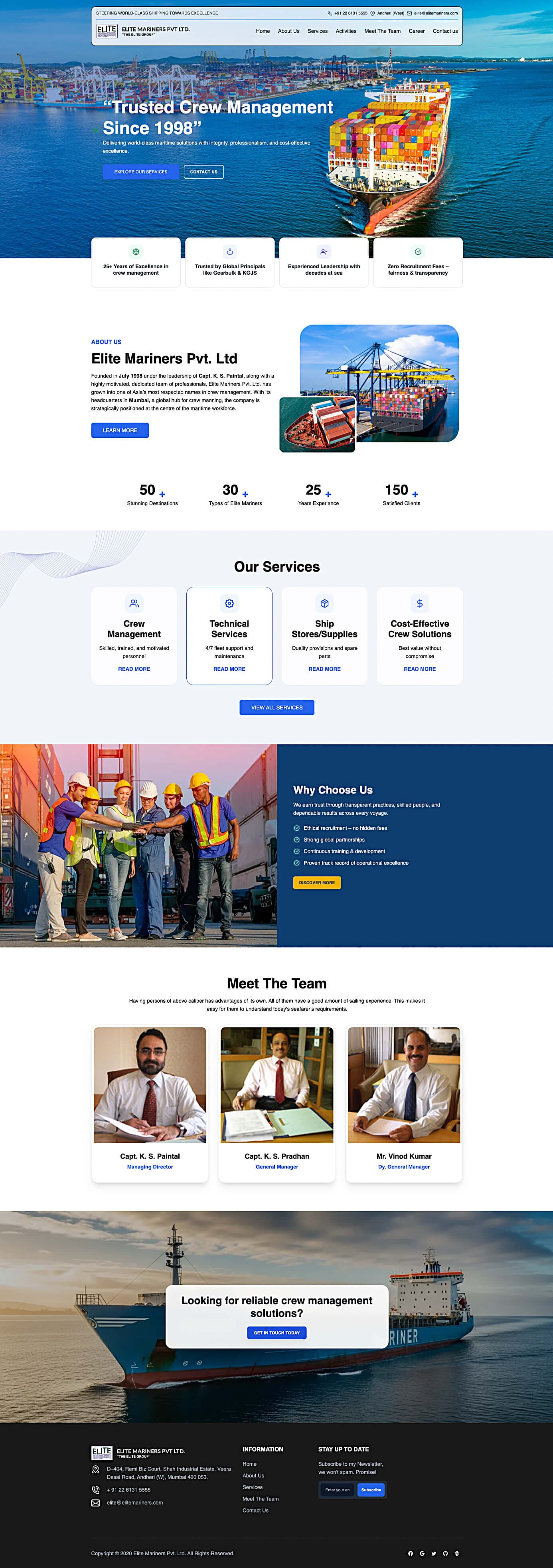
A maritime crew management and technical services website with clear service pages and contact paths.

A premium architecture firm portfolio website that presents projects visually and keeps enquiries easy.
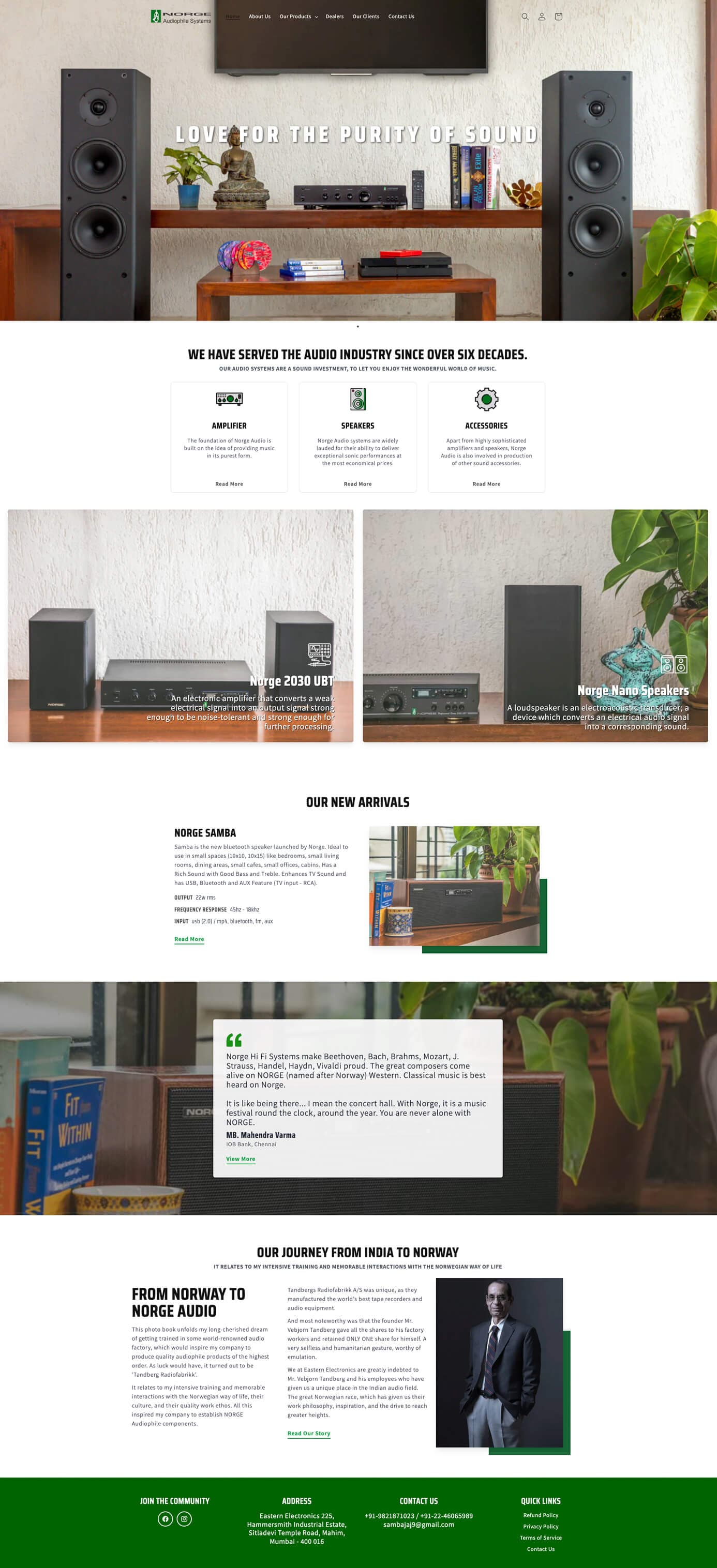
A premium audio ecommerce storefront with product pages and a straightforward buying journey.
FAQs
Shopify suits most product catalogues and is quicker to launch. A custom build makes sense for unusual pricing, B2B ordering or deep integration. We compare both against your needs before you commit.
Yes. You open and own the account with the payment provider and shipping partners of your choice, and we connect and test them in the store. Provider fees are separate and set by them.
Yes, usually. We plan the move of products, customers and order history where the platform allows it, and set up redirects so existing product links keep working.
Yes. We build product templates and walk your team through adding items, editing prices and managing orders so routine updates do not need a developer.
We set up the structure and can help shape key product copy. Large-scale photography and cataloguing are separate work, and we can plan around your own materials.
Often. It depends on whether your tool offers an API or an app for the platform. We confirm what is possible during scoping.
We set up basic tracking for visits, add-to-cart actions and orders so you can see where shoppers drop off and decide what to improve first.
Tell us what you sell and how you take orders today. We will reply with a suggested platform, a page plan and an itemised scope, with the costs of any third-party apps listed separately.
Share your catalogue size and sales channels, and we will outline an approach and what each part involves.
Locations
We proudly serve clients in major cities worldwide, delivering exceptional web design, development, and digital marketing services.