Platform-Fit Architecture
We select between Next.js with React, Laravel Blade Templates, and WordPress based on your publishing workflow, backend logic, and speed requirements rather than defaulting to one stack.
We provide custom website designing services in India across Next.js, React, Laravel Blade Templates, and WordPress for founders, marketing teams, and established organisations whose current site no longer explains their value clearly, performs reliably on mobile, or supports day-to-day publishing and enquiries.

Many business websites look acceptable in a design presentation yet struggle once real visitors arrive. Prospective buyers land on a phone screen, scan for a few seconds, and leave if the service scope feels vague, pages load sluggishly, or the enquiry path is buried. Meanwhile, internal teams often discover that adding a new landing page or updating copy risks breaking the layout.
Our website designing services in India treat visual design, information architecture, and technical implementation as one connected discipline. Whether your project calls for custom web design services in Next.js and React, server-rendered Laravel Blade Templates, or a structured WordPress build, we engineer websites that explain your value clearly, support faster loading under real usage, and remain straightforward for your team to maintain.
We select between Next.js with React, Laravel Blade Templates, and WordPress based on your publishing workflow, backend logic, and speed requirements rather than defaulting to one stack.
Typography scales, colour contrast, spacing tokens, and reusable interface components are defined in Figma before code is written so future pages stay visually coherent.
Responsive image pipelines, clean server-rendered HTML, disciplined script loading, and Core Web Vitals checks are planned around your project requirements.
Before launch, we review mobile layouts, keyboard navigation, form routing, redirects, and structured data against agreed project requirements—then hand over organized repositories and editor guidance.
Technology & Platform Ecosystem
Each technology below is selected to fit your content structure, integration needs, editorial workflow, and performance requirements—never presented as a badge of vendor partnership, certification, or guaranteed outcomes.
Production React framework for server-rendered, statically generated, and hybrid websites.
Selected when fast page transitions, Core Web Vitals discipline, clean routing, and crawlable server-rendered HTML are central to the brief.
The UI library underlying our Next.js and interactive frontend implementations.
Selected to structure complex user interfaces, calculators, filters, and design systems into reusable, maintainable component trees.
Server-rendered templating engine for websites paired with custom Laravel backends.
Selected when public pages share business logic, authentication, portals, or relational data with a Laravel application.
Custom-themed editorial and content-driven business websites without page-builder bloat.
Selected when marketing and editorial teams need structured day-to-day publishing autonomy with controlled block patterns and custom fields.

The Buyer’s Reality
Visitors judge clarity, usability, and credibility long before they contact sales.
When a prospective client compares suppliers, a confusing menu, slow mobile layout, or unclear service description quietly removes your business from the shortlist—without anyone ever filling in a form to tell you why.
A website fails commercially when visual styling is treated separately from how buyers read on mobile, how fast templates render, and how your team publishes updates. Effective responsive website design services solve these six friction points so your site works as a dependable business asset.
Prospective buyers arrive from search or a referral and cannot tell within a few seconds what you offer, who you serve, or how your services are structured.
Layouts designed only for wide desktop monitors force mobile visitors to pinch, scroll past awkward wraps, or tap cramped controls before they can read your offer.
Oversized images, unoptimised fonts, and third-party script clutter delay initial rendering and cause layout shifts just as a visitor tries to read or tap.
Rigid templates or fragile page-builder stacks make routine text, case study, or service updates risky—leaving marketing teams dependent on a developer for simple edits.
High-intent pages end without a logical next step, or bury contact forms and consultation options behind confusing navigation labels and high-friction fields.
Websites stitched together from conflicting plugins and undocumented theme overrides break during routine updates and become expensive to extend over time.
Six focused capabilities cover the complete lifecycle of a modern business website—from information architecture and platform implementation in Next.js, React, Laravel Blade, or WordPress to performance engineering and ongoing care.
Positioning, Hierarchy & Wireframes
Structured page planning, navigation architecture, and responsive Figma component systems that make your offer clear before development starts.
Before choosing colours or writing code, we map how prospective buyers evaluate your business and what questions they need answered before making contact. Whether you need small business website design or a multi-service corporate architecture, our UX and information architecture work defines page hierarchy, navigation labels, section order, and enquiry paths so visitors do not have to hunt for your core services or proof. We prepare wireframes, responsive page blueprints, and reusable UI design tokens in Figma that establish typography, spacing, and readable contrast across mobile, tablet, and desktop viewports before development begins.
Role in Your Website Architecture
Establishes the message hierarchy, buyer journey, and visual component rules that subsequent templates and platform implementations follow.
Modern Component & Rendering Architecture
Server-rendered and statically generated websites built with Next.js on top of a modular React UI component architecture.
When a website requires fast page transitions, interactive calculators, dynamic filtering, or a decoupled editorial workflow, we offer Next.js and React website design services built around a clean component system. React serves as the underlying UI library that structures interface elements into reusable, testable components, while Next.js provides the production application framework for server-side rendering, static generation, routing, and image optimization. This combination supports leaner initial page loads, preserves crawlable server-rendered HTML for search engines, and gives engineering teams a maintainable codebase that scales without template bloat.
Role in Your Website Architecture
Supports a fast, component-driven web frontend when performance budgets, custom interactivity, or headless CMS integrations are central to the brief.
Server-Rendered Application Views
Clean, maintainable Laravel Blade Templates designed for websites that combine public pages with custom backend workflows, portals, or databases.
For businesses whose website is closely tied to custom workflows, member portals, role-based dashboards, or structured relational data, we deliver Laravel Blade template website design directly inside the Laravel ecosystem. Rather than bolting a heavy single-page frontend onto a backend that does not need one, we build modular Blade components, clean layout inheritance, and server-rendered views paired with lightweight frontend interactivity. Your team gets a cohesive application where public marketing pages, authenticated workflows, form validation, and business logic share one maintainable, well-structured architecture.
Role in Your Website Architecture
Unifies custom backend business logic and server-rendered HTML views under a single, maintainable Laravel codebase.
Editorial Control & Custom Themes
Lean, custom-engineered WordPress websites that give marketing teams day-to-day publishing autonomy while reducing plugin bloat and accidental layout changes.
When marketing and editorial teams need to publish articles, landing pages, or service updates independently, we provide custom WordPress website design services without relying on bloated multipurpose themes or fragile page-builder stacks. We engineer lean custom themes, structured custom post types, and controlled block patterns that guide typography, spacing, and brand consistency. Non-technical editors can update copy, media, and structured fields with fewer layout risks while supporting faster loading, agreed accessibility practices, and more predictable maintenance across routine core and plugin updates.
Role in Your Website Architecture
Provides a familiar, structured editorial publishing environment while helping teams manage layout consistency, page weight, and routine update risk.
Core Web Vitals, Accessibility & Technical SEO
Technical search foundations, Core Web Vitals engineering, and keyboard-accessible semantics planned against your project requirements.
Search readiness and fast loading are far easier to achieve when planned into initial templates rather than retrofitted after launch. When scoped for a new website build or paired with website speed optimization services, we structure semantic heading hierarchies, clean URL paths, responsive image sizing, font-loading discipline, and layout stability in the core templates. We also implement Organization, Service, and FAQ structured data alongside clean metadata and internal linking. Technical SEO and performance engineering improve crawlability, speed, and topical eligibility only; they do not guarantee specific search rankings, featured snippets, or traffic volume.
Role in Your Website Architecture
Supports faster loading across mobile and desktop networks, usability with assistive technologies against agreed accessibility requirements, and clearer structure for search crawlers.
Migration Planning, Measurement & Care
Structured website redesigns with URL and redirect planning to reduce avoidable migration risk, consent-aware enquiry measurement, and ongoing maintenance after launch.
An older website often accumulates broken layouts, conflicting plugins, outdated service pages, and slow scripts that quietly erode buyer confidence. Our website redesign services in India reduce avoidable migration risk through URL inventory, content mapping, and 301 redirect planning while modernising visual presentation, mobile usability, and conversion paths. Search engines ultimately control crawling, indexing, and rankings, so we pair pre-launch crawl checks with Search Console monitoring rather than promising unchanged positions. After launch, we configure consent-aware analytics baselines and provide ongoing website maintenance scoped to your plan—applying updates, dependency reviews, and security patches to reduce known operational risks.
Role in Your Website Architecture
Reduces avoidable migration risk during a redesign and helps keep the website measurable, maintainable, and updated against known security risks after handover.
With long-standing website design and development experience across successive generations of web technology, we deliver website design services in India that combine thoughtful UX architecture, disciplined responsive web design and development, and transparent project management under one accountable team.
We start by auditing your offer, buyer questions, and navigation structure so visual design clarifies your message rather than disguising weak page hierarchy.
Because our team builds across Next.js, React, Laravel Blade Templates, and WordPress, we recommend the technology that fits your editorial workflow, integrations, and scope—not agency habit.
Our long-standing website design and development experience across successive generations of web technology helps us separate durable engineering standards from short-lived trends.
Whether we are writing React components, modular Laravel Blade views, or custom WordPress templates, we structure code so future pages and features are straightforward to ship.
Mobile-first layouts, keyboard navigation, readable contrast, Core Web Vitals checks, staging reviews, consent-aware analytics setup, and optional maintenance plans are organized around agreed checkpoints and project requirements.

How the Engagement Works
Whether we are scoping a new build or delivering website redesign services, stages pair agreed deliverables with client review checkpoints according to your project scope so information architecture, visual design, platform engineering, and launch validation move forward transparently.
What does the website need to achieve, and which technology stack fits best?
We review your current website, buyer questions, editorial workflow, and integration needs to define a clear project scope and choose between Next.js with React, Laravel Blade Templates, or WordPress. Output: Written discovery brief & platform architecture plan • Checkpoint: Approve scope, stack selection, and milestone schedule.
How should pages, navigation, and enquiry paths be organized?
We map your sitemap, navigation hierarchy, section order, and mobile-first wireframes so key services, proof points, and calls to action have a deliberate place before visual styling begins. Output: Sitemap, page hierarchy & responsive wireframes • Checkpoint: Sign off on navigation structure and buyer flows.
How will the brand look, read, and behave across mobile and desktop screens?
We design a cohesive Figma component system—covering typography, colour contrast, interactive states, and key page templates—tailored to your brand identity and readability requirements. Output: Figma UI component library & responsive page prototypes • Checkpoint: Approve visual design and component specifications.
Are templates responsive, accessible, and straightforward for your team to manage?
We engineer your website in the agreed stack—Next.js and React components, modular Laravel Blade Templates, or a custom WordPress theme—complete with structured content fields, forms, and technical SEO foundations. Output: Staging website with CMS/workflow integration • Checkpoint: Review staging build, content editing, and form routing.
Is the site reviewed across devices, launched cleanly, and measured after handover?
We run cross-browser, mobile, accessibility, performance, and 301 redirect checks against the agreed scope, deploy to production, configure consent-aware GA4 and Search Console baselines where access allows, and walk your team through the workflow. Output: Live website, analytics baseline & handover documentation • Checkpoint: Final launch sign-off and transition to scheduled maintenance.
Whether you are planning a new build or evaluating a website redesign company to replace an outdated site, share your goals with our team. We will review your current pages, discuss whether Next.js with React, Laravel Blade Templates, or WordPress best fits your workflow, and outline a clear scope before you commit.
Share your details below and we will follow up to discuss your goals, platform options, and next steps.
Selected Work
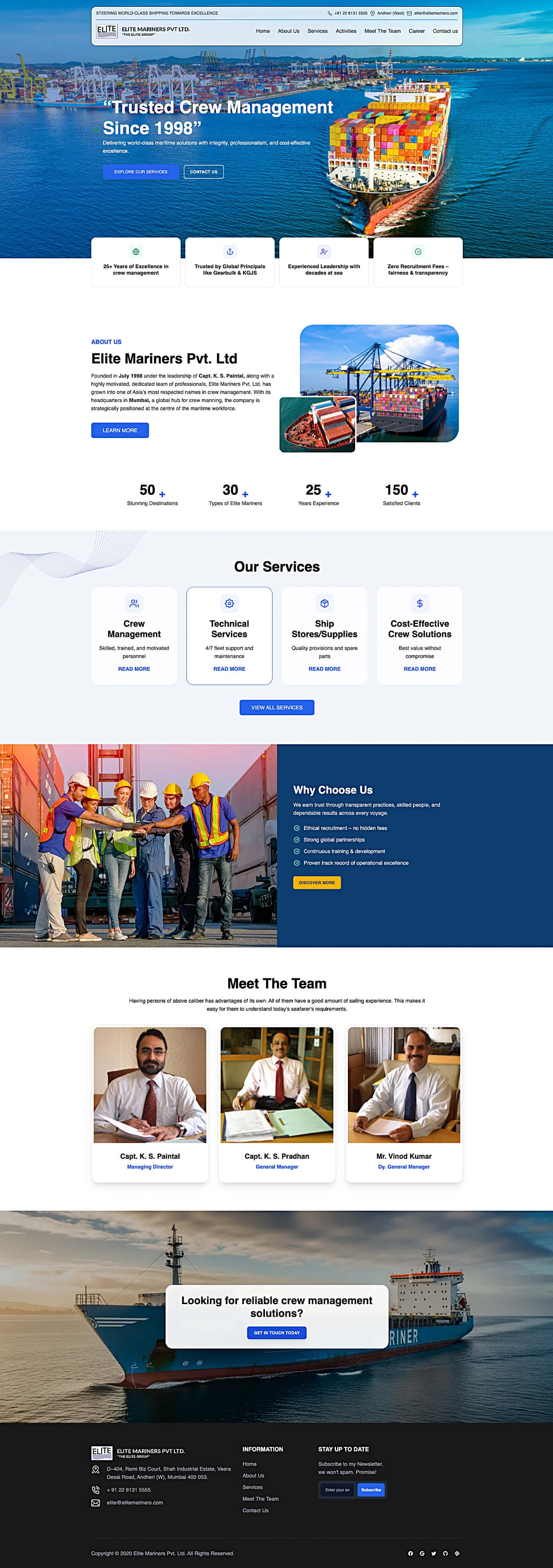
Corporate website architecture and service presentation built to explain maritime crew management, technical services, and direct enquiry channels clearly.
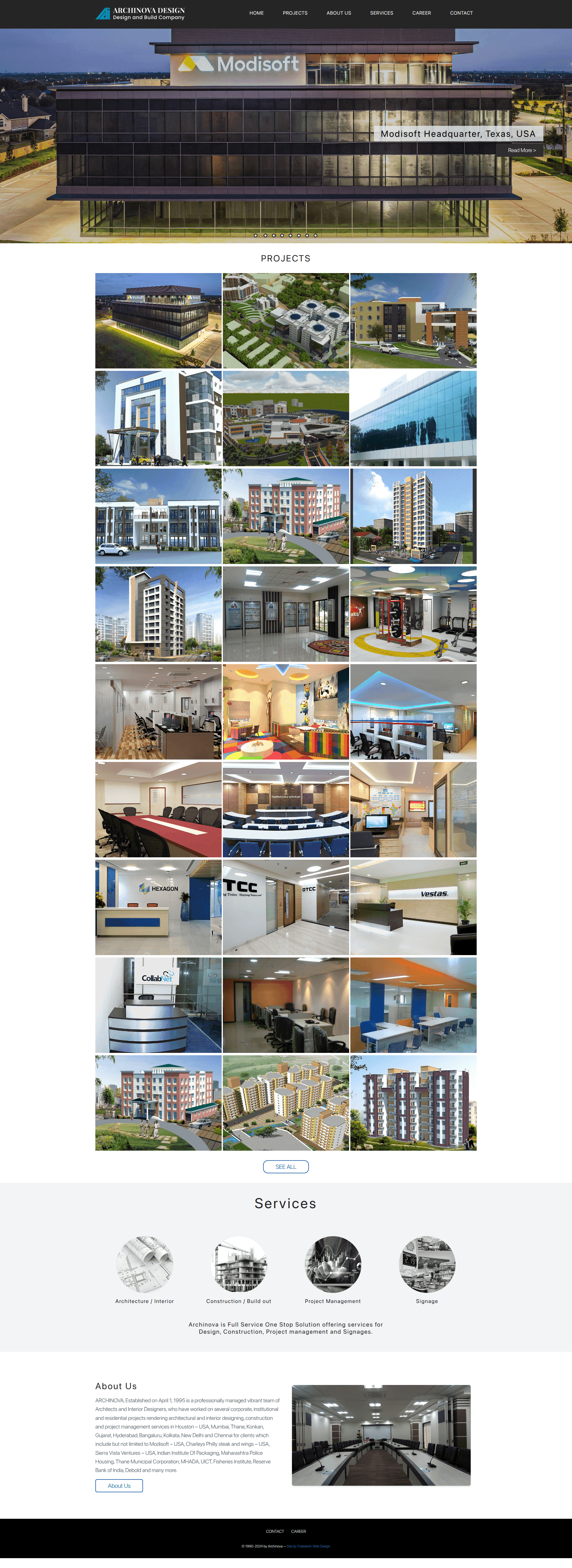
Structured portfolio and service showcase designed for an architecture practice, organizing commercial and residential work with clear consultation paths.
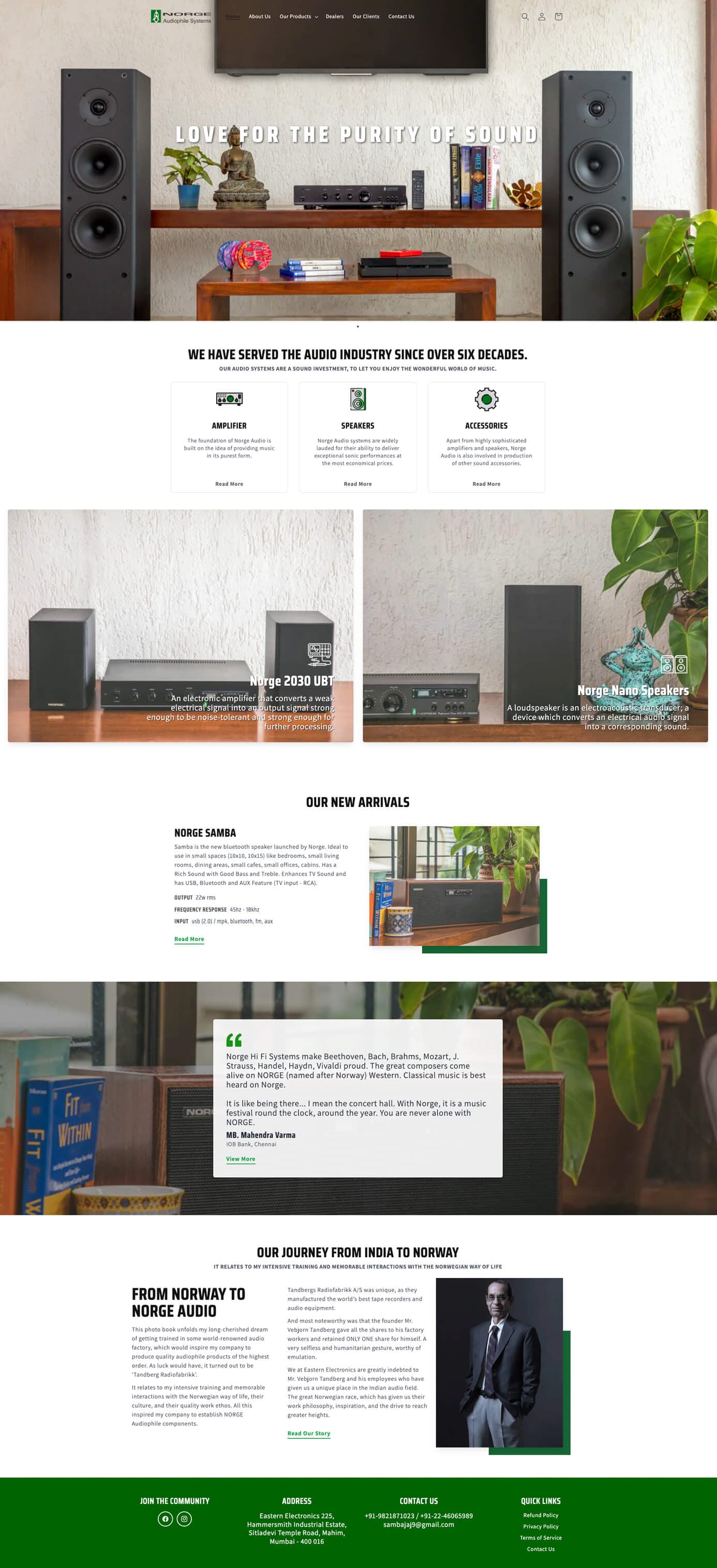
Product-led storefront and brand presence organizing audio equipment categories, specifications, and customer enquiry flows in a responsive layout.
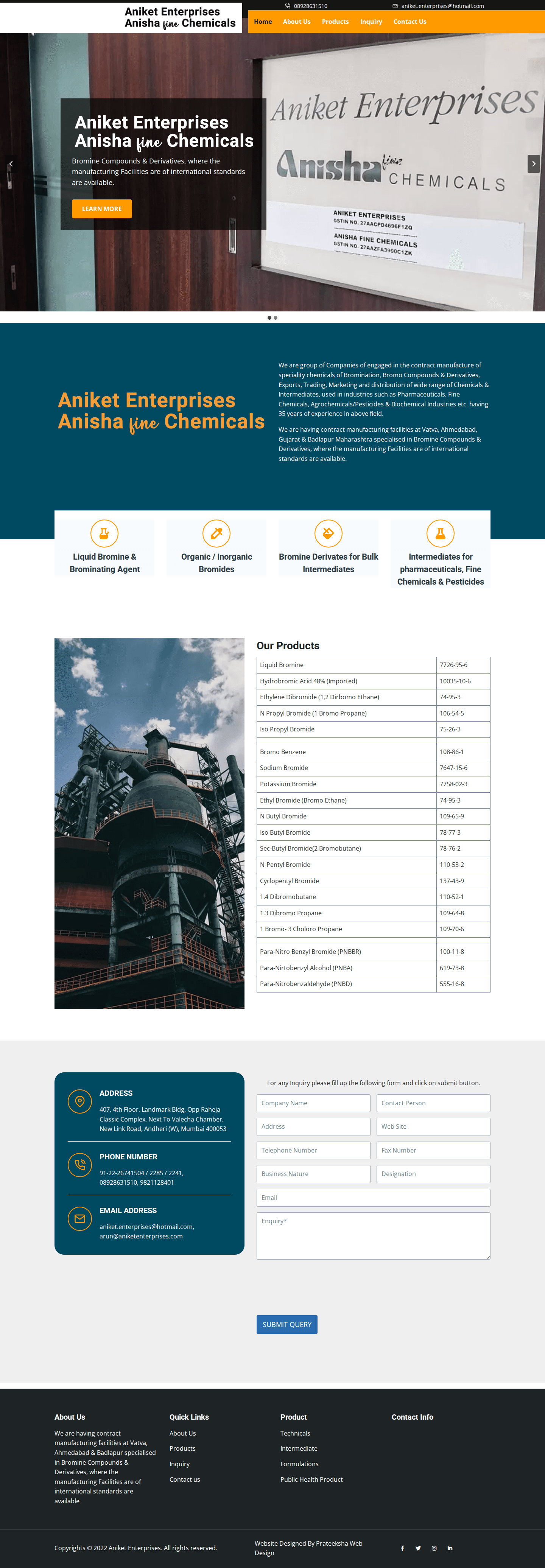
B2B trading and manufacturing website structured around product categories, quality credentials, and accessible buyer contact options.
FAQs
Direct answers on platform selection across Next.js, React, Laravel Blade Templates, and WordPress, plus scoping, accessibility, redesigns, and post-launch care.
Have a question specific to your website brief or technical stack? Reach out through the consultation form above.
We match the platform to how your website will be used and maintained. Next.js with React suits marketing and product websites that prioritize fast page transitions, custom interactive components, or headless CMS workflows. Laravel Blade Templates fit websites closely integrated with custom Laravel backends, portals, or structured databases. WordPress suits content-heavy businesses where non-technical editors publish and update pages frequently.
React is the underlying user-interface library used to build modular, reusable interface components such as navigation menus, interactive calculators, filters, and page sections. Next.js is the production framework built on top of React that handles routing, server-side rendering, static page generation, and image optimization so your site loads quickly and remains easy for search engines to crawl.
Pricing depends on the number of unique page templates, platform architecture, content migration volume, and custom integrations required. A focused company website has a different scope from a multi-workflow Laravel portal or a custom Next.js build. Share your requirements during a consultation and we will provide a written proposal with transparent deliverables and milestone pricing.
Rather than offering a generic fixed-week promise that ignores your scope, we map a written milestone schedule before work begins. The schedule reflects your template count, platform choice, integration complexity, and internal review cadence, with clear checkpoints for discovery, wireframes, visual design, staging review, and launch.
Yes, when editorial autonomy is part of your brief. On WordPress builds, we configure structured custom fields and clean block patterns so editors can update copy and media while reducing the risk of accidental layout changes. On Laravel Blade and Next.js builds, we connect an admin panel or headless CMS where needed and provide clear handover documentation.
We design mobile-first and review layouts across phone, tablet, and desktop breakpoints before launch. Templates are designed and tested against the responsiveness, accessibility, and performance requirements defined in your scope—covering semantic HTML headings, keyboard-operable controls, readable colour contrast, responsive image sizing, and disciplined script loading aimed at healthier Core Web Vitals.
No agency can guarantee that search rankings, traffic, or indexing will remain unchanged during a redesign, because search engines control crawling, indexing, and ranking decisions. To reduce avoidable migration risk, we inventory existing URLs, map 301 redirects for changed paths, preserve relevant topical pages and metadata, run pre-launch crawl checks, and configure Google Search Console monitoring so indexing and query trends can be reviewed over time as search engines recrawl the site.
At launch, we walk your team through the content workflow, configure consent-aware analytics baselines where account access allows, and complete repository and credential handover in accordance with your agreed proposal. We also offer ongoing website maintenance plans scoped to your agreement—covering software updates, security patching, dependency reviews, and backups to reduce known operational and security risks.
Locations
We proudly serve clients in major cities worldwide, delivering exceptional web design, development, and digital marketing services.