Custom Website Builds
Designs shaped around your services and customers rather than a one-size-fits-all template.
Specialist Christchurch web design: fast, mobile-first, and conversion-driven. We deliver custom websites, eCommerce setups, and responsive websites Christchurch businesses trust — built with React and Next.js or WordPress depending on your needs.

Christchurch businesses are often rebuilding or growing, and the website is one of the quickest ways to show customers what you offer. Our Christchurch web design is mobile-first, built for clarity and structured so your enquiries and sales have an easy path.
We are a Mumbai-based team and we work with Christchurch clients remotely, arranging calls and reviews around New Zealand time. We build custom websites, online shops and responsive redesigns using React and Next.js or WordPress, depending on what suits your team. We cannot guarantee particular outcomes, but we will explain our choices plainly.
Designs shaped around your services and customers rather than a one-size-fits-all template.
Shopify or WordPress stores with clear product pages, local shipping information and sensible checkout settings.
React and Next.js for speed and flexibility, or WordPress where easy editing matters most.
Review calls, shared documents and recorded updates are scheduled so New Zealand-based teams are not left waiting.
These are platforms and tools used in delivering this service, not clients and not official partnerships, certifications, or endorsements, and they carry no promise of performance. Each link opens in a new window.
A flexible content management system for service-business and brochure sites your team can edit.
A hosted ecommerce platform for stores that need product pages, payments, and checkout.
A React framework for fast, custom-built websites with strong control over performance.
Search queries, clicks, and indexing reports used to check how the website appears in Google.

Your website works while the shop or office is closed.
A responsive, clear site keeps answering questions and taking enquiries around the clock.
Customers research online before they visit or buy, so your website often forms the first impression. These are the areas where improvements tend to matter most.
Most browsing happens on phones, so menus, forms and product galleries must work well on small screens.
Slow sites lose visitors and strain search performance. Image optimisation and lean code make a noticeable difference.
Visitors should see what you do and who it is for in the first screen. Vague headlines waste that moment.
Missing shipping details or unclear returns wording raise doubts at the point of purchase.
Good titles, headings and local references help the right people find the site through search.
If your team cannot update pages easily, information becomes stale. An approachable CMS prevents that.
Six connected workstreams take a website for a Christchurch business from first plan to ongoing care. They are delivered together as one project and not as separate one-off purchases.
A clear brief before any design starts: who the site is for, what it must do, and which pages it needs.
We begin by understanding what you sell, who buys it, and what a visitor should do next. We review your current site if you have one, list the pages and content you need, and agree how enquiries or orders will be handled. The result is a short written plan covering sitemap, page purposes, content responsibilities, and the tools involved, so design and build work from decisions rather than assumptions. Nothing is promised about rankings or sales; the plan simply makes the project easier to scope, price, and review.
Role in the project
Gives the project an agreed starting point so design, build, and content do not drift apart.
Layouts that read clearly on a phone first, then scale up, with a consistent look across every page.
Most visitors arrive on a phone, so we design the small screen first and expand from there. We agree a simple visual system covering colours, type, buttons, and forms, then design the key pages for review before anything is built. Accessibility basics such as readable contrast, sensible heading order, and keyboard-friendly controls are part of the work rather than an extra. You see designs, give feedback in agreed rounds, and approve before development begins.
Role in the project
Turns the plan into pages a visitor can understand and act on quickly, on any screen size.
A fast, maintainable build on a platform your team can edit without calling a developer for every change.
We build the approved designs on the platform chosen in the plan, whether that is WordPress, a headless CMS, or a custom Next.js build. Content is structured so you can update pages, services, and posts yourself, and forms are connected to your inbox or CRM. We keep the code tidy and documented, optimise images, and avoid unnecessary plugins that slow a site down or add security risk. Where the work needs a third-party tool, we tell you what it is and what it costs.
Role in the project
Delivers the working site and the editing setup that keeps it useful after launch.
For businesses that sell online: product pages, checkout, and payment set-up that stay easy to manage.
If you sell products or bookings online, we set up the store on Shopify, WooCommerce, or a custom build depending on your catalogue and budget. That covers product and category pages, search and filters, shipping and tax settings, and payment providers such as card and wallet options. We test the buying journey on phones and desktops, and explain how to add products and process orders. Store results depend on your products, pricing, and traffic, so we do not forecast sales.
Role in the project
Makes buying straightforward and gives you a store you can run day to day.
The technical basics that help search engines read the site, plus the tracking to see how it is used.
We set up the foundations a new site needs: clean page titles and descriptions, sensible headings, a sitemap, redirects from old addresses, and structured data where it fits. We check speed and mobile behaviour before launch and fix what we can within the build. Analytics and Search Console are connected, with consent handled properly, so you can see which pages people use. Search rankings are decided by Google and many other factors, so this is groundwork and not a ranking promise.
Role in the project
Gives the site a sound technical base and a way to measure what happens after launch.
A planned go-live, a handover you can follow, and optional monthly care once the site is running.
Before launch we test forms, links, and key journeys, and agree a go-live plan including redirects and a rollback path. After launch we hand over logins and short written notes, and can train your team to edit the site. Many clients also choose monthly care covering updates, backups, security checks, and small changes. It is optional, and we describe what is included before you commit, so there are no surprises.
Role in the project
Moves the site live safely and keeps it current without depending on a single person.
We plan before we design, keep design, build, and search basics together, and work in ways you can review at every stage.
We agree goals, pages, and content responsibilities in writing before design starts, so the project follows decisions rather than guesses.
The same team designs the pages, builds them, and sets up the technical SEO and tracking basics, so the pieces fit together.
You get a defined scope, agreed approval points, and written notes at launch so your team can run the site without us if you choose.
We are a Mumbai-based team and work remotely with scheduled check-ins, shared progress, and written updates, so you always know where the project stands.

How the Work Runs
Five stages move from a written plan to a live site and a review. Each stage ends with something you can see and a decision you make before work continues.
What should the website do, and for whom?
We review your business, audience, and any existing site, then agree goals, pages, and content responsibilities. Output: Written plan with sitemap and page purposes • Checkpoint: You approve the scope before design starts.
Does the design make the next step obvious on a phone?
We design the key pages mobile-first with a simple visual system, and share them for feedback in agreed rounds. Output: Approved page designs • Checkpoint: You sign off the design before development begins.
Is it fast, editable, and wired to your enquiries?
We build on the agreed platform, structure the content for easy editing, and connect forms, analytics, and any store or booking tools. Output: Working staging site • Checkpoint: You review the staging site and send consolidated feedback.
Have forms, links, and key journeys been checked?
We test on common phones and browsers, set up redirects, and agree a go-live plan. Output: Live site with handover notes • Checkpoint: You confirm launch readiness.
What is the site showing, and what should change next?
We review analytics and Search Console where set up with consent, and describe trends as directional. Output: Plain-language review with next priorities • Checkpoint: You decide what to change next.
Selected Work
These are websites we have built for other organisations. They show the kind of work we do, and they are not results or outcome claims for Christchurch businesses.
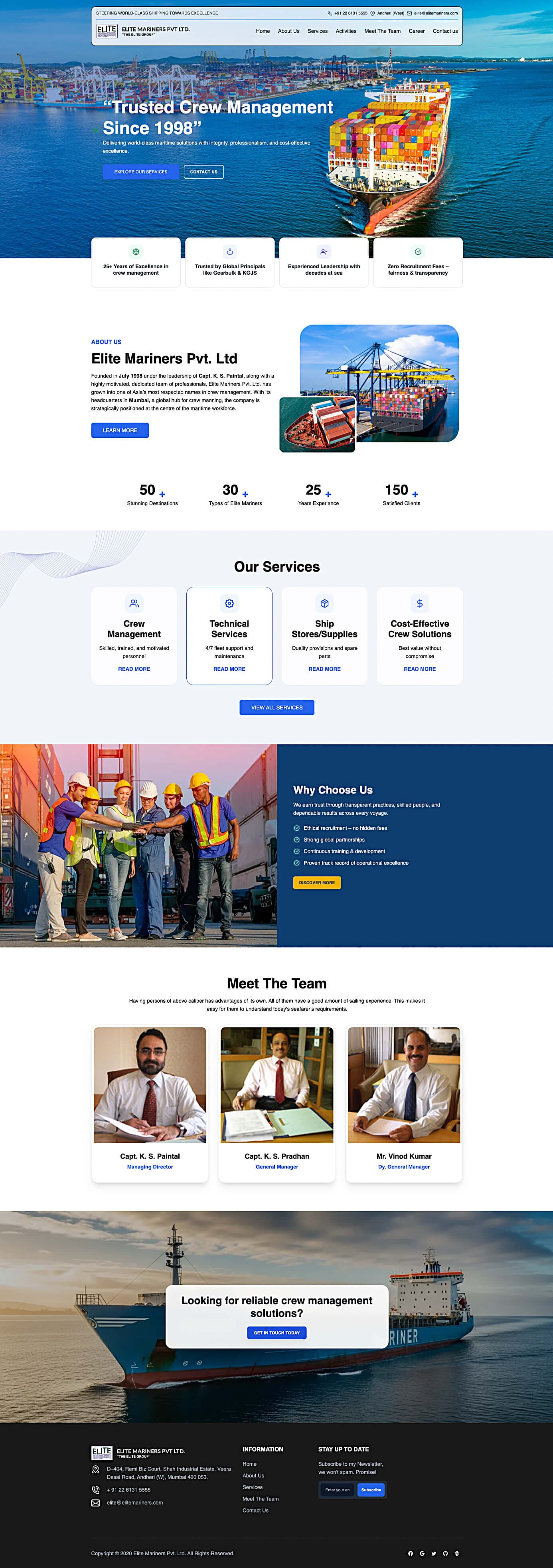
A maritime crew management and technical services website with clear service pages and contact paths.
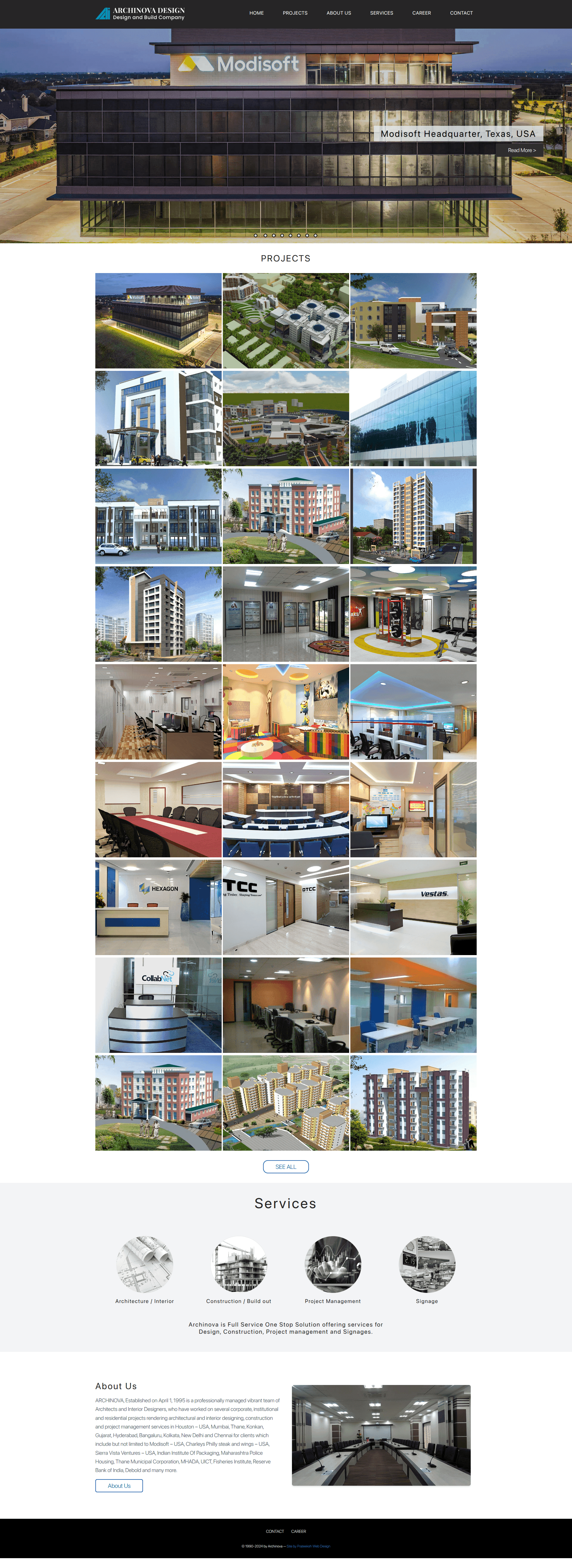
A premium architecture firm portfolio website that presents projects visually and keeps enquiries easy.
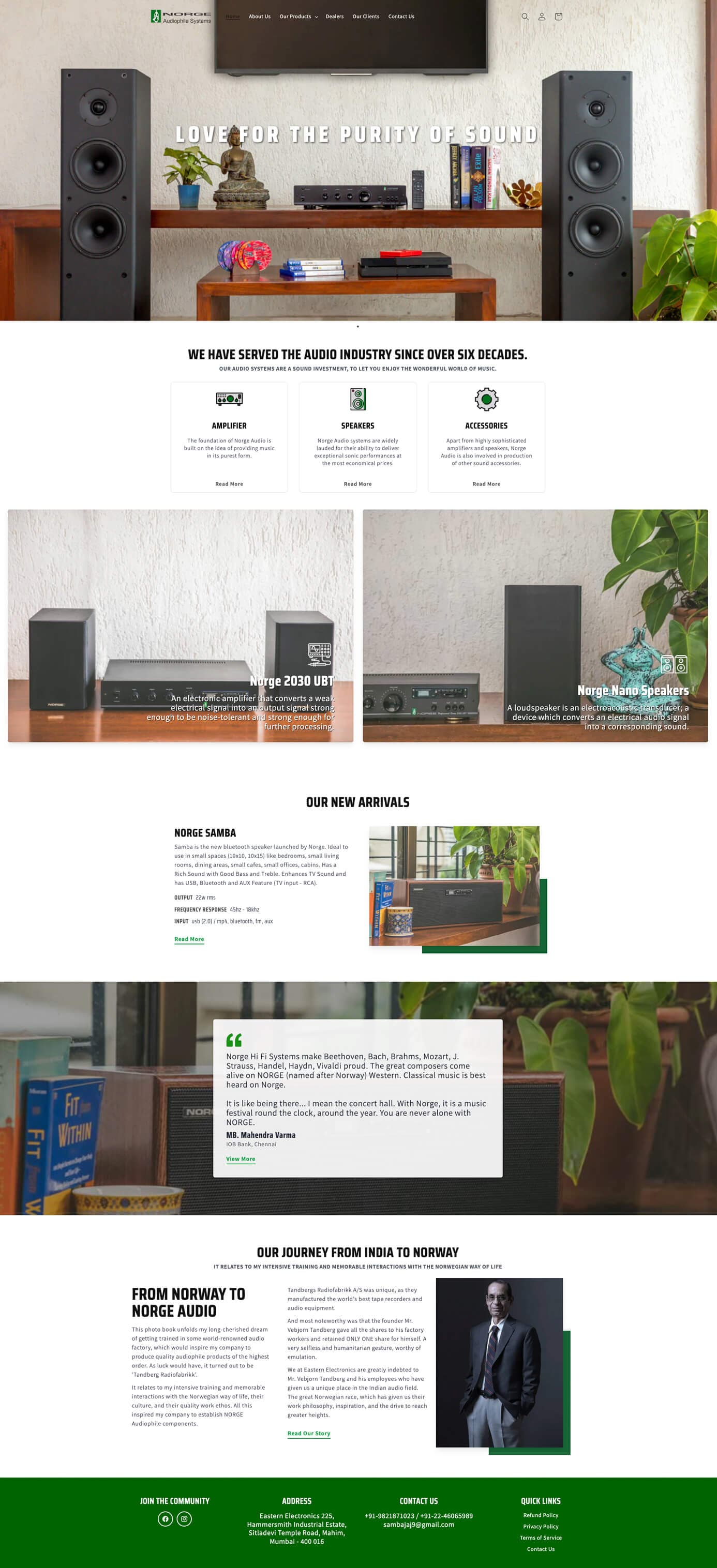
A premium audio ecommerce storefront with product pages and a straightforward buying journey.










FAQs
Answers to help you plan: web design cost, build time, SEO, and maintenance.
Tell us your sector — hospitality, retail, construction, nonprofits, or professional services — and we’ll share case studies and client testimonials.
Costs vary by scope: a basic small business web design typically starts at a modest package price, while ecommerce web design or complex integrations raise the estimate. Request a quote and we’ll provide a transparent proposal with options.
Most projects range from 3–10 weeks depending on pages, ecommerce features, and content readiness. We supply a project timeline so you know milestones like design, development, and launch dates.
Yes. We include technical SEO, schema, and on-page recommendations. For ongoing growth we offer SEO packages to improve SEO Christchurch businesses need.
Absolutely. We handle redesigns with a migration plan, 301 redirects, and SEO preservation to minimise traffic loss and recover rankings quickly.
Yes—responsive websites Christchurch customers expect are standard. We test templates across devices and fix mobile site issues before launch.
We diagnose performance issues and implement fixes: image/CDN strategy, caching, code-splitting, and Core Web Vitals improvements to make pages load faster.
Yes—we are Shopify experts and also provide WooCommerce setup and headless commerce options. We focus on conversion optimisation, fast checkouts, and inventory integrations.
Yes—you can hire web designer services for projects, updates, or ongoing work. We also offer maintenance plans to keep your site secure and up to date.
We offer tailored builds and sometimes provide starter templates; however our focus is custom work. For teams that want DIY guidance we can recommend tutorials and handover docs as part of the project.
We work with hospitality, retail, professional services, construction firms, nonprofits, and creative portfolios—helping each sector with targeted UX, SEO, and ecommerce setup.
Tell us about the business and what the website needs to do. We will review it and outline a sensible scope, with a written quote, before you commit to anything.
Share a few details and our team will follow up to discuss a focused first review.
Locations
We proudly serve clients in major cities worldwide, delivering exceptional web design, development, and digital marketing services.