Clear Course Structure
Each course gets a page built on one template, so visitors can compare formats, duration and prerequisites without hunting.
We design public course-marketing websites for instructors, course creators and training providers: clear course pages, trainer profiles, a handoff to the platform you already teach on, and a general enquiry path. This is not a custom LMS; a protected learning application is separately scoped.

Many instructors and training providers have strong courses but a website that buries them: one long page, vague descriptions, no trainer story, and no obvious next step. Course marketing website design gives each course, trainer and enquiry route a clear place.
We start by diagnosing your offer, who it is for, how ready your content is, which platform you already deliver on, and where the public site should stop. The intended value is practical: visitors understand what you teach, judge whether to trust you, and know how to reach you or move to your platform. Results depend on your market, reputation and demand.
Each course gets a page built on one template, so visitors can compare formats, duration and prerequisites without hunting.
Trainer profiles present background and credentials you supply and approve, linked to the courses each person leads.
The site links clearly to the platform where you already deliver courses, rather than trying to replace it.
The enquiry form asks for general contact details only, and the written scope states what the public site does not handle.
Online training website design should use tools that fit the project. These are the tools we work with, not partner badges or a promise of performance.
Fast, server-rendered course and trainer pages built from reusable templates
Accessible interface components and consistent page building blocks
Content back end, enquiry forms and APIs for structured course websites
Familiar editing for teams that add and update courses often

Learners choose a course by how clearly it is explained.
Before they enquire, people check what a course covers, who teaches it and what to do next, often on a phone. A public course site is largely about making those answers easy to reach. Schools and colleges may prefer our education website design page.
Website design for training providers fails in predictable ways. These are the problems we diagnose before proposing any pages.
When a page says what the course is without saying who it is for, visitors cannot tell whether it fits them and leave to compare elsewhere.
Duration, format and prerequisites buried in paragraphs make a shortlist difficult. A consistent layout lets visitors weigh courses quickly.
People often choose a course by who teaches it. Without a profile, the offer feels anonymous and harder to trust.
If a visitor cannot tell where to buy, enrol or log in, a ready learner gets stuck between the marketing site and the delivery platform.
A general website form should not ask for learner records or sensitive details. Asking for too much adds risk and puts people off.
Mixing the two leads to unclear expectations. The public site explains and sells; protected learner systems are a separate, separately scoped job.
Seven connected workstreams take a public course website from page plan to handover. This page covers the marketing site only. Protected learning applications fall under custom web application development.
A sitemap built around the questions a prospective learner or training buyer asks before they enquire.
Before any layout, we list what you teach, who it is for, and what a visitor must understand to take the next step. Then we map which page answers which question: a course overview, individual course pages, trainer profiles, and a contact route. The written structure also records where the public site ends and your existing course platform begins, so nobody expects the marketing site to deliver lessons.
Gives design, content, and development one agreed page plan and a stated boundary.
One focused page per course or programme, laid out the same way so visitors can compare options.
Each course page follows a shared template: who the course is for, what it covers, format and duration, prerequisites, and a clear next step. Consistent structure helps a visitor compare offers without hunting for details, and helps you add a new course later by filling in a template rather than designing a new page. Course content, schedules, and any qualifications you state are supplied and approved by you; we structure them and do not invent them.
Turns each course into a page a visitor can land on, understand, and act on.
Profile pages that present who teaches, using only the background and credentials the trainer approves.
People choose a course partly by who teaches it. Website design for course creators and training teams therefore includes profile pages with a photo, background, areas of teaching, and the courses each person leads, linked both ways between trainer and course. Qualifications, memberships, and accreditations appear only when you supply them and confirm they are current; we do not add or verify credentials on your behalf.
Lets a visitor see who is behind a course and connect people to the offers they teach.
Pages written for the HR lead or manager choosing training for a team, not only the individual learner.
A company buying training asks different questions from a learner: what the programme covers, how it suits a team, how it is delivered, and how to request a proposal. Corporate training website design therefore gives business buyers their own route, with programme overviews, a clear explanation of group or in-house formats where you offer them, and an enquiry path for proposals. This page covers training providers; general company websites are a separate service.
Gives business buyers a route that answers team-training questions and ends in an enquiry.
Clear links to the platform where you deliver courses, plus a contact route that stays general.
If you already deliver courses on an existing platform, the public site links to it clearly: where to buy, enrol, or log in. The site does not replace that platform. Building a custom LMS, student portal, progress tracker, assessments, protected student records, or Moodle, LearnDash, SCORM or xAPI functionality is out of scope for this service; that work is separately scoped. The enquiry form asks only for general contact details and never for grades, progress, or other sensitive learner information.
Sends ready visitors to the right place and keeps learner data out of a general website form.
An editable content system with training and documentation, so routine updates do not wait on a developer.
Course lists, dates, and trainer details change often. We build on a CMS that suits your team, either WordPress or a Next.js front end with a Laravel back end, and confirm the choice in the written proposal. After build we train your editors and hand over documentation covering editing a course, adding a trainer, and managing media and menus.
Keeps day-to-day course and trainer updates in your hands after handover.
Clean markup, sensible metadata, and a fast-loading build that gives search engines a clear site to read.
We build pages with semantic headings, unique titles and descriptions, optimised images, and a crawlable internal-link structure, and we check mobile layout and loading before launch. This improves how clearly search engines and visitors can read the site. It offers no assurance of any ranking, traffic level, or enrolment, which also depend on your offer, reputation, competition, and demand.
Gives every page a technically sound base for later content and search work.
Professional course website design is mostly about method: scope first, an honest boundary with your learning platform, and a handover your team can use.
We start from your offer, audience, content readiness and existing platform, so the written scope reflects what the site must do.
The proposal says plainly where the marketing site ends and your course platform or any protected application begins.
Layouts are checked on phone, tablet and desktop, with readable type, accessible contrast and visible keyboard focus.
Your team receives editor training and written guides for adding courses and trainers, so routine updates stay in-house.
Semantic markup, unique metadata and optimised images are built in and checked before launch, with no assurance of rankings.

The Process
Timing depends on the number of courses, how ready your content is, and how many review rounds you need, so your written proposal confirms the schedule. Every stage ends with something you can review and a checkpoint you approve.
What must the website do, and for whom?
We review your courses, audiences, existing platform and content, and you receive a written proposal covering pages, platform, integrations and the public-site boundary.
Which page answers which question?
We draft the sitemap, course and trainer page structure, and a content outline, and agree who supplies which course details and by when.
What will the pages look like?
We design the course, trainer and enquiry templates for desktop and mobile, then share them for review and revision.
Does everything work as agreed?
We build the templates on the agreed platform, add your content and platform links, and test forms, links and mobile behaviour on a staging site.
Can your team run it from here?
We publish the site, confirm enquiry and platform links work live, train your editors, and hand over documentation and access details.
As a course website design company, we begin with a conversation rather than a build. We look at your course offer, the learners or business buyers you want to reach, how ready your content is, the platform you deliver on, your enquiry path, and where the scope ends.
You receive a written scope before you commit to anything.
Start with a consultationShare general contact details only. Please do not send student records, grades or other sensitive learner information through this form.
Selected Work
These are general website projects that show our structure, responsive design and enquiry-path work. They are not course or training-sector projects, and we do not present them as such.
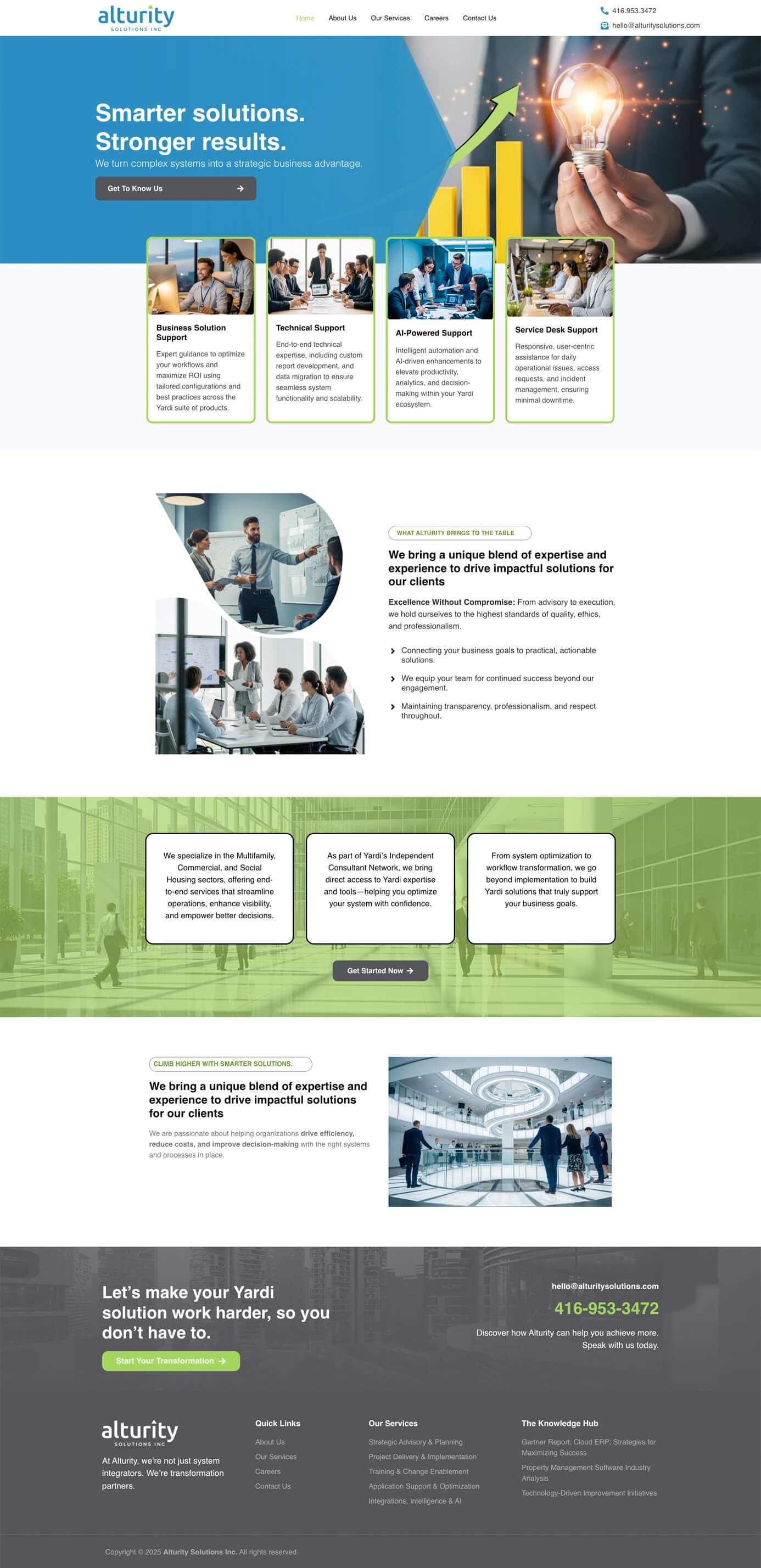
Services website organised around clear sections, credibility content and a direct contact flow.

Studio website presenting services and past work, with lead-focused calls to action.
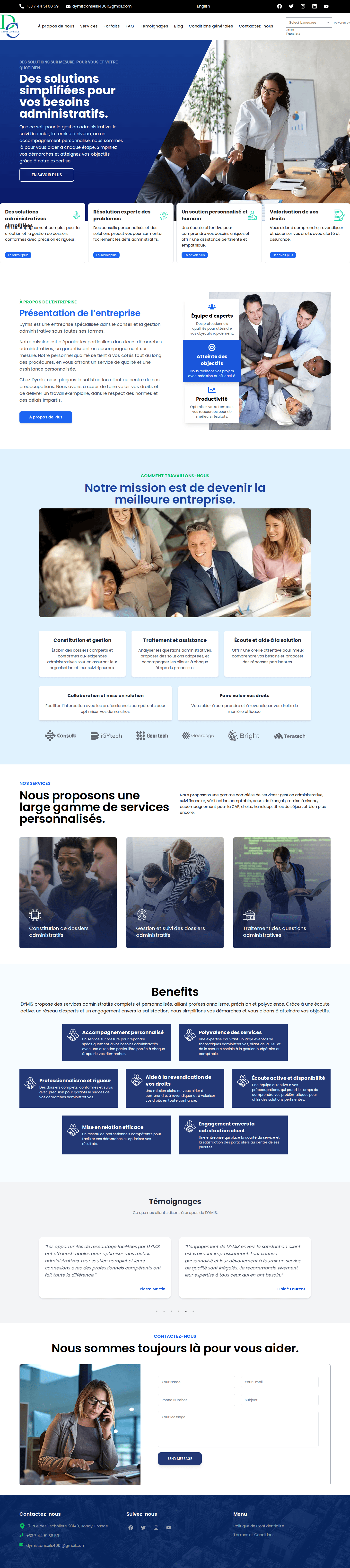
Business services website focused on clear positioning, structured sections and direct enquiries.
FAQs
Straight answers on scope, platforms, learner data, and what this service is not.
Not sure which format fits? Compare all website formats or talk to us.
No. This is a public course-marketing website, not a custom or secure LMS, and it does not store student records. Protected enrolment, grade, progress or learner-record functionality is out of scope here and needs separate technical discovery and its own scope; see our custom web application development service if that is what you need.
No. SCORM, xAPI, LearnDash and Moodle implementation is not included in this service, and we do not offer those integrations. The public site can link to a platform you already use. We build course websites on Next.js and React with a Laravel CMS, or on WordPress where a project calls for it.
Yes. If you already deliver courses on an existing platform, the website links to it clearly, for example to buy, enrol or log in. The platform stays yours; we do not rebuild or replace it, and we do not take over its configuration unless that is agreed separately in writing.
We won't promise that outcome. Enrolment depends on your reputation, your offer and your market, not just the website. What we build is a clear course-marketing site: course pages, trainer profiles, a link to wherever you deliver the course, and a straightforward enquiry path.
Basic contact fields only: name, email or phone, and a short message. It is a general enquiry form, not an intake for grades, progress data or other sensitive learner information. If students need to submit that kind of data, it belongs in your course platform or a separately scoped protected application, not a general website form.
You do. Course descriptions, accreditation, qualifications, trainer credentials, completion data and any accessibility or safeguarding requirements are supplied and approved by you. We structure what you give us; we do not invent or verify it.
Yes, for training providers who sell to businesses. We add a route for business buyers with programme overviews, group or in-house formats where you offer them, and a proposal-request enquiry path. For a general company website, see our business website service instead.
Our education industry page covers public institutional websites for schools, colleges and training centres more broadly, including programme information, faculty profiles and admissions. This page is scoped to course-marketing sites for instructors, course creators and training providers. If your situation is closer to an institution, start there.
Comparing formats? See all website formats, or read about education website design for institutions.
Locations
We proudly serve clients in major cities worldwide, delivering exceptional web design, development, and digital marketing services.