Ecommerce & Shopify · Mumbai & Worldwide
A storefront built
around the whole buying journey.
Discovery, product pages, cart and checkout are one connected path, not separate problems. We build Shopify, WooCommerce and custom storefronts around how buyers actually browse and decide — with payments, catalogue structure and measurement treated as part of the same system.

Prateeksha builds ecommerce storefronts in Mumbai on Shopify, WooCommerce and custom platforms, designed around the full buying journey from product discovery through checkout and post-purchase measurement, with PCI-aware payment integration through compliant providers.
Where storefronts lose sales
Most stores treat discovery, checkout and measurement as separate problems.
- 01
Discovery friction
Weak search, filtering or category structure makes it hard for buyers to find what they want.
- 02
Thin product information
Product pages that answer few of the questions a buyer actually has before purchasing.
- 03
A slow or confusing checkout
Extra steps, unclear shipping costs or limited payment options add friction at the worst moment.
- 04
Disconnected operations
Inventory, fulfilment and marketing tools that do not talk to the storefront, creating manual work.
What an integrated build changes
A storefront where discovery, checkout and measurement work as one system.
We treat product data, checkout design and analytics as part of the same build, not separate line items. Already running a store and want to grow it rather than rebuild it? See our Ecommerce Growth System.
- Catalogue and search structured around how buyers browse
- Product pages that answer real pre-purchase questions
- A streamlined checkout with clear shipping and payment options
- PCI-aware payment integration through compliant providers
- Analytics configured to measure the whole journey, not just orders
What's included
Everything a storefront needs to actually sell.
From strategy to launch, scoped to your catalogue and the platform that fits it.
Commerce strategy
Discovery
Storefront UX
PDP · PLP
Catalogue architecture
Structure
Shopify, WooCommerce & custom
Fit for context
Payments
PCI-aware
Integrations
Operations
Migration
Replatform
Support & optimisation
Care plans
The buying journey
Designed for what happens at every stage, not just the homepage.
Discovery, evaluation, purchase and retention are treated as one connected path.
Discover
Search, filtering and category structure that helps buyers find what they want.
Evaluate
Product pages that answer real pre-purchase questions with clear, honest information.
Add to cart
Clear pricing, shipping and stock information before a buyer commits.
Pay
A streamlined checkout with PCI-aware payment integration and sensible payment options.
Retain
Post-purchase communication and analytics that inform what to improve next.
What changes
A basic online catalogue vs. an integrated commerce system.
Both can take an order. The difference is whether discovery, checkout and measurement were designed together.
Platform fit
The right platform depends on your catalogue, not a fixed recommendation.
Each platform genuinely fits different situations — we scope the choice to yours.
Shopify
Fast to launch
WooCommerce
WordPress-native
Custom / headless
Bespoke needs
Choose your starting point
Three ways to start, depending on where your store is today.
A new build, a migration, or ongoing optimisation — each is a legitimate starting point.
New store
Storefront build
A new Shopify, WooCommerce or custom storefront built around your catalogue and buyers.
- Commerce strategy & catalogue architecture
- PDP/PLP design
- PCI-aware payment integration
- Analytics configured at launch
Recommended
Migration & replatform
A planned move to a new platform, with SKU migration and a redirect strategy that protects rankings.
- Audit of the current store
- SKU and content migration
- 301 redirect strategy
- Core Web Vitals uplift
Ongoing
Growth & optimisation
Structured, evidence-led improvement across acquisition, conversion and retention.
- Ecommerce Growth System diagnostic
- Storefront and checkout improvements
- Product data and feed work
- Monthly reporting
What ships with every storefront build
Catalogue architecture
Categories, variants and product attributes structured for buyers and search.
PCI-aware payment setup
Integration through a compliant payment provider, configured for your market.
Analytics & tracking
GA4 and checkout-funnel tracking configured during the build, not retrofitted.
SEO & product schema
Structured product data so listings are eligible for rich search results.
Handover documentation
A guide covering catalogue management, order handling and platform access.
Launch support
QA across devices and payment flows, with a monitored go-live.
Website Design

A confident, finance-grade website for Wise Business Plans, a business plan and funding advisory firm serving founders, investors and USCIS immigration cases.

A luxurious, architecture-led website for TouchKey, India's premium smart biometric door lock brand, built around real product photography and genuine installation galleries.
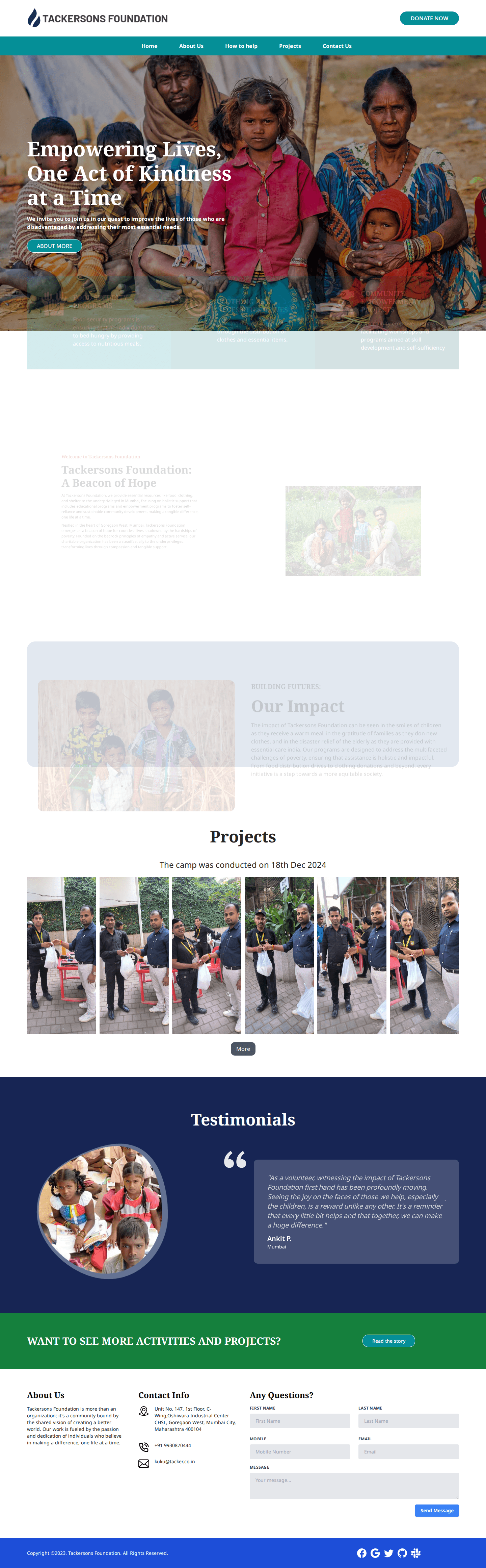
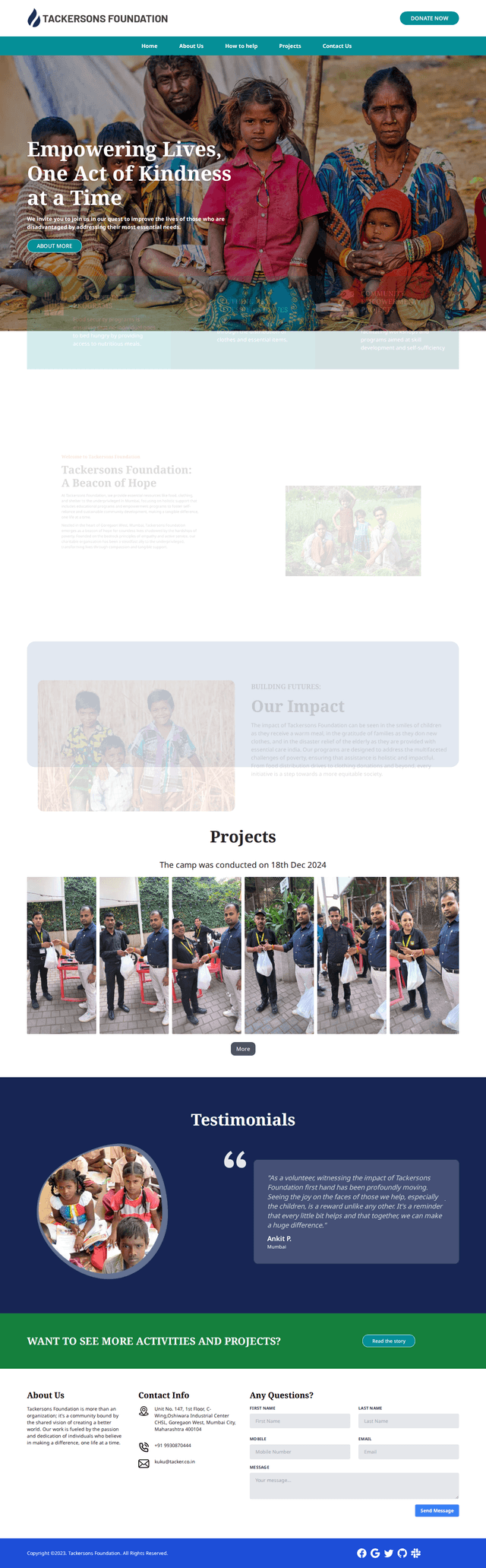
A warm, credibility-driven website for Tackersons Foundation, a Mumbai charitable nonprofit, built around genuine relief-camp photography and a real Certificate of Incorporation.
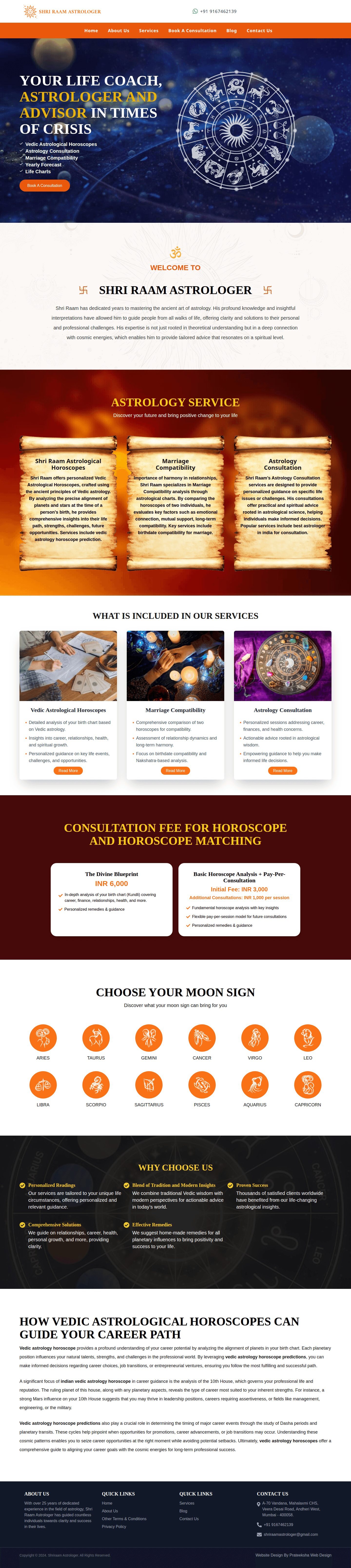
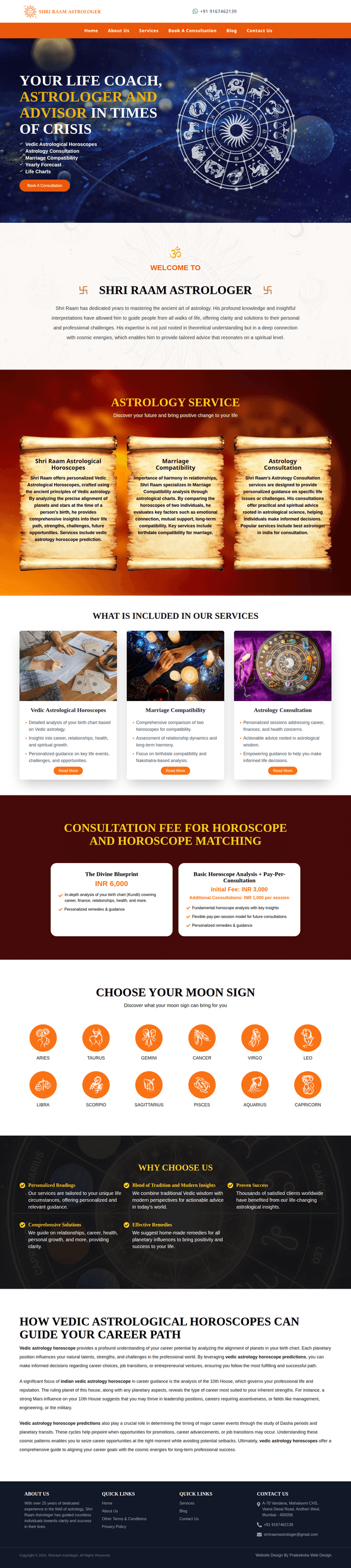
A warm, credible website for Shri Raam Astrologer, a Mumbai Vedic astrology practice, built around a glowing zodiac wheel hero and tasteful parchment-scroll service graphics.

A confident, near-black portfolio website for Pulp, an independent Bandra brand strategy and design agency, built around a striking mixed-media project grid and personal partner bios.

A cinematic, tech-forward website for PolicyGrace, a Mumbai InsurTech insurance broker, built around a striking eagle hero photograph and real dashboard mockups.

Wise Business Plans
A confident, finance-grade website for Wise Business Plans, a business plan and funding advisory firm serving founders, investors and USCIS immigration cases.

TouchKey
A luxurious, architecture-led website for TouchKey, India's premium smart biometric door lock brand, built around real product photography and genuine installation galleries.
Tacker
A warm, credibility-driven website for Tackersons Foundation, a Mumbai charitable nonprofit, built around genuine relief-camp photography and a real Certificate of Incorporation.
Shri Raam Astrologer
A warm, credible website for Shri Raam Astrologer, a Mumbai Vedic astrology practice, built around a glowing zodiac wheel hero and tasteful parchment-scroll service graphics.

Pulp India
A confident, near-black portfolio website for Pulp, an independent Bandra brand strategy and design agency, built around a striking mixed-media project grid and personal partner bios.

Policy Grace
A cinematic, tech-forward website for PolicyGrace, a Mumbai InsurTech insurance broker, built around a striking eagle hero photograph and real dashboard mockups.











Storefronts built to be maintained
Product discovery and checkout that stay easy to manage.
Customers find products faster now, checkout feels straightforward instead of clunky, and — just as important for us — our own team can update the storefront without needing a developer for every small change.
15+
Service categories covered
Including Shopify and custom ecommerce builds
4
Delivery regions
India, USA, UK and Europe
1
Shared delivery process
From storefront build to ongoing maintenance
Ready to build or grow your store?
Tell us about your catalogue — we'll recommend the right platform and scope.
Share your current store, or your plans for a new one. You'll get a clear proposal covering platform fit, timeline and what's included.
FAQs
Ecommerce development — frequently asked questions.
Straight answers on cost, platform choice and what's included.
Tell us your sector and we'll share relevant portfolio examples.
Often that is the more sensible starting point. Growing a store depends on how acquisition, storefront conversion, product data, search visibility and retention work together, not on a redesign alone — see our Ecommerce Growth System, which begins with a diagnostic of your store data.
Costs vary by scope — a starter Shopify store is priced differently from a custom or headless build for a large catalogue. Share your requirements and we will provide a clear quote against a defined scope.
Timeline depends on catalogue size and integrations. Typical storefronts launch in 3–8 weeks; larger projects with ERP or marketplace integrations take longer. We provide a milestone plan up front.
It depends on your catalogue, team and growth plans — Shopify for fast time-to-market, WooCommerce for teams already on WordPress, and custom or headless builds for bespoke performance or architecture needs. We recommend a fit after discovery, not a single default.
Yes. We offer maintenance plans covering updates, monitoring and priority fixes, so your store stays current and secure after launch.
Yes. We plan migrations around your existing content, SKUs and URLs, with a redirect strategy to protect search visibility through the transition.
Often, yes. We diagnose performance issues — image weight, checkout latency, caching — and address the ones actually limiting Core Web Vitals and page speed.
We design checkout for clarity and speed — clear shipping and returns information, sensible payment options, and a streamlined flow. We do not promise a specific reduction in cart abandonment, since that depends on many factors beyond the storefront itself, including price, product fit and shipping terms.
We implement payment integrations through PCI DSS–compliant providers such as Razorpay, Stripe or Shopify Payments, and follow PCI-aware practices in how card data is handled on the storefront. PCI compliance itself is certified by the payment provider and your business, not something we certify on your behalf — we can advise on what your setup requires.
Locations
Explore Our Locations
We proudly serve clients in major cities worldwide, delivering exceptional web design, development, and digital marketing services.