Conversion-Focused Shopify Store Package
A Shopify store package,
where theme, catalogue and apps are planned together.
This page details the package-level scope of a Shopify store build — conversion- focused design practices, catalogue structure and where this package isn't the right fit. For our broader Shopify implementation and ecommerce approach, see /shopify and /ecommerce.

This page details the package-level scope of a Shopify store build — theme customisation, catalogue structure and app integration review planned together, within our broader ecommerce service. Results depend on product demand, price, margin, inventory, competition, fulfilment, media investment, customer service, and implementation quality. The merchant owns product facts, pricing, taxes, policies, inventory, fulfilment, claims, imagery, and legal approvals. No sales or conversion outcome is guaranteed, and no urgency or scarcity messaging is fabricated. For our broader Shopify and ecommerce approach, see /shopify and /ecommerce.
What this package is
A Shopify storefront build — theme customisation, catalogue and metafield structure, and an app integration review, planned together and confirmed in a written proposal before work begins.
What this package is not
Not a guaranteed sales or conversion outcome, not fabricated urgency or scarcity, and not a Shopify Partner or Plus-specific claim. For platform strategy or ongoing growth work beyond store setup, see our ecommerce service.
Where Shopify package pages get vague
A package description that reads as a guaranteed sales promise instead of stating real scope.
- 01
Sales claimed as a build outcome
"Built to sell" language, when a storefront alone cannot guarantee sales revenue.
- 02
Fabricated urgency and scarcity
Manufactured stock warnings or countdown pressure used as a conversion tactic.
- 03
Unverified partner status implied
Shopify Partner or Plus-tier language used without a published, verifiable status.
- 04
Unattributed reviews used as proof
Generic testimonials and star ratings with no real, dated client link.
- 05
Commerce dependencies left unstated
Demand, margin, inventory and fulfilment left out of the picture entirely.
What this page does instead
Real scope, honest dependencies, and no fabricated urgency.
This page is the detailed package view behind our Shopify development service and our ecommerce service. Every claim here matches those pages' already-audited positioning — no guaranteed sales outcome, no invented figures.
- Results stated as dependent on demand, price, margin, inventory, competition and fulfilment
- No fabricated urgency, scarcity, or stock-level warning
- No Shopify Partner or Plus-tier claim without published, verifiable status
- No fabricated testimonial, rating, or review count
- Merchant ownership of product facts, pricing and legal approvals stated explicitly
What's included
Every stage a Shopify package build actually needs, in order.
Scoped to your catalogue, theme and the platform tier you're actually on.
Store setup
Setup
Theme customisation
Theme
Catalogue & product setup
Catalogue
Conversion-focused design practices
Design
App & integration review
Integrations
Analytics & pixel setup
Depends on access
Payments
PCI-aware
Launch support
Launch
How delivery runs
Plan, configure, design, validate, launch — in that order.
The same sequence for a new store or a theme refresh on Shopify.
Plan
Catalogue structure, theme requirements and app needs understood before any build work starts.
Configure
Store setup, shipping, taxes and payment integration configured to your market.
Design
Theme customisation and conversion-focused design practices built on Online Store 2.0 and Liquid.
Validate
Catalogue data, checkout flow and payment integration tested before go-live.
Launch
A monitored go-live, with a handover so your team can manage the store.
What changes
A generic theme with bolted-on apps vs. this scoped Shopify package.
Both are Shopify stores. The difference is whether theme, catalogue and apps were planned to work together, and whether claims about outcomes stay honest.
Suited to
Built for the store your catalogue actually needs.
Shopify genuinely fits some catalogues better than others — we scope the build to yours.
New stores
New store
Theme refresh
Refresh
Platform migration
Migration
Store & platform strategy
Platform choice
Compare platformsNot a good fit?
This package is not right for every store — here is where it falls short.
We would rather tell you honestly than fit your store into a package that isn't right for it.
Not a good fit
Ongoing growth & acquisition work
A store build is one part of growth — acquisition, retention and demand generation need a separate, coordinated approach.
- Acquisition & traffic strategy
- Retention & lifecycle marketing
- Ongoing conversion diagnostics
Not a good fit
Non-Shopify commerce builds
A custom or WooCommerce ecommerce build is a different scope — see our broader ecommerce service for platform choice.
- Platform selection & comparison
- Custom or headless commerce
- Complex multi-warehouse logic
Talk it through first
Undefined project scope
If your catalogue and requirements aren't yet clear, we won't quote this package against them — we'll help you define scope first.
- Catalogue and goals clarified
- Honest scope recommendation
- A defined scope before any quote
What ships with every Shopify package engagement
Catalogue structure documentation
Categories, variants and metafields documented so your team can extend the catalogue confidently.
PCI-aware payment setup
Integration through a compliant payment provider, configured for your market — PCI certified by the provider and the merchant.
App review notes
A written record of what each installed app adds, so future changes are informed decisions.
Migration redirect plan (where relevant)
URLs mapped from your previous platform, validated before cutover to reduce visibility risk.
Handover documentation
A guide covering catalogue management, theme editing and platform access.
A written proposal
Scope, timeline and terms confirmed in writing before store work begins.
Website Design

A confident, finance-grade website for Wise Business Plans, a business plan and funding advisory firm serving founders, investors and USCIS immigration cases.

A luxurious, architecture-led website for TouchKey, India's premium smart biometric door lock brand, built around real product photography and genuine installation galleries.
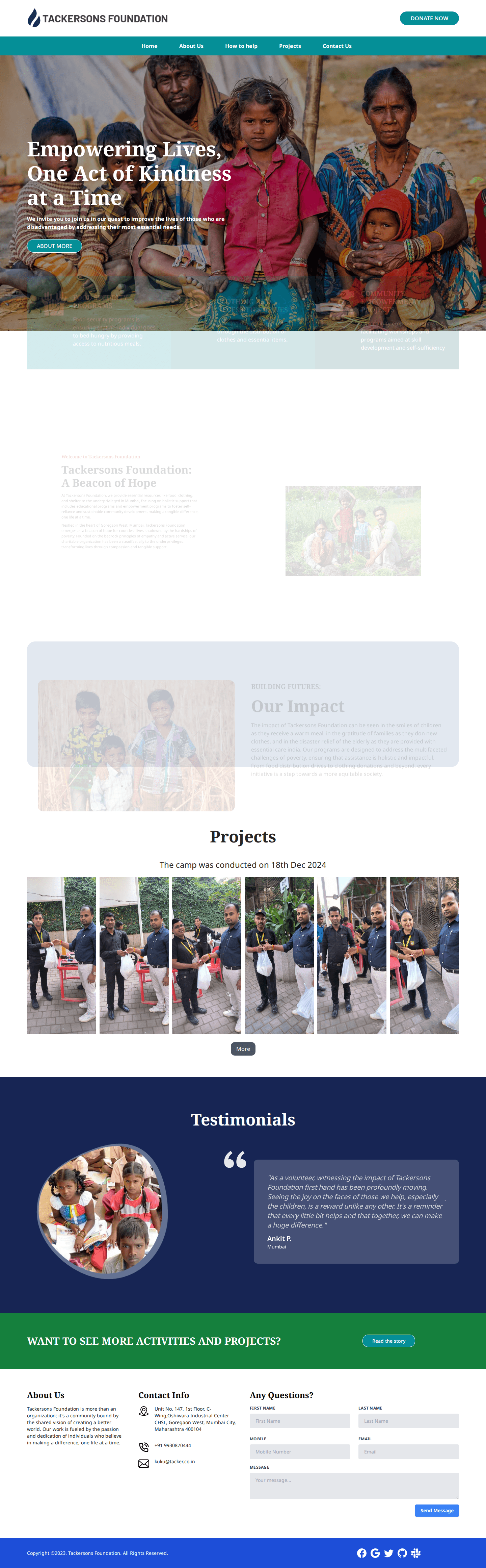
A warm, credibility-driven website for Tackersons Foundation, a Mumbai charitable nonprofit, built around genuine relief-camp photography and a real Certificate of Incorporation.

A warm, credible website for Shri Raam Astrologer, a Mumbai Vedic astrology practice, built around a glowing zodiac wheel hero and tasteful parchment-scroll service graphics.

A confident, near-black portfolio website for Pulp, an independent Bandra brand strategy and design agency, built around a striking mixed-media project grid and personal partner bios.

A cinematic, tech-forward website for PolicyGrace, a Mumbai InsurTech insurance broker, built around a striking eagle hero photograph and real dashboard mockups.

Wise Business Plans
A confident, finance-grade website for Wise Business Plans, a business plan and funding advisory firm serving founders, investors and USCIS immigration cases.

TouchKey
A luxurious, architecture-led website for TouchKey, India's premium smart biometric door lock brand, built around real product photography and genuine installation galleries.
Tacker
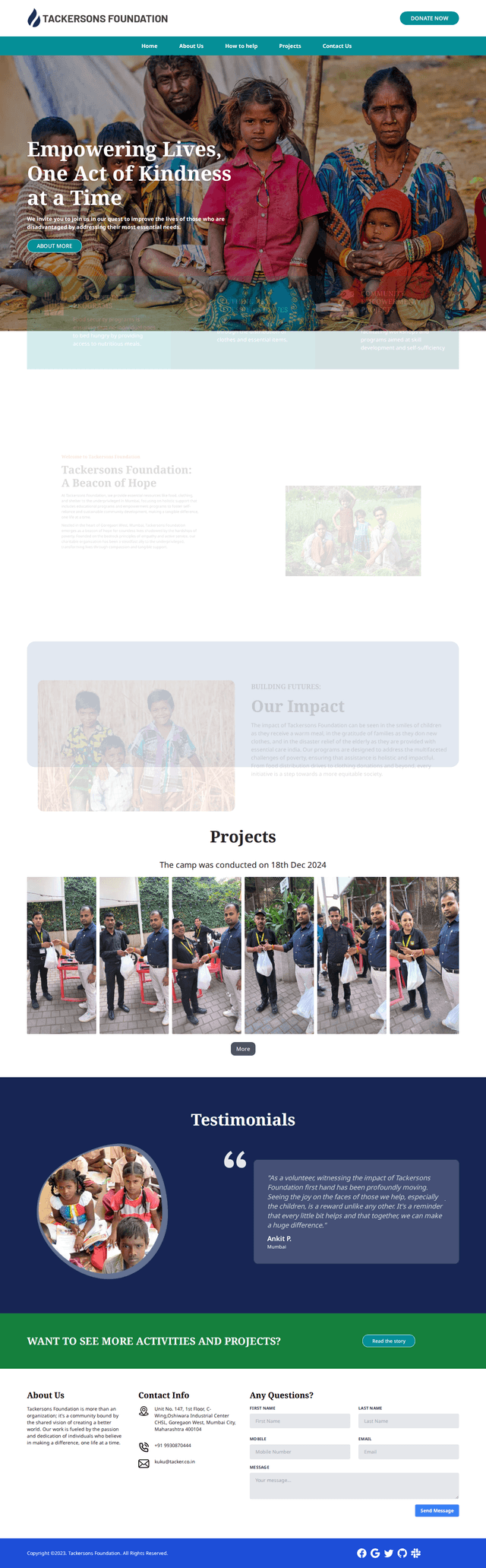
A warm, credibility-driven website for Tackersons Foundation, a Mumbai charitable nonprofit, built around genuine relief-camp photography and a real Certificate of Incorporation.

Shri Raam Astrologer
A warm, credible website for Shri Raam Astrologer, a Mumbai Vedic astrology practice, built around a glowing zodiac wheel hero and tasteful parchment-scroll service graphics.

Pulp India
A confident, near-black portfolio website for Pulp, an independent Bandra brand strategy and design agency, built around a striking mixed-media project grid and personal partner bios.

Policy Grace
A cinematic, tech-forward website for PolicyGrace, a Mumbai InsurTech insurance broker, built around a striking eagle hero photograph and real dashboard mockups.











Ready to talk through your store?
Tell us about your catalogue — we'll scope the build honestly.
Share your current store or plans for a new one. You'll get a clear proposal covering theme scope, timeline and what's included — no overselling checkout freedom, fabricated urgency, or a sales outcome we don't control.
FAQs
Shopify store package — frequently asked questions.
Straight answers on scope, platform constraints and what this package can and cannot promise.
Not sure if Shopify is the right platform, or is your store already live and underperforming? Our ecommerce service and Ecommerce Growth System cover that.
No — this page is the package-level scope behind our Shopify implementation work at /shopify, within our broader /ecommerce service. This page spells out theme, catalogue and app scope, plus poor-fit boundaries, in more depth than the service pages do.
No, and we won't claim it does. We build conversion-focused design practices — clear product information, trust signals, structured navigation — but results depend on product demand, price, margin, inventory, competition, fulfilment, media investment, customer service, and implementation quality. None of these are things a storefront build alone controls.
We build on Shopify regularly, but we don't currently hold a listed Shopify Partner Program status or a published Shopify Plus track record, and we won't claim either. What we can offer is a straightforward look at recent theme and storefront work during a consultation.
No. We do not fabricate scarcity, stock-level warnings, or countdown urgency that isn't real. Conversion-focused design here means clear product information, genuine trust signals and structured navigation — not manufactured pressure tactics.
Checkout customisation on Shopify is genuinely constrained by your plan tier — Shopify restricts how deeply checkout can be modified outside Shopify Plus. We work within whatever your plan allows and are upfront about the ceiling. We do not promise a specific increase in conversions or reduction in cart abandonment.
Apps, tracking pixels, and analytics integrations are reviewed for what they genuinely add to your specific store, not bundled in identically at every tier. Analytics and marketing pixels also require your own approved accounts, consent decisions, and account access — we cannot configure these without you.
Payment integration runs through PCI-compliant providers such as Razorpay, Stripe, or Shopify Payments. PCI compliance itself is certified by the payment provider and the merchant — not by Prateeksha.
The merchant owns and is responsible for product facts, pricing, taxes, policies, inventory, fulfilment, marketing claims, imagery, and legal approvals. We build the storefront that presents this information; we do not generate or guarantee the accuracy of your product or business claims.
Costs depend on scope — store setup, theme customisation, catalogue size and app integrations all affect it. There is no single fixed price; share your requirements through a quote request for a tailored estimate, confirmed in a written proposal.
Locations
Explore Our Locations
We proudly serve clients in major cities worldwide, delivering exceptional web design, development, and digital marketing services.