Web Designers vs Web Developers: Who Does Your Business Actually Need?
Confused about whether you need a web designer or a web developer for your project? Here's how I explain the difference to clients, and why most real projects need both.
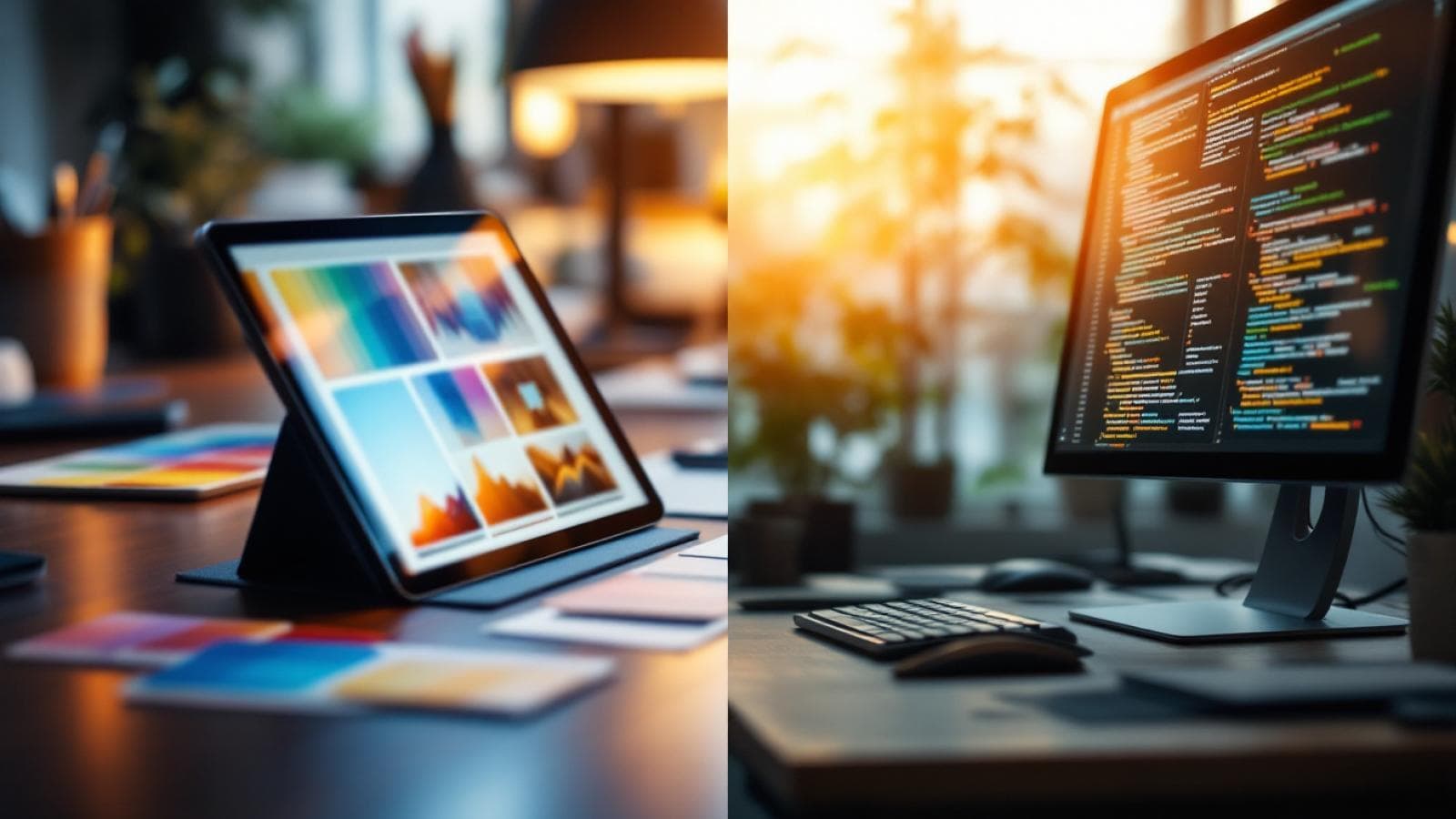
I get this question almost every week: "Do I need a web designer or a web developer?" Most people asking have already talked to a few freelancers and gotten conflicting answers, because the terms genuinely overlap in how they're used across the industry. Here's how I actually break it down when a business owner asks me directly.
What Web Designers Actually Do
Web designers focus on how a site looks and how visitors move through it. That includes layout, color, typography, imagery, and the overall visual hierarchy that guides someone's eye from a headline down to a call-to-action button. A good web designer is also thinking about usability — where does the eye land first, is the navigation obvious, does the page feel trustworthy within the first three seconds. Tools like Figma are typically where this work happens before anything gets built.
What web designers usually don't do is write the underlying code that makes the site function — the database queries, the server logic, the payment integration. That's a different skill set entirely.
What Web Developers Actually Do
Web developers take a design and turn it into a working website or application. This includes front-end work (making the design responsive and interactive in the browser) and back-end work (databases, server logic, integrations with things like payment gateways or CRMs). A developer working on an ecommerce store, for example, needs to understand how inventory, checkout, and order management connect behind the scenes, not just how the product page should look.
Some developers are strong on the visual side too, and some designers can write enough code to build simple sites themselves. The line blurs constantly in practice, which is exactly why the question comes up so often.
Why Most Real Projects Need Both
If you're launching a basic brochure site with five static pages, one person with both skill sets can often handle it end to end. But the moment your project involves a booking system, an online store, a member login, or any kind of custom functionality, you genuinely need design thinking and development skill working together. A beautifully designed page that's slow to load or breaks on mobile isn't a good website. Neither is a fast, functional site that looks unprofessional and drives visitors away before they read a word. This is one of the reasons a proper structured web design process matters more than picking one specialist over another.
At Prateeksha Web Design, we don't split this into two separate quotes and hope the handoff works out. Our process keeps design and development in the same room from day one, because a design decision made in isolation — like an animation that looks great in a mockup — can quietly break performance or accessibility once it's actually built.
How the Roles Show Up Differently in a Job Posting
If you're hiring in-house rather than working with an agency, job postings for these two roles usually look quite different, and that difference is a useful shortcut for understanding the split. A web designer posting typically asks for a portfolio, familiarity with design tools, and an eye for typography and layout. A web developer posting usually asks for specific programming languages, frameworks, and experience with databases or APIs. If you see a single posting demanding deep expertise in both visual design tools and back-end frameworks, it's worth asking during the interview how they've actually balanced both in past roles, since true depth in both areas at once is less common than job postings sometimes suggest, and candidates who claim mastery of everything are worth a closer, more skeptical look.
Questions to Ask Before You Hire Either
- Can you show me a live site you designed, not just a static mockup?
- Who handles the back-end if my site needs a database, login, or payment system?
- What happens after launch — is ongoing maintenance included, or is that a separate conversation?
- Will the site be built to load quickly, or is speed something we'll fix later?
These questions usually reveal pretty quickly whether you're talking to someone who can carry a project end to end or someone who'll need a partner for half of it.
What The Data Says About Getting This Right
A few figures worth keeping in mind when deciding how to staff a website project:
- Google's research on mobile usability has repeatedly shown that page load delays of even a few seconds significantly increase the chance a visitor leaves before the page finishes loading — a development-side problem no amount of good design alone can fix.
- Industry usability studies commonly find that visitors form a strong first impression of a website's credibility within the first few seconds, which is largely a design and visual-hierarchy outcome.
- According to widely cited web performance benchmarks, mobile traffic now represents the majority of visits for most business websites, which means responsive execution (a development responsibility) directly affects how many people actually experience the design as intended.
How We Handle This at Prateeksha
When someone comes to us for a new site, we don't ask them to pick a lane. We scope the project first — what it needs to do, who it needs to serve, what systems it has to connect to — and then bring in the right mix of design and development from our own team. That's true whether it's a lead generation website, a full ecommerce store, or a custom web application. If you've been quoted separately for "design" and "development" and it feels disjointed, that's usually a sign the two sides of the project aren't actually talking to each other.
Watch: Designer vs Developer, Explained Simply
Further Reading
- MDN Web Docs — an introduction to web standards and roles
- web.dev — Google's learning resources on modern web development
Frequently Asked Questions
Can one person be both a web designer and a web developer?
Yes, some professionals are skilled at both, often called full-stack designers or designer-developers. For smaller, simpler projects this can work well. For larger projects with custom functionality, a dedicated team usually delivers a stronger result faster.
Which should I hire first for a new website project?
Ideally neither in isolation. Start with a team or agency that can scope the whole project, then let design and development work together from the start rather than handing off a finished mockup with no development input.
Is a web designer cheaper than a web developer?
Costs vary widely based on experience and project scope rather than the title itself. A simple design-only project can cost less than a full custom build, but comparing hourly rates alone doesn't tell you much about overall project cost or quality.
Do I need a web developer if I'm using a platform like Shopify?
Often yes, especially for theme customization, app integrations, or performance tuning. Off-the-shelf platforms reduce some development work but rarely eliminate it entirely once you need something beyond the default theme.
How do I know if my project needs custom development versus a template?
If your site needs specific business logic — custom booking rules, unique checkout flows, integrations with internal tools — that usually points toward custom development. A straightforward informational site can often work well with a well-chosen template and strong design execution.