The 7 Steps in Web Design: How I Take a Website From Brief to Launch
Every website we build goes through the same seven stages, in the same order, because skipping one is exactly how projects go over budget or miss the mark.
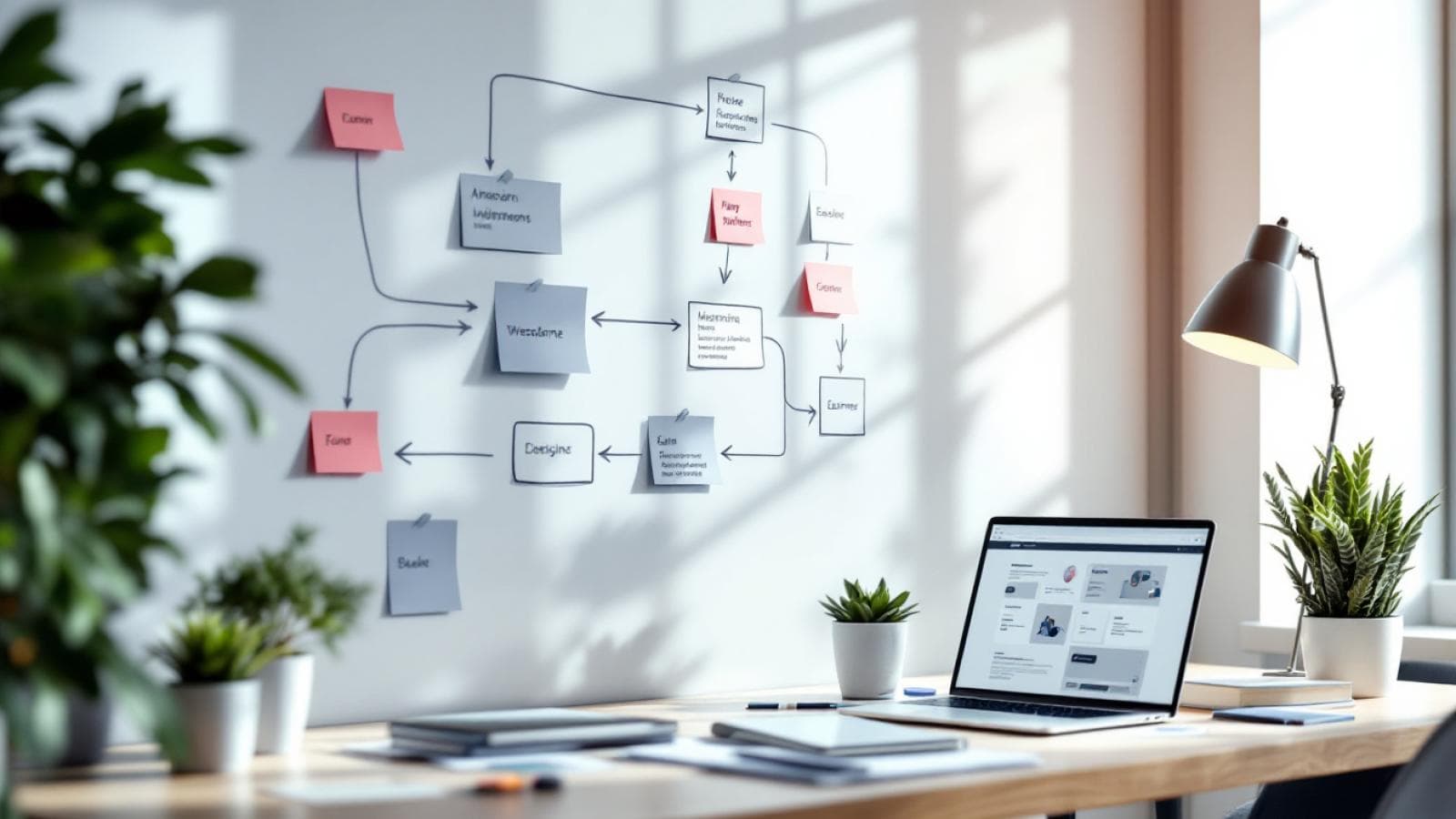
The web design process, done properly, has seven distinct steps: discovery, planning, wireframing, visual design, development, testing, and launch — followed by ongoing support. I know that sounds like a lot for “just a website,” but every step exists because skipping it causes a specific, predictable problem later. Let me walk through each one the way we actually run it at Prateeksha Web Design.
Step 1: Discovery
This is where we figure out what the site actually needs to do. Who's the target customer? What are they searching for? What does the business want visitors to do once they land — call, fill a form, buy something? Skipping discovery is the number one reason redesigns come back looking nice but performing no better than the old site.
Step 2: Planning and Sitemap
Once we know the goal, we map out the site structure — every page that needs to exist and how they connect. This is also where we decide the content strategy: what each page needs to say to move a visitor toward the goal from step one. A clear sitemap prevents the common problem of a site growing unplanned pages that confuse navigation and dilute SEO.
Step 3: Wireframing
Before any visual design happens, we lay out where content blocks sit on each page — headline, image, call-to-action, form — in a plain, undecorated skeleton. This lets us solve layout and priority problems cheaply, before time gets spent on colours and fonts that might get reshuffled anyway.
Step 4: Visual Design
Now the actual look comes in — colour, typography, imagery, spacing. Good visual design supports the hierarchy set in wireframing rather than fighting it. This is also where brand consistency matters: fonts, colours, and tone should feel like one coherent business, not a stitched-together set of stock templates.
Step 5: Development
Design files get built into a real, working site. Depending on the project, we build custom in Next.js for speed and flexibility, or on Shopify for ecommerce stores that need catalog and checkout functionality out of the box. This stage also covers forms, integrations, and making sure the site performs well on mobile, since most visitors will arrive on a phone.
Throughout development, we're also building in the fundamentals of search engine optimization — proper heading structure, fast load times, clean URLs — rather than treating SEO as something to fix after launch.
Step 6: Testing and Quality Assurance
Before anything goes live, every form gets submitted, every link gets clicked, and the site gets checked across browsers and devices. We also look specifically at conversion elements here — is the call-to-action visible without scrolling, does the WhatsApp button actually open correctly on mobile, are there any dead ends in the user journey. This is where conversion rate optimization thinking gets applied practically, not just theoretically.
Step 7: Launch and Handover
Going live involves more than uploading files — DNS, SSL, analytics tracking, and a final full walkthrough with the client. We also make sure the client actually knows how to use whatever content management system sits behind the site, so they're not stuck calling us for every small text change.
The Step People Forget: Ongoing Support
A launched website isn't finished — it needs updates, monitoring, and occasional content refreshes to stay secure and effective. That's why we offer website maintenance as a distinct, ongoing stage rather than treating launch as the finish line.
Where This Process Breaks Down in Practice
I've described these seven steps as a clean, linear sequence, but real projects rarely move in a perfectly straight line. Feedback during visual design sometimes sends a project back to revisit the sitemap. A client discovers halfway through development that they need a feature nobody scoped at the start. That's normal, and a good process should be able to absorb it without collapsing into chaos — the point of structure isn't rigidity, it's having a clear reference point to return to when something changes.
What actually causes projects to go badly isn't deviation from the plan — it's the absence of a plan to deviate from in the first place. When there's no documented sitemap, no wireframe, and no agreed scope, every change becomes a renegotiation from scratch, and that's when timelines and budgets spiral.
How Long Each Step Typically Takes
As a rough guide for a standard business website: discovery and planning usually take about a week, wireframing another few days, visual design one to two weeks depending on revision rounds, development two to three weeks, and testing plus launch prep about a week. These are approximate and shift significantly with project complexity, but knowing the rough shape helps you judge whether a quoted timeline is realistic or optimistic. If an agency can't roughly explain their own timeline stage by stage when you ask, that's worth noting — it's one of the same warning signs of an agency that won't deliver that's worth checking before you sign anything.
Why We Stick to This Process Even Under Deadline Pressure
Clients sometimes ask us to skip steps when they're in a hurry — usually wireframing or testing, since neither produces something visually exciting to look at. We push back on this more often than clients probably expect, because the stages we'd be asked to skip are exactly the ones that catch expensive mistakes early. A wireframing session that takes two days can prevent two weeks of rework later if it surfaces a layout problem before development starts. A thorough testing pass before launch can catch a broken checkout flow before it costs a client real sales on day one.
The honest trade-off is that a disciplined process sometimes feels slower in the moment than skipping ahead to the visually satisfying parts. In our experience, it's consistently faster overall, because it avoids the far more expensive cycle of building something, discovering a fundamental problem, and rebuilding it after the fact.
What You Can Do to Keep Your Own Project on Track
From the client side, the biggest lever you have is turnaround time on feedback and content. Projects rarely slip because a design team is slow — they slip because a client takes three weeks to approve a homepage draft or hasn't written the About page copy the developer needs to build the page. If you want your project to move at the pace quoted, treating your own feedback and content delivery as part of the critical path, not an afterthought, makes a bigger difference than almost anything else in your control.
Why process discipline actually matters:
- Project management research consistently shows that skipping planning stages is one of the leading causes of scope creep and budget overrun on digital projects, a pattern widely documented across software and design industry surveys.
- Google's page experience guidance has repeatedly shown that sites built with performance considered from the development stage — not patched in afterward — load meaningfully faster on mobile connections.
- According to commonly cited UX research, users form a first impression of a website's credibility within seconds, which is why the wireframing and visual design stages carry so much weight on conversion outcomes.
Frequently Asked Questions
How long does the full 7-step web design process take?
For a standard business website, the full process typically takes four to eight weeks. Larger ecommerce or custom-functionality projects can take longer, mainly depending on content readiness and how quickly feedback comes back at each stage.
Can I skip wireframing and go straight to visual design?
You can, but it usually costs more time overall — layout problems discovered during visual design are more expensive to fix than the same problems caught in a plain wireframe.
What's the difference between web design and web development?
Design covers the look, layout, and user experience. Development is the technical build that makes the design actually function in a browser, including forms, integrations, and performance.
Do you need a written brief before starting the process?
A brief helps, but it's not strictly required — the discovery step exists specifically to extract and clarify goals even when a client doesn't arrive with a fully formed brief.
What happens after the website launches?
We recommend an ongoing maintenance plan covering updates, security monitoring, and content changes, so the site stays reliable and current rather than slowly degrading after handover.
A structured process like this is exactly what protects you from the problems I described in why your last web design agency didn't deliver.Further Reading
- web.dev: Learn Web Development Fundamentals
- Nielsen Norman Group: 10 Usability Heuristics
- Next.js: Official Learn Course
If you'd like to see how this process plays out on a real project, browse our case studies or get in touch and we can talk through your specific brief.