How Much Does the Average Shopify Store Make Per Month?
Most Shopify stores earn between $200 and $2,000 per month, but actual income varies widely. Learn what affects Shopify store earnings and how to estimate your potential.
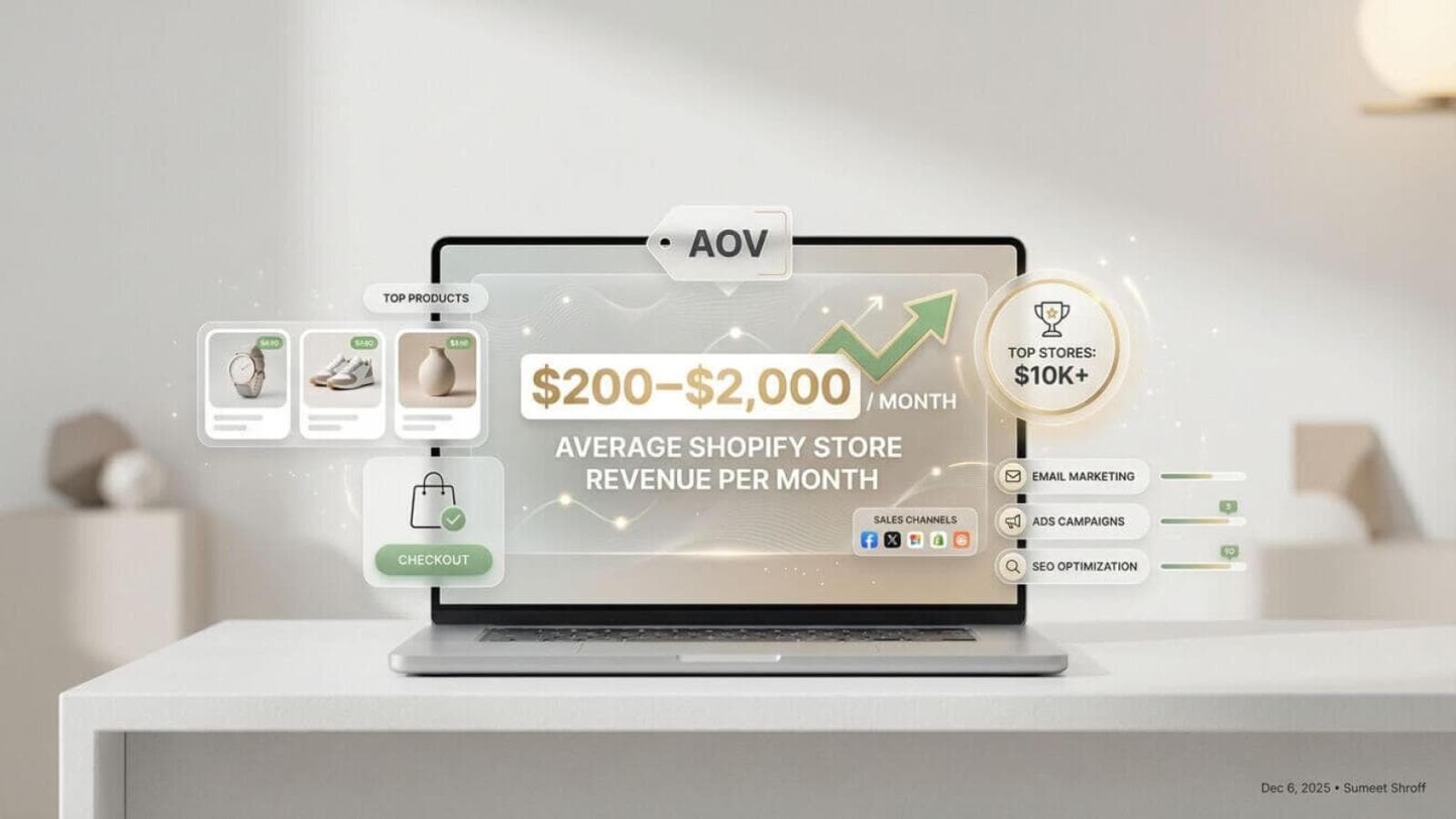
The average Shopify store makes between $200 and $2,000 per month in revenue, but this number can vary greatly depending on factors like niche, marketing efforts, and experience. While a few stores earn much more, many new or small stores may make less, especially in the early stages. Shopify is a flexible platform, and your actual income will depend on product selection, pricing, traffic, and conversion rates.
Step-by-Step Instructions
Understand Typical Earnings Ranges
- Most new Shopify stores earn less than $1,000/month in the first year.
- Growing stores with consistent marketing and a strong product-market fit may reach $2,000–$10,000/month or more.
- Top-performing stores (the top 10%) can earn $10,000–$100,000/month, but these are exceptions, not the rule.
Estimate Your Potential Income
- Calculate your average order value (AOV). For many Shopify stores, AOV ranges from $30 to $70.
- Estimate monthly visitors. A new store may get 200–2,000 visitors/month with basic marketing.
- Use a typical ecommerce conversion rate (1–3%) to estimate monthly sales.
- Example: If you have 1,000 visitors/month, a 2% conversion rate, and a $50 AOV, you’d make about $1,000/month in sales (1,000 x 2% x $50).
Track and Improve Your Results
- Use Shopify analytics to monitor traffic, sales, and conversion rates.
- Test new marketing strategies (ads, SEO, email) to increase visitors and sales.
- Optimize your product pages and checkout process to boost conversions.
Compare with Industry Benchmarks
- Shopify regularly publishes data and case studies. Check the Shopify blog or forums for recent statistics.
- Remember, most stores take several months to become profitable.
Before You Start
- Initial Investment: Building a profitable Shopify store often requires upfront investment in products, ads, and website design.
- Realistic Expectations: Most stores do not become overnight successes. Consistency and learning from analytics are key.
- Backup Your Data: Always back up your store data before making major changes or launching new campaigns.
Alternatives to This Action
- Try Other Platforms: If Shopify’s costs or features don’t fit your needs, consider WooCommerce or BigCommerce.
- Start with a Marketplace: Selling on Amazon, Etsy, or eBay can be a lower-risk way to test your products before building a store.
- Dropshipping: Consider dropshipping to minimize inventory costs and test products before investing heavily.
FAQs
Q: Can you make a full-time income with a Shopify store?
Yes, some Shopify store owners earn a full-time income, but it usually takes time, effort, and investment in marketing and product development. Most stores start small and grow over months or years.
Q: What factors affect how much a Shopify store makes?
Key factors include product demand, pricing, marketing strategy, website quality, and customer service. Stores in trending niches with strong marketing typically earn more.
Q: How long does it take to become profitable on Shopify?
Most stores take several months to a year to become profitable. Success depends on your niche, marketing efforts, and ability to attract and convert visitors.
Q: Are there any hidden costs that affect Shopify store profit?
In addition to Shopify’s monthly fee, consider costs for apps, transaction fees, advertising, shipping, and product sourcing. These can reduce your net profit.