What Is Local SEO? A Plain-English Guide for Mumbai Business Owners in 2026
Local SEO helps Mumbai businesses appear when nearby customers search on Google. Learn the 3 pillars, realistic timelines, and how to get started in 2026.
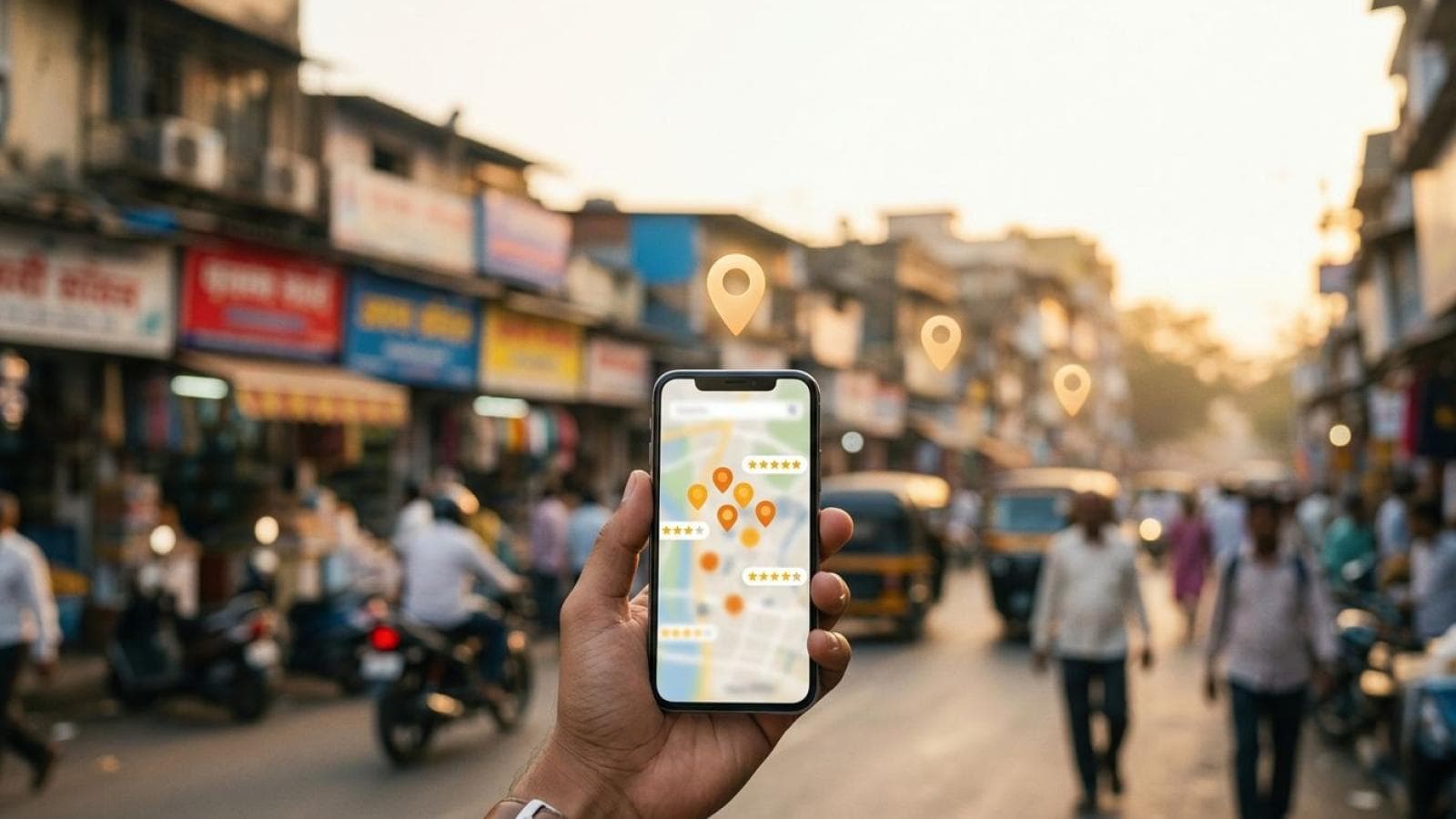
Local SEO for small business is the process of making your business appear when nearby customers search for what you sell on Google. If someone in Andheri types "accountant near me" or "best interior designer Bandra", local SEO determines whether your business shows up — or whether your competitor's does. It is not about gaming an algorithm. It is about giving Google every signal it needs to trust that your business is real, relevant, and close enough to help the searcher.
This guide explains local SEO in plain English — with a Mumbai context throughout — so you can understand what it is, how it works, and what to do first.
Want a local SEO strategy built specifically for your Mumbai business? We audit, plan, and execute — so you don't have to guess.
Explore our Local SEO ServicesLocal SEO Explained Without Jargon
Local SEO is the practice of optimising your online presence so Google shows your business to people searching in your geographic area. Think of it this way: you run a bakery in Juhu. When someone two streets away searches "birthday cake near me" on their phone, Google has to decide which bakeries to show. The ones that appear in the top 3 results (called the Local Pack or Map Pack) get 44% of all clicks, according to BrightLocal's 2024 Local Consumer Review Survey. Everyone below that gets a fraction.
Here's a simple analogy. Imagine the old Mumbai phone directory — the Yellow Pages. If your bakery wasn't listed, customers couldn't find you. Google Maps is the 2026 version of that directory. Local SEO is the work of making sure your listing is complete, accurate, and compelling enough that Google places it at the top of that digital directory when the right customer searches.
Local SEO is distinct from traditional SEO in one key way: it targets searches with geographic intent. A user typing "how to bake a cake" wants information — that is a national SEO battle. A user typing "bakery Juhu" wants to buy — and that is your local SEO opportunity. For most Mumbai small businesses — contractors, doctors, designers, restaurants, finance professionals — local SEO delivers a higher return than any other form of digital marketing because the searcher already wants to buy and is already close to you.
Learn how our full SEO services combine local and organic SEO for a complete growth strategy.
How Google Decides Which Businesses to Show in Local Search
Google uses three core factors to rank local businesses: Relevance, Distance, and Prominence. Google officially names these three signals in its own documentation, and every local SEO action you take maps to one of them.
- Relevance — Does your business match what the searcher is looking for? A plumber in Andheri West will not rank for "caterers Bandra" no matter how well optimised the listing is. Relevance is about category match, keywords in your business description, and the services you list.
- Distance — How close is your business to the searcher or to the location mentioned in the query? Google uses the user's real-time location (with permission) and the location specified in the search phrase. A café in Colaba will outrank a café in Thane for someone searching "café near me" in South Mumbai.
- Prominence — How well known and trusted is your business? This is where the bulk of local SEO work happens. Prominence is built from reviews, backlinks from local websites, mentions across directories (citations), and the overall authority of your Google Business Profile.
Google's algorithm weighs these three factors together — not in isolation. A highly prominent business a little further away can still outrank a less prominent one that is physically closer. This is why a dental clinic in Andheri East with 200 reviews and a complete GBP profile often ranks above a clinic in Andheri West with 10 reviews and a half-filled profile, even for searches explicitly mentioning "Andheri West dentist".
The practical implication: you cannot game distance (you are where you are), but you can dramatically improve relevance and prominence with consistent, deliberate work. That is exactly what our local SEO service focuses on.
The 3 Pillars of Local SEO: GBP, Citations, and On-Page Signals
Local SEO rests on three pillars: your Google Business Profile, your local citations, and your website's on-page local signals. Neglect any one of them and the other two underperform.
Pillar 1 — Google Business Profile (GBP)
Your Google Business Profile is the single most important local SEO asset you control. It is the card that appears in Google Maps and in the Local Pack when people search for your service. A complete GBP profile includes your business name, address, phone number, website, business hours, categories, photos, and a keyword-rich description. Google's own data shows that businesses with complete profiles get 7x more clicks than those with incomplete ones.
For Mumbai businesses, the GBP profile also needs to list your neighbourhood correctly. "Andheri West" and "Andheri East" are searched separately — they are not interchangeable. Listing only "Andheri" means you compete poorly in both micro-areas. Our Google Business Profile optimisation service covers every field, including the less obvious ones like Q&A, Products, and Posts that most businesses leave blank.
Reviews are the fuel that drives GBP prominence. A business with 50 recent 4-star reviews consistently outperforms one with 5 five-star reviews from 3 years ago. Recency and volume both matter. Responding to every review — including negative ones — signals to Google that the business is active and engaged.
Pillar 2 — Local Citations
A local citation is any online mention of your business Name, Address, and Phone number — referred to as NAP. Citations appear on directories like JustDial, Sulekha, IndiaMart, Google Maps, Facebook, and dozens of industry-specific directories. Moz's Local Search Ranking Factors study identifies citation consistency as one of the top 5 local ranking signals. Every time your NAP information is consistent across directories, it strengthens Google's confidence that your business is real and trustworthy.
The problem most Mumbai businesses face: their NAP is inconsistent. The phone number on JustDial differs from the one on Google Maps. The address on Sulekha spells the locality differently from the one on the website. These small inconsistencies dilute your local authority and directly suppress your ranking. Auditing and cleaning up citations is often one of the highest-impact local SEO actions in the first 90 days.
Pillar 3 — On-Page Local Signals
Your website must confirm the same location signals as your GBP and citations. This means embedding your full address (with pin code) in the footer on every page, using LocalBusiness schema markup so Google can read your NAP in structured format, and including location-specific content in your page copy. A page titled "Web Design Services in Andheri West Mumbai" with the suburb name in the H1, body copy, and meta tags sends a clear geographic relevance signal that a page titled just "Web Design Services" does not.
Title tags, meta descriptions, and page content should reference your service area naturally — not keyword-stuffed, but genuinely specific. Phrases like "for Mumbai businesses", "serving Andheri, Bandra, and Juhu", and "trusted by South Mumbai professionals" work because they are factual and local. Google's natural language processing has become sophisticated enough to understand these signals without needing exact-match repetition.
Local SEO vs Regular SEO — Do You Need Both?
Local SEO and regular (organic) SEO are different strategies that serve different search intents — most Mumbai businesses need both, but in different proportions depending on their service model.
Here is how they compare:
| Factor | Local SEO | Regular SEO |
|---|---|---|
| Primary goal | Appear in Google Maps / Local Pack | Rank on the organic (blue link) results |
| Search intent | "Near me", "in [city]", location-specific queries | Informational, national, or broad commercial queries |
| Key asset | Google Business Profile | Website content + backlinks |
| Typical timeline | 2–4 months to see movement | 4–12 months for competitive queries |
| Best for | Service-area businesses, brick-and-mortar, local professionals | Ecommerce, national services, SaaS, content businesses |
| Radius | Hyperlocal — suburb or district level | City, national, or global |
If you are an interior designer in Bandra, a CA firm in Andheri, or a security services company in South Mumbai, local SEO is your highest priority. The majority of your buyers search with location intent and are ready to contact you within hours of the search. Your Google Maps ranking directly determines how many enquiry calls you receive each week.
Regular SEO matters as well — it builds long-term authority and drives traffic from blog posts, comparison pages, and how-to guides. But for most Mumbai small businesses with limited budgets, local SEO gives a faster return. Start with local, then layer in organic content as your GBP gains traction.
What a Mumbai Business Can Realistically Expect from Local SEO in 6 Months
A Mumbai business that executes local SEO consistently can expect meaningful ranking improvements within 60–90 days and measurable lead increases by month 4–6. Here is a realistic month-by-month breakdown, based on typical results across similar businesses:
- Month 1: GBP fully optimised, NAP citations cleaned up, website LocalBusiness schema added. No visible ranking change yet — Google is re-crawling and re-evaluating your signals.
- Month 2: Impressions in Google Maps start rising. You begin appearing for longer-tail queries ("interior designer Andheri West flat renovation") that you were invisible for before. Still limited clicks.
- Month 3: First meaningful positions in the Local Pack for suburb-specific queries. Review count growing (assuming active review generation). GBP insight data shows rising search appearances.
- Month 4: Consistent Local Pack appearances for 3–5 core queries. Calls from Google Maps increasing. Competitors who had a head start begin to be displaced for some terms.
- Month 5–6: Compounding effect visible — more reviews mean better prominence, which means more clicks, which triggers more GBP activity signals. A well-executed campaign at this stage typically shows 40–80% more monthly GBP calls than the baseline.
These timelines assume active work — not a one-time GBP fill and forget. Local SEO requires monthly attention: new photos, GBP posts, responding to reviews, adding services, and tracking keyword rankings. The businesses that treat it as a one-time task plateau after month 2. The ones that run it consistently compound their results month after month.
For context: BrightLocal's 2024 data shows the average local business receives 1,260 customer searches on Google per month. Businesses in the top 3 Map Pack positions capture over 700 of those — businesses outside the top 3 share the remaining 560 between them. The gap between rank 1 and rank 4 is enormous.
Typical indicators of progress for a Mumbai business in 6 months of local SEO:
- GBP monthly impressions up 3–5x from baseline
- GBP calls up 40–80% (tracked in Insights)
- Ranking in Local Pack for 5–10 suburb + service queries
- Website traffic from Google Maps clicks up 2–3x
- 25–50+ Google reviews (up from 5–15 at start)
Ready to see what local SEO can do for your Mumbai business? We build the complete system — GBP, citations, on-page signals, and review generation — so you rank and convert.
Get a Free Local SEO AuditFrequently Asked Questions
Is local SEO free?
Local SEO has both free and paid components. Creating and maintaining a Google Business Profile is free — any business can claim their profile and optimise it at no cost. However, the execution work — citation building, review generation systems, on-page optimisation, and ongoing management — requires either your time or a professional's. For most Mumbai business owners, the time cost is significant enough that hiring a local SEO specialist delivers a faster return than doing it slowly in-house.
How long does local SEO take to show results?
Most Mumbai businesses start seeing measurable movement in Google Maps rankings within 60–90 days of a full local SEO implementation. Lead increases — actual calls and enquiries from Google Maps — typically appear by month 4–6 as rankings compound and review count grows. Local SEO is faster than organic SEO for commercial queries, but it still requires patience and consistent monthly activity to sustain and improve results.
Can I do local SEO myself or do I need an agency?
You can handle the basics yourself — claiming your Google Business Profile, filling in all details, uploading photos, and responding to reviews. These foundational steps are free and manageable. However, citation audits, technical schema markup, keyword-targeted service pages, and structured review generation campaigns are considerably more technical and time-consuming. Most Mumbai business owners find that a professional local SEO service pays for itself within 3–4 months through the additional leads generated.
Does local SEO work for service-area businesses that don't have a shop?
Yes. Google Business Profile supports Service Area Businesses (SABs) — businesses that travel to customers rather than having a physical storefront. A Mumbai plumber, electrician, or home cleaning service can hide their physical address and instead set a service radius covering their target suburbs. Local SEO for SABs focuses on service-area signals in the GBP description, on-page suburb mentions, and citations listing the service area rather than a walk-in address.
What is the difference between Local Pack and organic results?
The Local Pack (also called the Map Pack) is the block of 3 business listings with a map that appears near the top of Google results for local queries. These come from Google Maps data and are driven by your Google Business Profile. Organic results are the standard blue-link web pages that appear below the Local Pack — these are driven by your website's SEO authority and content. Local SEO primarily targets the Local Pack; regular SEO targets the organic results. Both are worth pursuing, but the Local Pack typically drives higher click rates for purchase-intent queries.