Store Design & Buyer Journeys
We structure category navigation, collection filters, product detail pages, variant selectors, and cart drawers so mobile and desktop shoppers can compare products and reach checkout clearly.
Discovery, product pages, cart, and checkout are one connected path, not separate problems. Our ecommerce website design services and ecommerce website development services cover Shopify, WooCommerce, and custom storefronts—combining ecommerce store design, catalogue and checkout setup, Shopify theme design, Shopify development, speed optimization, and ongoing maintenance.

Many online stores look acceptable on launch day but quietly lose momentum when customers try to filter collections on mobile, compare variants, check delivery terms, or complete payment. At the same time, internal teams often struggle with rigid templates, scattered product data, and overlapping plugins that turn routine merchandising updates into technical bottlenecks.
Our ecommerce website design services connect visual ecommerce store design with the operational realities of running a store: structured ecommerce setup services for catalogues, shipping, and provider-hosted payments, modular Shopify theme design and Shopify development, and ongoing Shopify optimization and maintenance. When your storefront foundation is ready for broader acquisition, retention, and lifecycle programs, our Ecommerce Growth System extends that foundation across the wider buying journey.
We structure category navigation, collection filters, product detail pages, variant selectors, and cart drawers so mobile and desktop shoppers can compare products and reach checkout clearly.
Beyond visual templates, our store setup work covers product taxonomies, SKU attributes, shipping zones, GST or regional tax rules, and provider-hosted payment gateway configuration.
We handle Shopify theme development and customize Online Store 2.0 themes using modular Liquid sections, structured metafields, and reviewed app selections so everyday merchandising stays manageable.
After launch, we support storefronts through Shopify speed optimization, checkout diagnostics, third-party script cleanups, scheduled theme updates, release checks, and ongoing maintenance.
Storefront Platforms, Checkout & Analytics
Whether your store requires Shopify, WooCommerce, or custom ecommerce website development, we select platforms, payment gateways, and measurement tools based on your SKU structure, operational workflow, and internal team capacity. These icons indicate technologies used or suitable for store implementation—never vendor certifications, partnerships, or endorsements.
Used for hosted storefronts requiring custom Liquid sections, structured metafields, Shopify store setup, app reviews, and day-to-day retail or D2C catalogue management.
Suitable for WooCommerce development services and self-hosted stores that combine WordPress editorial publishing with customizable product catalogues and checkout workflows.
Suitable for server-rendered and statically cached web frontends when fast page transitions, clean routing, or custom API-backed buying flows are required.
Used to structure modular interface components such as product filter drawers, variant selectors, comparison views, and accessible cart interactions.
Used in payment gateway integration services to configure provider-hosted gateways and tokenized checkout flows (such as Razorpay, Stripe, or Shopify Payments) for UPI, cards, and netbanking.
Used to configure consent-aware Google Analytics 4 ecommerce event baselines and Search Console monitoring where account access and consent settings allow.
An ecommerce website is not just a digital lookbook. Every purchase depends on a chain of practical decisions: how collections are grouped, how clearly product pages answer buyer questions, how variants and inventory states behave, how quickly templates load on mobile networks, and how reliably checkout handles shipping, tax, and payment confirmation.
When visual design, ecommerce website development services, and store setup are treated as disconnected tasks, merchants often inherit a storefront that looks appealing in static previews but struggles during real catalogue updates, promotional campaigns, or mobile checkout. Planning the interface, catalogue structure, provider-hosted payment flow, and maintenance cadence together keeps the store easier to run and clearer to buy from.
Important Commercial Context
While sound storefront architecture, fast templates, and reliable checkout setup remove avoidable friction, commercial ecommerce results always depend on product demand, price positioning, margin structure, inventory availability, category competition, fulfilment reliability, media investment, and implementation quality.

A store can look polished on a presentation slide yet frustrate buyers if category hierarchy is shallow, mobile filters are hard to use, or product pages hide sizing, materials, delivery timelines, and return terms below the fold.
When products, variants, tags, and collections are imported without a consistent taxonomy, merchandisers end up creating duplicate pages, broken filters, and manual workarounds every time a seasonal range launches.
Hard-coded template hacks and overlapping Shopify or WooCommerce plugins inject redundant JavaScript, slow down collection and product pages, and cause unexpected layout regressions during routine updates.
Misconfigured shipping tables, unclear tax calculation, untested payment callbacks, or launching without a structured maintenance and optimization plan can turn paid and organic store traffic into abandoned carts.
Whether you need Shopify ecommerce website design, structured store setup, custom Shopify theme work, technical development, store optimization, or scheduled maintenance, each service is scoped around how your store sells and operates day to day.
Storefront UX, Merchandising & Templates
Mobile-first storefront architecture, collection layouts, and product detail templates designed to help shoppers compare products and move toward checkout with clarity.
Our ecommerce website design services begin with how real shoppers browse, compare, and decide on mobile and desktop rather than isolated visual mockups. We plan store design and catalogue layouts that clarify category navigation, collection filtering, product detail hierarchy, variant selection, sizing or specification tables, and cart reassurance. Every template in Figma is structured around your actual product photography, SKU complexity, and merchandising cadence so buyers can locate the right item quickly and your team can launch new collections without breaking layout consistency.
Role in Your Commerce System
Establishes the visual system, category navigation, and purchase-path hierarchy across homepage, collection, product, and cart templates before development begins.
Catalogue, Payments, Tax & Fulfilment Setup
Structured configuration of products, collections, provider-hosted payment gateways, shipping rules, tax settings, and analytics baselines for launch readiness.
A visually polished storefront still struggles at launch if collections, variants, tax rules, or payment flows are incomplete. Through our ecommerce store setup services and Shopify store setup workflows, we configure product taxonomies, SKU attributes, inventory locations, shipping zones, GST or regional tax rules, and order notifications alongside payment gateway integration services. Provider-hosted gateways or tokenized checkout flows such as Razorpay, Stripe, or Shopify Payments are configured to keep raw card data out of the storefront application, while provider and merchant PCI responsibilities still depend on the final setup.
Role in Your Commerce System
Organizes product data and operational policies into a functioning, checkout-ready store with configured tax, shipping, payment, and measurement foundations.
Online Store 2.0 Sections & Brand Systems
Flexible Shopify Online Store 2.0 themes crafted with reusable sections and metafields so your merchandising team can publish campaigns without fragile template edits.
When your brand runs on Shopify, your theme shapes both buyer perception and how easily your team can publish campaigns. Our Shopify theme design and Shopify ecommerce website design work produces responsive Online Store 2.0 theme systems using structured JSON templates, modular Liquid sections, and custom metafield definitions. Instead of locking merchandisers into rigid template edits or heavy page-builder plugins, we design reusable storytelling blocks, collection headers, product specification modules, and promotional layouts that stay readable, accessible, and consistent across seasonal updates.
Role in Your Commerce System
Provides Shopify merchants with a brand-aligned storefront paired with editor-friendly sections and structured metafields for everyday merchandising.
Custom Liquid, App Reviews & Migrations
Clean Shopify engineering covering custom Liquid sections, third-party app reviews, supported workflow connections, and structured platform migrations.
Beyond visual templates, growing merchants often need Shopify theme development and store setup support alongside clean engineering for catalogue data and storefront behavior. We build custom Liquid sections and product presentation rules, review installed apps to identify redundant scripts and evaluate where native theme features can cover the requirement, connect supported inventory or CRM workflows where scoped, and deliver ecommerce website redesign services and migrations with URL inventories and 301 redirect mapping. Changes are reviewed in a preview or staging theme before publication.
Role in Your Commerce System
Extends and supports your Shopify storefront through maintainable Liquid code, disciplined app governance, and risk-reduced replatforming workflows.
Core Web Vitals, PDP Clarity & Checkout Flow
Diagnostic speed improvements and purchase-path refinements that reduce script bloat, clarify product pages, and address avoidable checkout friction.
If shoppers land on your store but stall on slow collection pages or abandon the cart, rebuilding from scratch is rarely the first step. Our ecommerce store speed and checkout optimization and Shopify speed optimization reviews examine Core Web Vitals bottlenecks, unoptimized media, redundant third-party scripts, mobile filter usability, product page clarity, and cart-to-checkout friction. We pair technical performance improvements with consent-aware GA4 ecommerce event checks and purchase-path refinements, connecting into our broader Ecommerce Growth System when ongoing experimentation is appropriate.
Role in Your Commerce System
Improves page responsiveness and reduces avoidable browsing and checkout friction across existing ecommerce and Shopify storefronts.
Scheduled Updates, Release QA & Store Care
Scheduled post-launch care covering theme updates, app conflict checks, catalogue support, checkout verification, and promotional launch readiness.
Online stores are active operational systems that drift when theme updates, app changes, seasonal promotions, and catalogue imports happen without oversight. We provide ongoing ecommerce and Shopify store maintenance and support to help keep your storefront dependable after launch. Scheduled care covers theme and plugin update reviews, third-party script conflict checks, broken-link and checkout-path verification, backup readiness, and pre-campaign checks so your team can run product drops and seasonal sales with fewer avoidable issues.
Role in Your Commerce System
Supports day-to-day store reliability, helps keep themes and integrations maintainable, and gives merchant teams structured technical assistance after launch.
Specialist Practice Areas
This page coordinates our end-to-end ecommerce design, setup, optimization, and maintenance scope. For Shopify-only architecture, visit our specialist Shopify development services page. For cross-channel acquisition, product discovery, retention, and experimentation, explore our Ecommerce Growth System alongside our conversion rate optimization, storefront speed optimization, and scheduled website maintenance plans.
From Shopify and WooCommerce builds to custom ecommerce website development, we focus on the practical engineering and merchandising details that determine whether an online store stays fast, manageable, and dependable after launch.
We do not separate visual web design from how your catalogue operates. Collection templates, variant selectors, metafields, and search filters are planned around your real SKU structure and inventory workflows.
Before recommending a third-party app, we evaluate whether the requirement can be handled cleanly using native Shopify Online Store 2.0 sections, metafields, and lightweight Liquid so storefront scripts stay leaner.
Our store setup work configures shipping zones, tax rules, order notifications, and provider-hosted or tokenized checkout flows designed to keep raw card data out of the storefront application.
When handling ecommerce website redesign services and platform migrations, we inventory legacy product and collection URLs, map 301 redirects, preserve structured data, and check Search Console coverage to reduce avoidable transition risk.
Rather than guessing at redesigns, our store speed and checkout audits isolate Core Web Vitals bottlenecks, heavy media, script conflicts, and PDP-to-checkout drop-off points before changes are made.
Through ongoing ecommerce and Shopify store maintenance, we review theme updates, check for app conflicts, scan for broken links, and verify checkout paths before promotional campaigns.
How the Engagement Works
Whether we are launching a new storefront, customizing a Shopify theme and store setup, or migrating an existing catalogue, every project follows five documented stages with explicit outputs and review checkpoints.
What does your catalogue, platform, and buyer journey require?
We review your SKU and variant structure, platform constraints, fulfilment workflow, and payment setup to produce a written Store Architecture Brief & Scope Matrix, then confirm platform fit and template scope before design begins.
How will shoppers browse collections, compare products, and reach checkout?
We map collection taxonomy, navigation hierarchy, and mobile-first buyer journeys, delivering a Catalogue Taxonomy & Responsive Figma UI Kit for stakeholder sign-off on wireframes and purchase-path hierarchy.
How are themes, products, shipping rules, and payments assembled cleanly?
We develop modular Shopify Online Store 2.0 sections or storefront templates and configure product catalogues, tax and shipping rules, provider-hosted payment gateways, and consent-aware GA4 events inside a Staging Storefront for review.
Have purchase flows, redirects, and performance checks passed before cutover?
Before cutover, we verify mobile and desktop checkout flows, order notifications, Core Web Vitals, canonical tags, and 301 redirect mappings, completing a Pre-Launch QA Checklist before live order verification.
How is the storefront supported and refined after launch?
After launch, we deliver a Handover Guide, Maintenance Schedule & Optimization Backlog, then review Search Console and checkout analytics, apply scheduled theme and app updates, and refine storefront performance.
Our team combines storefront UX architecture, catalogue and checkout configuration, Shopify Online Store 2.0 theme engineering, and custom web development under one workflow. We look at how shoppers evaluate products on mobile alongside how your staff manages inventory, promotions, and day-to-day updates.
Connecting store design, setup, optimization, and maintenance helps address common operational bottlenecks—such as confusing collection filters, slow product templates, redundant app scripts, and fragile theme edits—so your storefront stays clearer for buyers and easier for your team to run.
Every engagement begins with a structured scope review. Share your store URL or launch brief in the form, and we will inspect your current templates, catalogue structure, platform fit, payment and shipping setup, and maintenance priorities before outlining next steps.
Tell us about your products, platform, and goals, and our team will follow up with a clear scope recommendation.
Selected Work
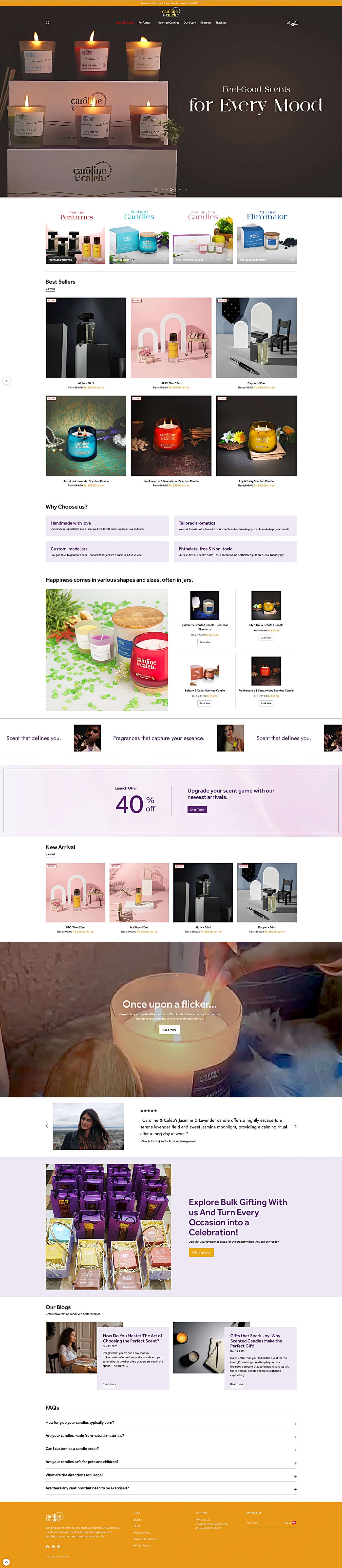
Fragrance and candle ecommerce storefront organized around scent collections, product detail layouts, and category navigation.

Fashion and apparel ecommerce website presenting seasonal collections, garment specifications, size options, and responsive catalogue templates.
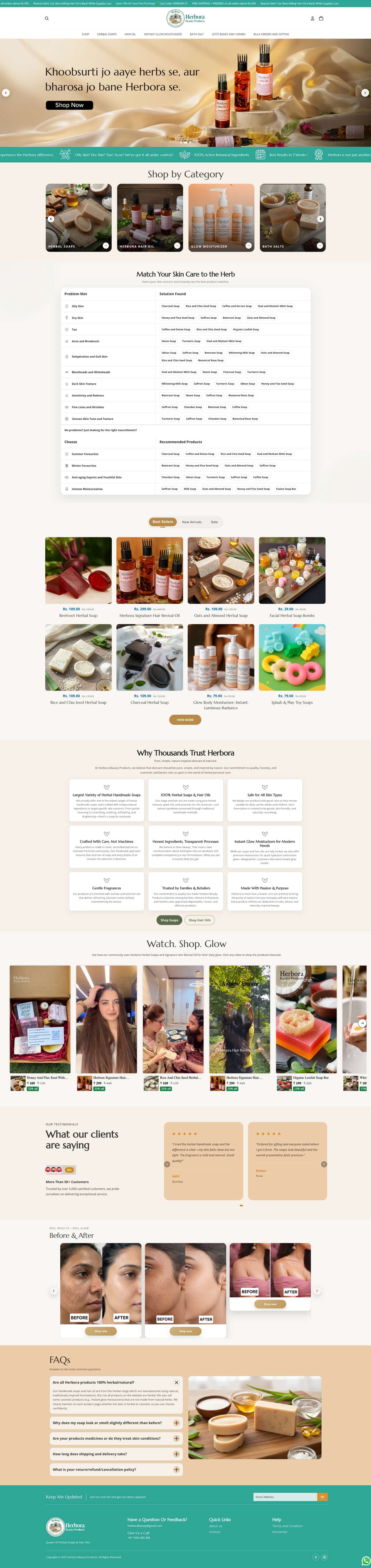
Beauty and personal care online store structured around product categories, ingredient information sections, and mobile-friendly product pages.
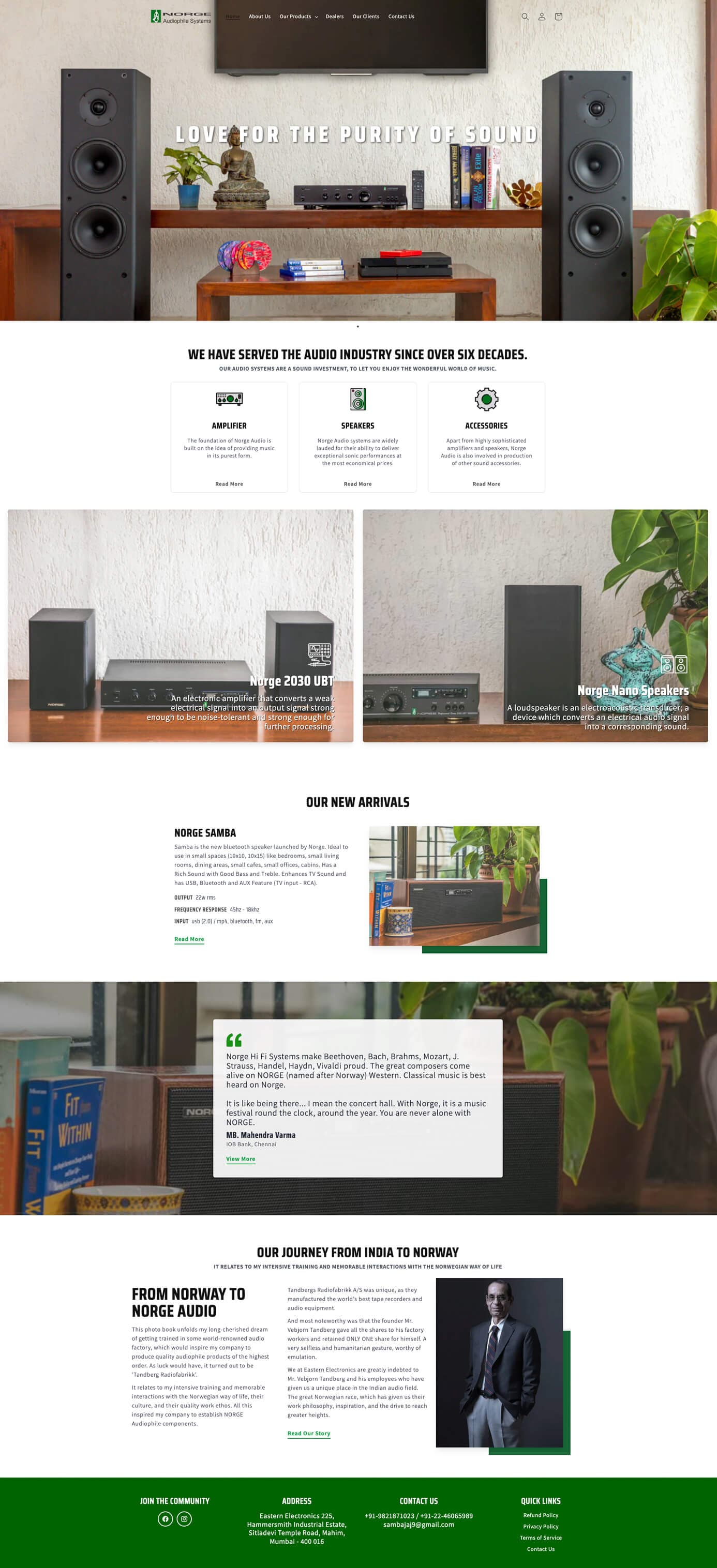
Audio equipment storefront organizing amplifier and speaker categories, technical specifications, and customer enquiry paths.
FAQs
Clear answers on store design, setup, Shopify theme architecture, payment gateways, optimization, migrations, and ongoing store maintenance.
Have a question specific to your catalogue, platform, or Shopify store? Reach out through the consultation form above.
Our ecommerce website design services and store setup scope cover category and navigation planning, responsive Figma templates for homepage, collection, product, and cart views, catalogue and variant structuring, shipping and tax configuration, provider-hosted payment gateway integration, consent-aware GA4 ecommerce tracking, and pre-launch quality assurance.
The right platform depends on your catalogue complexity, internal team workflow, and integration requirements. Shopify is often a practical fit for D2C and retail brands that want hosted checkout and structured Online Store 2.0 merchandising. WooCommerce suits businesses closely tied to WordPress publishing, while custom Next.js and React frontends suit specialized buying flows or API-driven architectures.
Shopify theme design focuses on visual hierarchy, mobile-first buyer journeys, collection and product page layouts, and modular Online Store 2.0 section design. Shopify development covers the underlying Liquid implementation, metafield definitions, third-party app reviews, storefront logic, and structured platform migrations. For dedicated Shopify-only engagements, we also maintain a specialist practice at /shopify.
During online store setup and payment gateway integration, we configure provider-hosted payment gateways or tokenized checkout flows—such as Shopify Payments, Razorpay, or Stripe—alongside GST or regional tax rules and shipping rate tables. Provider-hosted and tokenized flows are configured to keep raw card data out of the storefront application, while payment-provider and merchant PCI responsibilities still depend on the final checkout setup and merchant operations.
Yes. Many merchants ask us for ecommerce store speed and checkout optimization on an existing storefront. We audit Core Web Vitals bottlenecks, heavy imagery, redundant third-party app scripts, collection filter usability, product page clarity, and cart-to-checkout friction, implementing targeted improvements or connecting into our broader Ecommerce Growth System (/solutions/ecommerce-growth) when ongoing conversion experimentation is appropriate.
Our ongoing ecommerce and Shopify store maintenance and support work includes scheduled theme and plugin update reviews, third-party script conflict checks, checkout and payment callback verification, broken-link scans, backup readiness, and merchandising support for seasonal campaigns or catalogue updates.
When handling ecommerce website redesign services and store migrations, we inventory existing product, collection, and content URLs, preserve page-level metadata and product structured data, implement a one-to-one 301 redirect matrix, and check canonical tags and XML sitemaps before launch. Search engines ultimately control crawling, indexing, and rankings, so we pair pre-launch verification with post-launch Search Console monitoring to reduce avoidable transition risk.
Timelines depend on the size and readiness of your product catalogue, the number of custom templates or Shopify sections required, data migration scope, third-party integrations, and stakeholder review speed. After an initial scope review, we provide a phased delivery schedule with explicit milestones rather than a fixed one-size-fits-all time promise.
Locations
We proudly serve clients in major cities worldwide, delivering exceptional web design, development, and digital marketing services.